
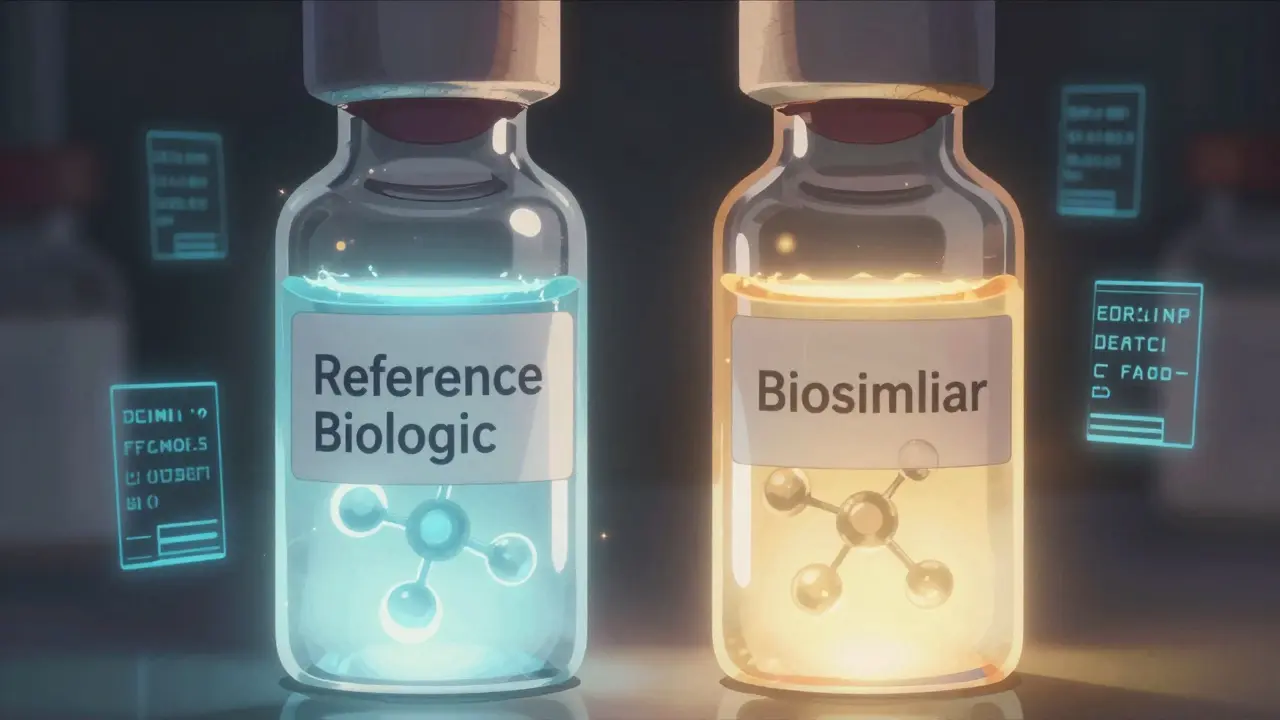
When you hear the word biosimilar, you might think it’s just another generic drug. But that’s not right. Biosimilars aren’t like the little pills you pick up at the corner pharmacy. They’re complex, living medicines made from living cells - the same way the original biologic drugs are. And the big question people ask is simple: Do they work as well? The answer, backed by real data from hospitals, clinics, and millions of patients, is yes. They do.
What Exactly Is a Biosimilar?
A biosimilar is a biologic medicine that’s extremely similar to a reference biologic - the original, brand-name drug that was first approved. Think of it like this: if a biologic is a handmade watch with hundreds of tiny gears, the biosimilar is another watch made with the same materials, same design, and same performance. It’s not a copy. It’s a near-identical twin.
The FDA and EMA don’t approve biosimilars lightly. They require over 200 analytical tests to prove the molecule’s structure, function, and purity match the original. Then they test how the body absorbs it (pharmacokinetics), how it affects the body (pharmacodynamics), and whether it causes unexpected immune reactions. Only after all that do they run small clinical trials - often with fewer than 100 patients - focused on the most sensitive outcomes. And even then, the data has to show no clinically meaningful difference.
By contrast, traditional generics are simple molecules. You can break them down into atoms and rebuild them. Biologics? They’re too big, too fragile, too sensitive to environmental changes. That’s why biosimilars take years to develop and cost millions to test.
Do They Work as Well? The Evidence
Let’s cut through the noise. There are now over 150 biosimilars approved worldwide. More than half a million patients have been tracked in real-world studies. And the results are consistent: no meaningful difference in effectiveness or safety.
In inflammatory bowel disease, a Canadian study followed 1,200 patients switching from reference infliximab to its biosimilar CT-P13. Over two years, disease activity, flare rates, and treatment persistence were nearly identical. The hazard ratio? 0.92 - meaning patients on the biosimilar were slightly *more* likely to stay on treatment, not less.
In rheumatoid arthritis, a 2022 study of 3,450 patients across 12 European centers compared adalimumab biosimilar ABP501 with the original Humira. At 12 months, drug survival rates were 82.3% versus 81.7%. The difference? Statistically meaningless. Same for ankylosing spondylitis patients on Reddit - countless posts like, “Switched from Humira to Hyrimoz 18 months ago. Zero difference in my symptoms.”
And in oncology? The NOR-SWITCH trial, a randomized, double-blind study of 480 patients with cancers including lymphoma and colorectal cancer, found no difference in overall response rates. The biosimilar rituximab (RTXM83) had a 69.3% response rate. The original? 72.9%. The p-value? 0.42 - meaning the difference could’ve happened by chance.
A 2022 meta-analysis of 1,711 patients across six cancer types showed the same thing. For bevacizumab biosimilars in lung cancer, the response rate ratio was 1.02 - meaning the biosimilar matched the original almost perfectly. For trastuzumab in breast cancer? 1.01. For rituximab in lymphoma? 1.04. All within the 95% confidence interval of 1.0.
What About Safety?
One big fear is immunogenicity - will the body reject the biosimilar? After all, these are complex proteins. Could tiny differences in sugar chains or folding trigger antibodies?
That’s a reasonable concern. But here’s what the data says: after over a decade of real-world use, there’s no evidence that biosimilars cause more immune reactions than the originals. In fact, many biosimilar trials are *more* rigorously monitored than the original trials. A 2022 study found 84% of biosimilar studies were double-blinded. Only 17% of the original biologic trials were.
In the UK, over 12,000 patients switched from rituximab to its biosimilar Rixathon for non-Hodgkin’s lymphoma. NHS England reported no uptick in infections, infusion reactions, or autoimmune events. In the U.S., the Arthritis Foundation surveyed 2,100 patients who switched from infliximab to Inflectra. 92% said their disease control stayed the same. 6% even said they felt better. Only 2% said they worsened.
And yes - some patients do report flares after switching. But when doctors dig in, it’s rarely the biosimilar’s fault. Stress, infection, missed doses, or even seasonal changes can trigger flares. The key is monitoring, not avoiding biosimilars.
Why Do Some Doctors Still Hesitate?
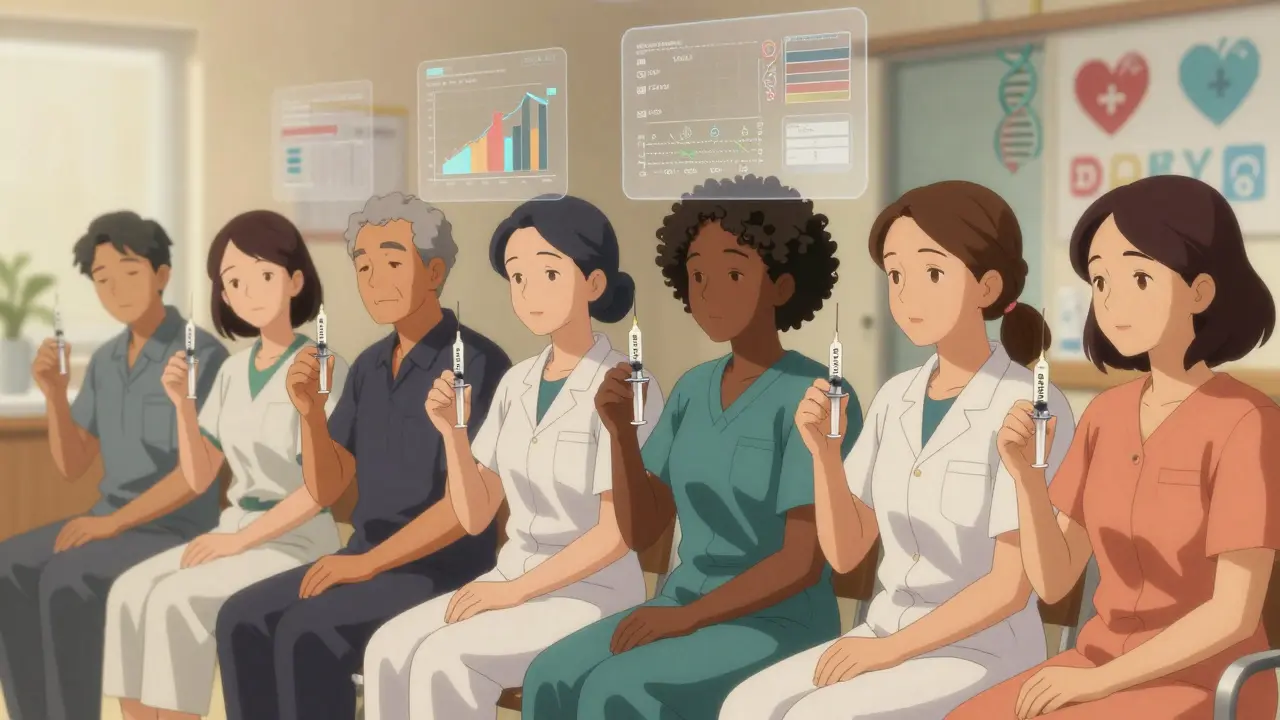
Despite the evidence, a 2021 survey found 38% of U.S. physicians expressed concern about biosimilar efficacy. Why? Not because of data - but because of myths.
Some think biosimilars are “second-rate.” Others worry about switching back and forth. But here’s the twist: the FDA requires interchangeability studies for biosimilars that can be switched without a doctor’s approval. And studies show even switching between multiple biosimilars - say, from one adalimumab biosimilar to another - doesn’t hurt outcomes. A 2023 study found drug retention at 12 months was 84.2% for patients who switched twice versus 85.7% for those who stayed on one.
There’s also a financial layer. Biologic manufacturers spend millions on marketing and patient support programs. Biosimilar makers don’t. So when a patient has been on Humira for five years, and their doctor gets a call from a pharma rep offering free samples and co-pay cards, it’s hard to switch - even if the science says it’s safe.
Cost Matters - A Lot
Biosimilars aren’t just safe. They’re affordable. In the U.S., they typically cost 15-30% less than the original. In Europe? Up to 85% cheaper.
That’s not a small thing. Biologics like adalimumab (Humira) or infliximab (Remicade) used to cost over $2,000 a month. With biosimilars, that’s dropped to $1,000 or less. For patients on Medicare Part B, biosimilars saved $1.3 billion in 2022 alone. The Congressional Budget Office estimates biosimilars will save the U.S. $169 billion over the next decade.
And here’s the kicker: those savings aren’t just for hospitals. They mean patients can afford their treatment longer. They mean fewer people skip doses because of cost. They mean more people get treated at all.

How Are Biosimilars Being Adopted?
Adoption varies by specialty. In rheumatology? 78% of providers use biosimilars. In gastroenterology? 65%. In oncology? Only 31%. Why? Because cancer treatments are often complex, with narrow therapeutic windows. But even there, adoption is rising.
Successful programs follow three rules:
- Provider education - 100% of health systems that adopted biosimilars trained their doctors first.
- Clear patient communication - Kaiser Permanente reduced patient refusal from 22% to 5% using simple, visual handouts.
- Electronic alerts - EHR systems that flag biosimilar options during prescribing cut delays by 60%.
The Purple Book, maintained by the FDA, lists every approved biosimilar and its reference product. It’s updated monthly. If you’re a prescriber, you should know it exists.
What’s Next?
The future is clear. The FDA is proposing to eliminate the requirement for comparative clinical trials when analytical and PK/PD data are strong enough. That means faster approvals, more competition, and lower prices.
And biosimilars aren’t just replacing originals anymore - they’re replacing each other. Switching between biosimilars is now proven safe. That’s a game-changer. It means competition isn’t just between the brand and the copy - it’s between all the copies. That drives prices down further.
Experts agree. Dr. G. Caleb Alexander from Johns Hopkins says the evidence is overwhelming. The International Society for Pharmacoeconomics and Outcomes Research, with 47 experts from 15 countries, concluded: biosimilars have demonstrated equivalent outcomes across over 300 real-world studies.
Yes, long-term data beyond five years is still being collected. But so far, no signal of harm. No rise in serious infections. No increase in autoantibodies. No drop in response rates over time.
If you’re a patient on a biologic - whether for arthritis, Crohn’s, cancer, or another chronic condition - the choice isn’t between safety and savings. It’s between staying on an expensive drug that works, or switching to an equally effective one that costs less. The data says: you can have both.
Are biosimilars the same as generics?
No. Generics are chemically identical copies of small-molecule drugs - like aspirin or metformin. Biosimilars are highly similar but not identical copies of complex biologic drugs made from living cells. They can’t be exactly replicated like a pill, so they undergo a much more rigorous approval process than generics.
Can I switch from my biologic to a biosimilar safely?
Yes. Multiple studies, including the NOR-SWITCH trial and real-world data from the NHS and U.S. health systems, show switching from a reference biologic to its biosimilar doesn’t increase risk of side effects or reduce effectiveness. Most patients report no change in symptoms. Doctors typically monitor patients for 1-3 months after the switch to ensure stability.
Do biosimilars cause more immune reactions?
No. Despite theoretical concerns, real-world data from over 500,000 patients shows no increased risk of immunogenicity compared to reference biologics. In fact, biosimilar trials often include more rigorous immune monitoring than the original trials. No regulatory agency has found a pattern of increased immune-related adverse events.
Why are biosimilars cheaper if they’re just as good?
Because biosimilar manufacturers don’t have to repeat the full, multi-billion-dollar clinical trials the original maker did. They only need to prove similarity through analytical, pharmacokinetic, and targeted clinical studies. That cuts development costs dramatically. Plus, competition among multiple biosimilar makers drives prices down further.
Are biosimilars available for all biologic drugs?
Not yet. Biosimilars are approved for many of the most common biologics - like adalimumab, infliximab, rituximab, and trastuzumab - but not all. New biologics are still under patent protection. However, as patents expire, biosimilars are rapidly entering the market. Over 120 biosimilar candidates are currently in development worldwide.
Comments
Noluthando Devour Mamabolo
Honestly? I switched my mom from Humira to Hyrimoz last year. 🤯 Zero flare-ups, zero side effects. She’s saving $1,800/month. Biosimilars aren’t ‘cheap versions’-they’re science doing its job. 🙌
Also, the FDA’s approval process is wild. Like, 200+ tests? That’s more scrutiny than my iPhone gets before launch. 😅
Leah Dobbin
While I appreciate the data presented, one must consider the ontological distinction between biosimilars and reference biologics. The very notion of ‘equivalence’ in a pharmacodynamic context is philosophically fraught-especially when glycosylation patterns, though statistically similar, are inherently stochastic. One cannot reduce biological fidelity to p-values.
Alex MC
I’m a rheumatology PA in rural Iowa. We’ve switched over 80 patients to biosimilars in the last 18 months. Not one has needed to go back. The biggest hurdle? Patient trust. Once we sit down, show them the studies, and explain it like they’re a smart person-not a number-it clicks. No magic. Just good science and good communication. 👍
rakesh sabharwal
Let’s be real-the whole biosimilar narrative is corporate-driven placebo engineering. You think a lab in Bangalore can replicate the exact 3D folding of a monoclonal antibody produced in a Swiss cleanroom? Please. The ‘data’ is cherry-picked. Real medicine isn’t about cost-cutting-it’s about precision. And biosimilars? They’re the pharmaceutical version of IKEA furniture. Looks fine until you need it to hold weight for 10 years.
Kathy Leslie
My husband has psoriatic arthritis. We switched him to a biosimilar last winter. He didn’t even notice. I cried. Not because it was cheaper (though that helped), but because he finally stopped flinching when he stood up. This isn’t about money. It’s about dignity.
Buddy Nataatmadja
Just came back from a med trip to India. Saw a clinic using biosimilars for 90% of their biologic patients. Cost per patient: $120/year. In the U.S.? $24k. The gap isn’t just economic-it’s ethical. We’re not just debating science here. We’re debating who gets to live.
Stephanie Paluch
I’m a nurse in oncology. We started using trastuzumab biosimilars last year. The patients? They don’t care what it’s called. They care if they can afford to keep coming. We had one lady say, ‘I’m not dying because my insurance won’t pay for the fancy name.’ That stuck with me.
Lorna Brown
There’s a deeper question here we’re avoiding: Why do we even need biosimilars? If the original biologics work, why not just make them cheaper? The answer is capitalism. We’re not solving access-we’re optimizing profit margins under the guise of innovation. The science is solid, sure. But the system? Broken.
Rex Regum
Biosimilars are a scam. I’ve seen patients go from stable to flaring after switching. The studies? Funded by biosimilar manufacturers. The FDA? Captured by Big Pharma 2.0. And don’t get me started on the ‘no difference’ claims-correlation isn’t causation. I’ve got a cousin who went blind after switching. Coincidence? Or the tip of the iceberg?
Kelsey Vonk
I’ve been on adalimumab for 7 years. Switched to a biosimilar last year. I was terrified. But honestly? I feel the same. Better, even. Less fatigue. More sleep. Maybe it’s placebo? Maybe. Or maybe… the system works when we let it. 🌱
Emma Nicolls
i switched to inflectra and honestly? i forgot i even had a chronic illness for like 3 months. no more pain, no more doctor visits. my insurance paid like 10% now. i dont know why anyone wouldnt do this. its not even a choice anymore. 🤷♀️