
More than 1 in 10 people believe they’re allergic to a medication. But here’s the truth: most of them aren’t. If you’ve been told you’re allergic to penicillin because you got a rash as a kid, you might be carrying around a label that’s not just wrong-it’s dangerous. Drug allergies are real, but they’re also wildly overdiagnosed. And the consequences aren’t just about avoiding a rash. They’re about being stuck with stronger, costlier, and sometimes less effective antibiotics that fuel antibiotic resistance and put you at higher risk for complications.
Penicillin: The Most Misunderstood Drug Allergy
Penicillin is the poster child for drug allergies. About 10% of Americans say they’re allergic to it. But when you dig into the data, only about 1% actually have a true IgE-mediated allergy that can cause anaphylaxis. The rest? They had a rash, a stomach ache, or a fever after taking it-and got labeled allergic without ever being tested. The problem? Once you’re labeled allergic, doctors avoid penicillin and reach for broader-spectrum antibiotics like vancomycin or fluoroquinolones. That’s not harmless. A 2017 JAMA study found patients with a penicillin allergy label spend half a day longer in the hospital and pay over $1,000 more per admission. Why? Because those alternatives are less targeted, more toxic, and more likely to trigger resistant infections. Here’s the good news: penicillin allergy testing is one of the most reliable tests in medicine. Skin testing followed by an oral amoxicillin challenge is 97-99% accurate. If you’ve been told you’re allergic, and you’ve never had a severe reaction like swelling, trouble breathing, or low blood pressure, you should ask about getting tested. Most people who do pass the test and can safely take penicillin again.Other Antibiotics That Trigger Reactions
Penicillin isn’t the only culprit. Antibiotics as a class cause about 80% of all drug allergies. Cephalosporins-like cephalexin or ceftriaxone-are often used as alternatives, but cross-reactivity with penicillin is much lower than people think. The old rule of thumb said 10% of penicillin-allergic patients would react to cephalosporins. New data shows it’s closer to 1-3%. For most people, that’s not a reason to avoid them. Then there’s sulfa drugs. Trimethoprim-sulfamethoxazole (Bactrim) is one of the most commonly prescribed antibiotics for urinary tract infections and pneumonia. About 3% of the general population reacts to sulfa drugs. But if you have HIV, that number jumps to 60%. Reactions range from mild rashes to life-threatening conditions like Stevens-Johnson syndrome. If you’ve ever had a blistering rash after taking Bactrim, don’t assume it’s just a coincidence. Document it. Talk to your doctor.NSAIDs: When Painkillers Cause Problems
Ibuprofen, naproxen, aspirin-these aren’t just for headaches. They’re among the most common triggers for drug hypersensitivity. Unlike penicillin allergies, NSAID reactions aren’t usually IgE-mediated. Instead, they often involve a disruption in your body’s inflammatory pathways. This is why they’re called “nonallergic hypersensitivity.” One specific condition, aspirin-exacerbated respiratory disease (AERD), affects 7% of adults with asthma and 14% of those with nasal polyps. People with AERD don’t just get a rash-they get wheezing, nasal congestion, and sometimes full-blown asthma attacks after taking aspirin or other NSAIDs. This isn’t an allergy in the traditional sense. It’s a pharmacological intolerance. Avoiding NSAIDs is the only solution, but acetaminophen (Tylenol) is usually safe.
Anticonvulsants: Genetic Triggers and Deadly Rashes
Carbamazepine (Tegretol) and lamotrigine (Lamictal) are used for epilepsy and bipolar disorder. But they’re also among the most dangerous drugs in terms of skin reactions. Carbamazepine can trigger Stevens-Johnson syndrome or toxic epidermal necrolysis-conditions where your skin starts to peel off, like a severe burn. These are medical emergencies. About 1 in 1,000 people on carbamazepine develop these reactions. Here’s the critical part: if you’re of Southeast Asian descent-Thai, Malaysian, Filipino, or Han Chinese-you carry a higher risk. That’s because of a genetic marker called HLA-B*1502. In Taiwan, doctors started testing for this gene before prescribing carbamazepine. The result? A 90% drop in SJS/TEN cases. The FDA now recommends this screening for high-risk populations. If you’re prescribed carbamazepine and have Asian ancestry, ask if genetic testing is available. Lamotrigine causes rashes in 5-10% of users. Most are mild. But about 1 in 1,000 develop a serious reaction. The key? Start low and go slow. Doctors are trained to increase the dose gradually. If you get a rash, stop the drug immediately and contact your provider. Don’t wait.Chemotherapy and Biologics: When Life-Saving Drugs Cause Reactions
Chemotherapy drugs like paclitaxel (Taxol) and monoclonal antibodies like cetuximab (Erbitux) are powerful, but they’re also highly reactive. Up to 41% of patients on paclitaxel experience an infusion reaction-flushing, itching, low blood pressure. These aren’t always true allergies. Often, they’re “pseudoallergies” caused by the drug’s chemical structure triggering mast cells to release histamine. That’s why hospitals premedicate patients with steroids and antihistamines before infusions. It works. It drops reaction rates from over 20% to under 5%. For drugs like cetuximab, which can cause anaphylaxis in 2% of patients, premedication and slow infusion are standard. Biologics are the future of medicine. But they’re also the next frontier for drug allergies. As their use grows, so will the need for allergists. Experts predict we’ll need 20% more allergy specialists by 2030 just to keep up.Contrast Dyes and Other Hidden Triggers
If you’ve ever had a CT scan with contrast dye, you might have heard you’re allergic to “iodine.” That’s a myth. It’s not iodine-it’s the molecule the iodine is attached to. These dyes can cause reactions in 1-3% of people. Severe reactions are rare (0.01-0.04%), but they happen. If you’ve had a reaction before, you’re at higher risk. But here’s the trick: premedication with corticosteroids and antihistamines cuts the risk of moderate-to-severe reactions from 12.7% down to just 1%. Many radiology centers now offer this for high-risk patients. Ask about it.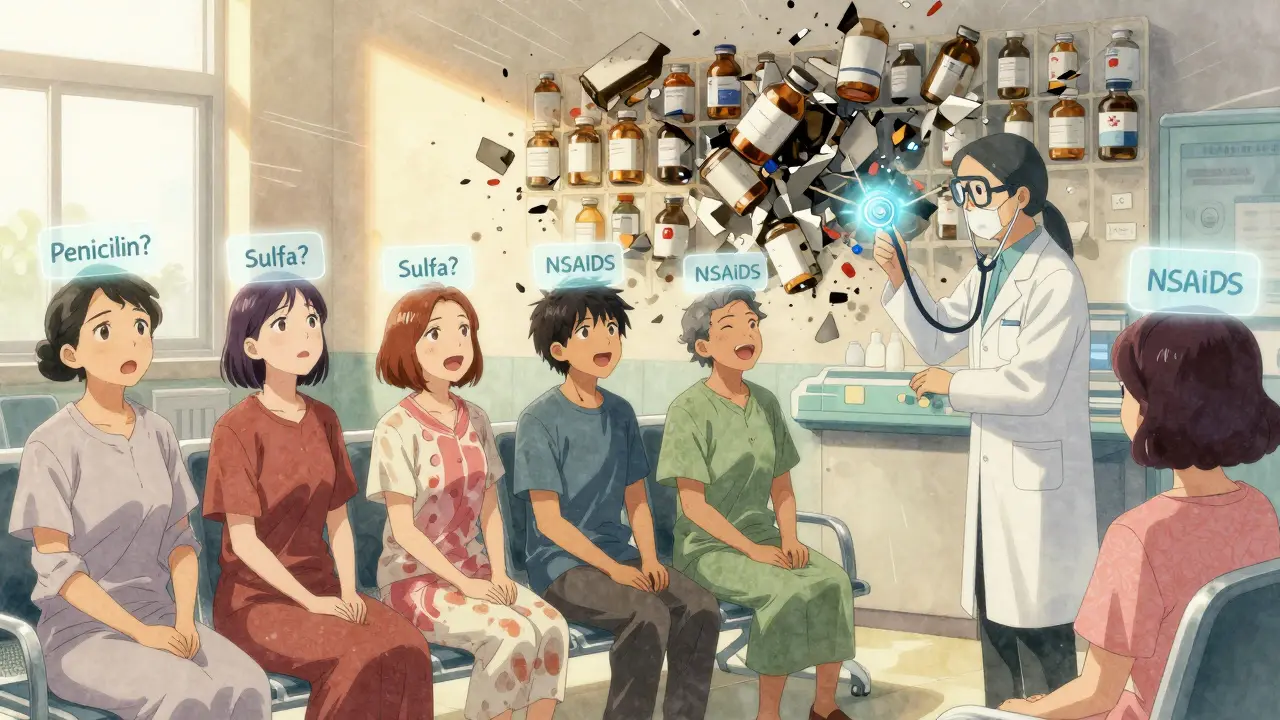
How to Know If You’re Really Allergic
Not every rash or stomach upset means allergy. Here’s how to tell:- True allergy symptoms: Hives, swelling of lips/tongue, wheezing, drop in blood pressure, anaphylaxis-these happen within minutes to hours.
- Delayed reactions: Rashes that appear 1-14 days later (common with lamotrigine or sulfonamides) are often T-cell mediated. They’re serious but not anaphylactic.
- Non-allergic reactions: Nausea, headache, dizziness, diarrhea-these are side effects, not allergies.
What You Can Do Right Now
If you’ve been told you have a drug allergy:- Check your records. Was it ever confirmed with testing?
- Ask your doctor if you’re a candidate for allergy testing-especially if it was a mild rash years ago.
- Don’t avoid all antibiotics just because you’re labeled penicillin-allergic. Ask about cephalosporins or aztreonam.
- If you’re on carbamazepine and have Asian ancestry, ask about HLA-B*1502 testing.
- Never assume a reaction will get worse next time. Severity is unpredictable.