
Decongestant Safety Checker
Is This Decongestant Safe for You?
Many cold medicines contain decongestants that can dangerously raise blood pressure. This tool helps you determine if a decongestant is safe based on your health conditions.
Safety Assessment
What to do:
- This decongestant is safe for you to use.
- Consider safer alternatives like saline nasal spray or steam inhalation.
- STOP taking this decongestant immediately. Contact your doctor or pharmacist immediately.
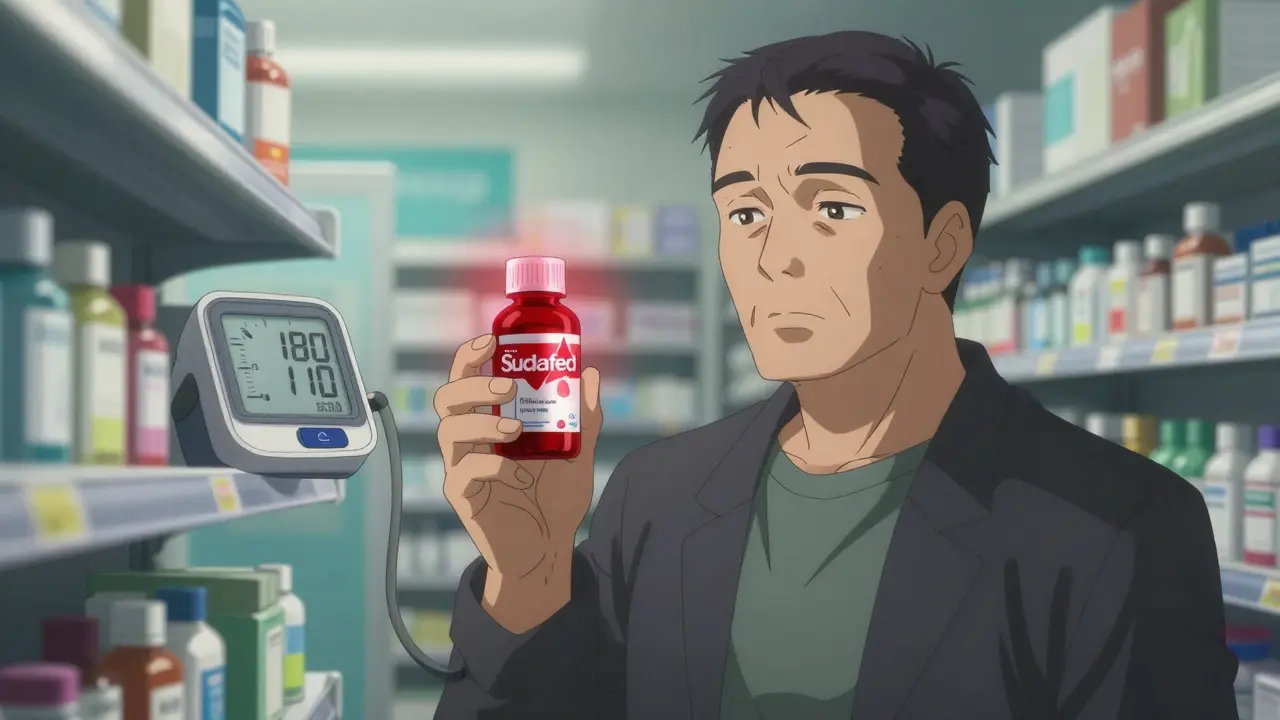
Many people reach for decongestants when they have a cold or sinus infection. It’s quick, easy, and available without a prescription. But if you have high blood pressure, that little bottle of Sudafed or Mucinex Sinus Max could be doing more harm than good. The truth is, decongestants aren’t just harmless nasal sprays-they’re powerful chemicals that can spike your blood pressure, trigger heart palpitations, and even lead to a stroke or heart attack in vulnerable people.
How Decongestants Work (and Why They’re Dangerous for Hypertension)
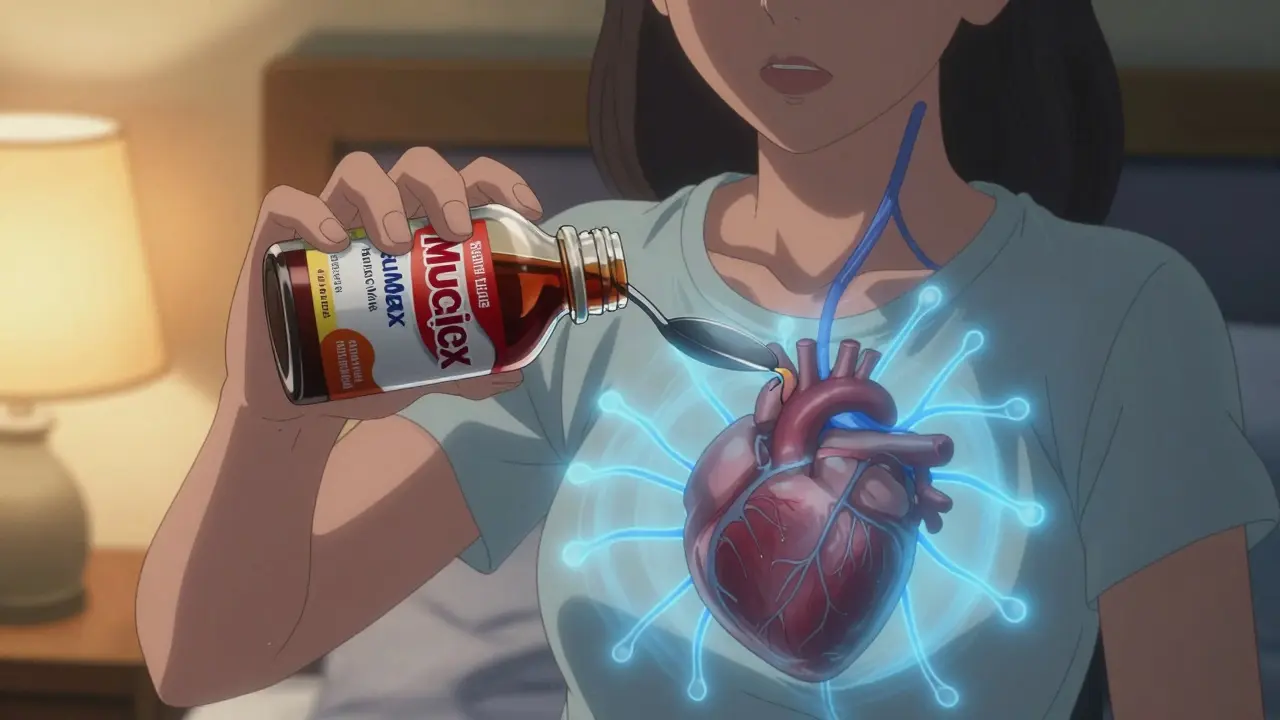
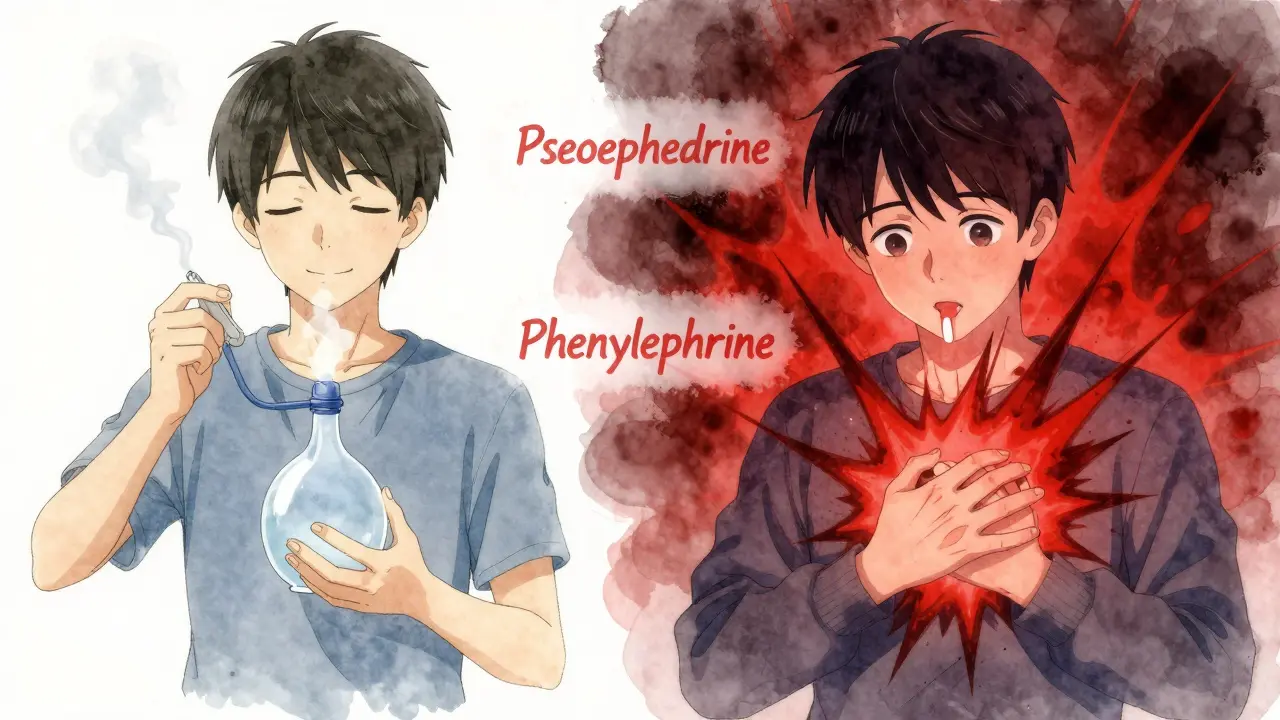
Decongestants like pseudoephedrine and phenylephrine work by narrowing blood vessels in your nose. That reduces swelling and mucus, helping you breathe. But here’s the catch: they don’t stop at your nasal passages. These drugs tighten blood vessels all over your body, including in your heart and kidneys. That increases resistance in your circulatory system, forcing your heart to pump harder. The result? A rise in blood pressure.
It’s not just a small bump. Studies show that pseudoephedrine can raise systolic blood pressure by 5 to 10 mm Hg on average. For someone with controlled hypertension, that might seem minor. But for someone with uncontrolled blood pressure, heart disease, or a history of arrhythmias, it’s enough to push them into danger. A 2023 meta-analysis in US Pharmacist confirmed that even at standard doses, pseudoephedrine causes measurable increases in blood pressure-especially with immediate-release forms.
Which Decongestants Are the Riskiest?
Not all decongestants are the same. The most common and well-studied is pseudoephedrine, found in Sudafed and many multi-symptom cold remedies. It’s been linked to heart attacks, strokes, and dangerous heart rhythms in people with high blood pressure. Because of this, it’s sold behind the pharmacy counter in the U.S. and requires a pharmacist to screen for contraindications.
Phenylephrine, now the most common decongestant in OTC products since pseudoephedrine was restricted, was once thought to be safer. But recent research tells a different story. A 2023 case study in US Pharmacist documented a 5-year-old child who developed high blood pressure after taking a phenylephrine-based cold syrup. Her pressure returned to normal only after stopping the medication. This suggests phenylephrine isn’t any safer than pseudoephedrine-it just hasn’t been studied as long.
Other decongestants to avoid include:
- Ephedrine (rarely used now but still in some supplements)
- Naphazoline (found in some nasal sprays)
- Oxymetazoline (Afrin, Dristan, and others)
Even nasal sprays like Afrin can be risky if used for more than 3 days. They cause rebound congestion and can be absorbed into the bloodstream, leading to systemic effects.
What Happens When Decongestants Meet Blood Pressure Meds?
It’s not just the decongestant itself that’s dangerous-it’s what it does when mixed with your regular blood pressure medication. Beta-blockers, ACE inhibitors, diuretics, and calcium channel blockers all work to lower blood pressure. But decongestants fight against them. The result? Your meds become less effective. Your blood pressure creeps up, and you might not even notice.
One 2023 report from the American Heart Association found that nearly 1 in 5 hypertensive patients using decongestants saw their blood pressure rise enough to require an emergency visit. Many didn’t realize their cold medicine contained a decongestant because it was buried in a multi-symptom formula.
Here are common products that contain hidden decongestants:
- Tylenol Cold and Flu
- Advil Multi-Symptom Cold and Flu
- Benadryl Allergy Plus Congestion
- Mucinex Sinus Max
- Theraflu Cold & Flu
- Robitussin CF
Always read the active ingredients list-not just the brand name. Look for these words: pseudoephedrine, phenylephrine, ephedrine, oxymetazoline.
Who Is at Highest Risk?
Not everyone with high blood pressure will have a bad reaction. But some people are far more vulnerable:
- Those with uncontrolled hypertension (BP over 140/90)
- People with heart disease, including prior heart attacks or heart failure
- Patients with irregular heart rhythms (like atrial fibrillation)
- Those with Prinzmetal angina (a rare type of chest pain caused by artery spasms)
- Anyone taking MAO inhibitors (antidepressants like Nardil or Parnate)
- Older adults on multiple medications
Even if your blood pressure is under control, your heart may still be under stress. Decongestants can trigger arrhythmias or sudden spikes in pressure that you won’t feel until it’s too late.
What Should You Do Instead?
You don’t have to suffer through congestion. There are safer ways to clear your nose without risking your heart:
- Saline nasal spray or rinse (like a neti pot)-no drugs, no side effects
- Steam inhalation-breathe in warm, moist air from a bowl of hot water
- Humidifiers-especially at night-help keep nasal passages moist
- Antihistamines without decongestants-like loratadine (Claritin) or cetirizine (Zyrtec)-if allergies are the cause
- Hydration and rest-your body heals better when you’re not dehydrated or exhausted
These alternatives won’t work as fast as a decongestant, but they’re far safer. And for many people, they work just as well over time.
What to Do If You’ve Already Taken a Decongestant
If you have high blood pressure and accidentally took a decongestant:
- Stop taking it immediately
- Check your blood pressure if you have a home monitor
- Watch for symptoms: headache, dizziness, chest pain, rapid heartbeat, blurred vision
- If your BP is over 180/110 or you feel unwell, seek medical help
- Call your doctor-even if you feel fine. A spike might not cause symptoms right away
Pharmacists are trained to catch these mistakes. When you buy pseudoephedrine, they ask about your health because they know the risks. Don’t be embarrassed to say you have high blood pressure. That’s exactly why the questions exist.
The Bigger Picture: Why This Keeps Happening
It’s not just about ignorance. The problem is built into how OTC meds are sold. Companies package decongestants into multi-symptom formulas because they sell better. Consumers assume "cold medicine" means "safe for everyone." But it’s not. The American Society of Health-System Pharmacists estimates that 15% of hypertensive patients still use decongestants despite warnings.
Even more troubling? Many elderly patients are on five or more medications. A single cold medicine can add a hidden drug that interacts with their heart pills, kidney meds, or diabetes drugs. The risk grows with age.
The American Heart Association launched a "Medication Check-Up" campaign in 2022 to address this. Their message is simple: "Just because it’s over-the-counter doesn’t mean it’s safe for you."
Final Advice: Protect Your Heart
If you have high blood pressure:
- Never assume an OTC medicine is safe
- Always read the active ingredients list
- Ask your pharmacist: "Does this contain a decongestant?"
- Keep a list of your medications and share it with every doctor
- Use saline sprays and steam as your first line of defense
- Monitor your blood pressure more often during cold season
Decongestants aren’t evil. But they’re not harmless either. For someone with high blood pressure, they’re a hidden trigger. The best way to stay healthy isn’t to avoid colds-it’s to choose safe ways to treat them.
Comments
Sam Pearlman
I’ve been taking Sudafed for years with my high BP and never had an issue. Maybe I’m just lucky. Or maybe this whole thing is overblown. My doctor never said anything, so why should I believe some random article?
Steph Carr
So let me get this straight - we’re banning a drug because it might raise blood pressure… but we still sell sugary cereals, energy drinks, and 20-ounce sodas with 70g of sugar in every convenience store? The real public health crisis is that we treat symptoms like they’re the disease.
Also, ‘saline spray’ is the new kale. Everyone’s suddenly a wellness guru because they found a neti pot. Meanwhile, my grandma’s still using Vicks VapoRub on her chest and calling it a day. She’s 82. She’s fine.
Brenda K. Wolfgram Moore
This is exactly why we need better labeling. I read the whole article and I still don’t know which products are safe. You say ‘read the ingredients’ - but most people don’t know what pseudoephedrine even looks like. It’s not like it’s labeled ‘DANGER: THIS WILL KILL YOUR HEART’.
Pharmacists should be required to explain this every single time someone buys cold medicine. Not just ‘do you have high blood pressure?’ - but ‘here’s what this does to your arteries.’
Oliver Calvert
Phenylephrine is basically a placebo now anyway. The FDA admitted it doesn’t work well orally. So if it’s not helping your nose and it’s still raising your BP, why is it even on the shelf? Just remove it. Simple. No need for lectures. Just take it off the market.
Kancharla Pavan
You people are so naive. You think this is about health? This is about corporate greed. The pharmaceutical industry doesn’t want you to use saline sprays because they don’t make money. They want you hooked on pills. Every time you buy a cold medicine, they profit. Every time you go to the ER because your BP spiked, they profit again. They own the FDA. They own the labels. They own your doctor’s continuing education. This article is just a Band-Aid on a hemorrhage. Wake up. The system is rigged. Stop being a sheep. Demand real change. Don’t just read the label - burn the whole damn system down.
PRITAM BIJAPUR
Nature always wins. 🌿💧
When we forget that our bodies are not machines to be patched with chemicals, we lose sight of healing. Saline, steam, rest - these aren’t ‘alternatives,’ they’re the original design. The body knows how to heal. We just stopped listening. Decongestants are like slapping a Band-Aid on a broken leg and calling it progress.
Modern medicine is brilliant… until it forgets its roots. Let’s return to simplicity. Let’s breathe. Let’s hydrate. Let’s sleep. Let’s trust our biology. 🙏✨
Dennis Santarinala
I love how this article doesn’t just say ‘don’t use it’ - it gives you real alternatives. That’s so much more helpful. I’ve got my neti pot out every night now, and honestly? My sinuses feel better than they have in years. No more waking up with a clogged nose. And no heart palpitations. Win-win.
Also, I’ve started asking my pharmacist, ‘Is this safe for someone on lisinopril?’ - and guess what? They’re always happy to help. It’s like they’ve been waiting for someone to ask.
Haley DeWitt
I had no idea that Theraflu had phenylephrine. I’ve been taking it for my allergies for months. My BP was out of control last month and I thought it was stress. Turns out it was this. I stopped it and my numbers dropped 20 points in a week. I’m so mad I didn’t know this sooner. 😔 Thank you for this post. I’m sharing it with my whole family.
John Haberstroh
I’ve been a pharmacist for 18 years. Let me tell you - the worst thing isn’t the decongestant. It’s the fact that people think ‘OTC’ means ‘no risk.’ It’s like saying ‘this candy is safe because it’s in a bag, not a vial.’
Every day, I see elderly folks on five meds who grab a multi-symptom tablet because ‘it’s just for a cold.’ They don’t know that ‘congestion relief’ means ‘cardiovascular stress test.’ I’ve had patients show up with BP of 210/120 after taking one pill. No symptoms. No warning. Just… boom.
We need mandatory warning stickers. Like cigarette packs. ‘This pill can kill you if you have high blood pressure.’ Simple. Brutal. Effective.
Logan Hawker
Look, I get it. You’re all very concerned about ‘hypertensive patients.’ But let’s be real - most of these people are just lazy. They don’t want to ‘read the label.’ They want a magic bullet. If you can’t be bothered to check ingredients, maybe you shouldn’t be allowed to buy medicine. This isn’t a public health crisis. It’s a personal responsibility crisis. Stop infantilizing adults.
James Lloyd
The data is clear. Pseudoephedrine raises systolic BP by 5-10 mmHg on average - but the real danger is in variability. Some patients spike 30 mmHg. That’s not a ‘risk’ - that’s a medical emergency waiting to happen. And phenylephrine? It’s not just ineffective - it’s pharmacologically redundant. Why are we still using it?
Saline sprays, humidifiers, steam - these are not ‘alternative therapies.’ They’re first-line, evidence-based, physiologically appropriate interventions. The fact that we’ve forgotten this is a failure of medical education.
Liam Earney
I’ve been living with hypertension for 12 years. I used to take Sudafed every winter. I didn’t think twice. Then one day, I woke up with a pounding headache, my vision blurred, and my heart felt like it was trying to crawl out of my chest. I didn’t connect it to the cold medicine - until I read this. I’ve never taken anything with a decongestant since. I still get congested. I still suffer. But I’m alive. And that’s worth more than a few days of breathing easily.
Linda Franchock
My mom took Mucinex Sinus Max last year and ended up in the ER. She thought it was ‘just a cold medicine.’ She’s 71. She’s on three heart meds. The ER doc said she was lucky she didn’t have a stroke. Now I print out lists of unsafe ingredients and tape them to her medicine cabinet. She says I’m overbearing. I say I’m saving her life.