
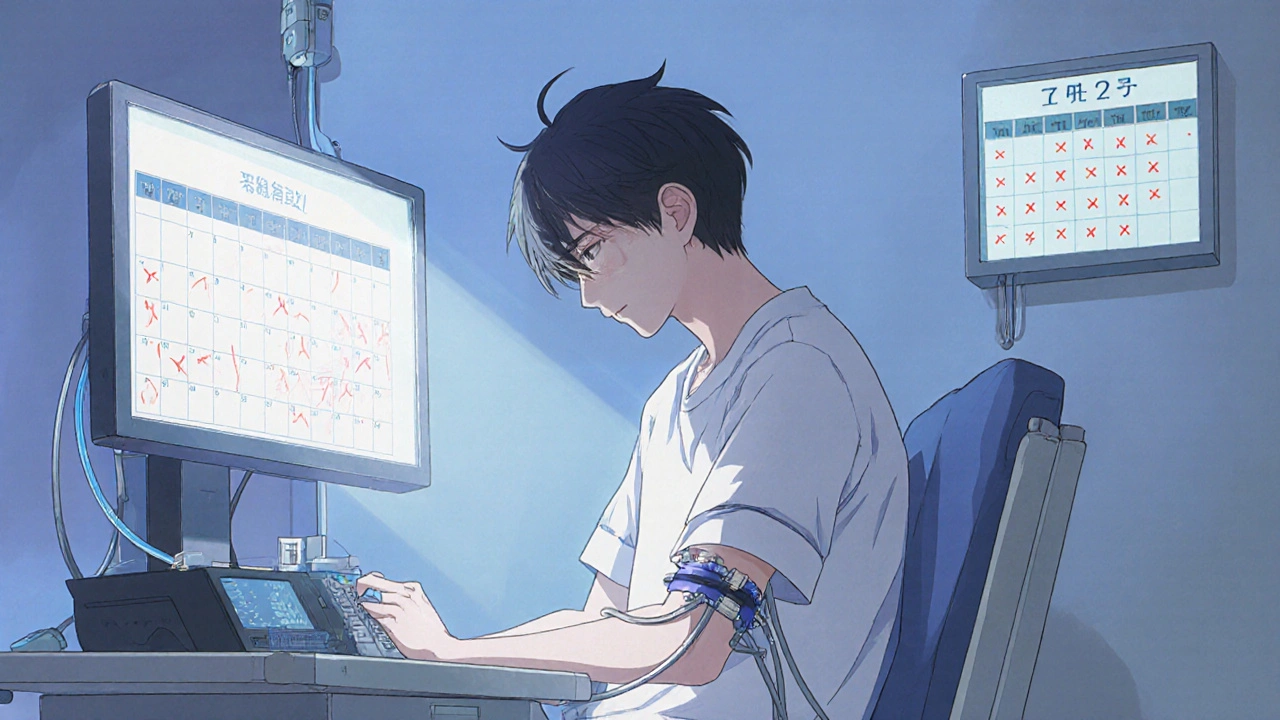
When your kidneys stop working, life doesn’t end-but it changes forever. End-stage renal disease (ESRD) means your kidneys have lost about 90% of their ability to filter waste and fluid from your blood. Without treatment, toxins build up, fluids swell your body, and your heart struggles to keep up. At this point, you need either dialysis or a kidney transplant to survive. But between those two options, there’s a world of difference in how you live, not just how long you live.
What Exactly Is End-Stage Renal Disease?
ESRD isn’t just advanced kidney disease-it’s the point where your kidneys can no longer keep you alive without medical help. Doctors measure kidney function with something called the glomerular filtration rate, or GFR. When it drops below 15 mL/min/1.73 m², you’re in ESRD. That’s like trying to clean a swimming pool with a teaspoon. Your body’s natural filter has failed. The two biggest causes? Diabetes and high blood pressure. Together, they account for more than 70% of new ESRD cases in the U.S. Other causes include autoimmune diseases like lupus, inherited conditions like polycystic kidney disease, and long-term damage from certain medications or toxins. Most people don’t realize their kidneys are failing until it’s too late. Symptoms like fatigue, swelling, nausea, and trouble sleeping often show up only after major damage has already happened.Dialysis: Life Support, Not a Cure
Dialysis keeps you alive by doing the job your kidneys can’t. There are two main types: hemodialysis and peritoneal dialysis. Hemodialysis means your blood is pumped out of your body, cleaned through a machine, and returned. Most people go to a clinic three times a week for 3 to 4 hours each time. That’s 12 to 16 hours a week just sitting in a chair, hooked up to a machine. Add travel time, prep, and recovery, and it’s more like 20 hours. You’ll need a surgically created access point in your arm-a fistula-that takes months to heal before it can be used. Peritoneal dialysis happens at home. A fluid is pumped into your belly through a catheter, where it absorbs waste through your abdominal lining, then drained out. Some do this manually four times a day. Others use a machine overnight while they sleep. It’s more flexible, but you’re doing it every single day. And there’s a risk of infection in the belly cavity, which can be serious. Neither type fixes your kidneys. They just manage the symptoms. And they come with strict rules. You have to watch your fluid intake, limit potassium and phosphorus, and take pills to control calcium and vitamin D. Many patients say the biggest burden isn’t the physical toll-it’s the loss of freedom. You can’t just hop in the car for a road trip. You can’t skip a session without risking hospitalization.Kidney Transplant: The Best Shot at Living Again
If you’re healthy enough, a kidney transplant is the gold standard. It’s not just about living longer-it’s about living better. Studies show transplant recipients have a 68% lower risk of dying than those on dialysis. Five years after getting a new kidney, about 83% of transplant patients are still alive. On dialysis? Only 35% make it that far. Why? Because a working kidney does more than clean your blood. It helps regulate your blood pressure, makes red blood cells, balances minerals, and keeps your bones strong. You don’t need to be tied to a machine. You can eat more normally. Travel becomes possible. Work becomes realistic. Many people go back to full-time jobs after transplant. Living donor transplants have the best outcomes. A kidney from a living person-often a family member or friend-has a 95% chance of working after one year. Deceased donor kidneys still do well, with 94% surviving the first year. Five-year survival rates are 86% for living donor kidneys and 79% for deceased donor ones. But here’s the catch: you have to be approved. Not everyone qualifies. If you’re over 75 with heart disease, have active cancer, or struggle with substance use, you might not be eligible. Mental health matters too. You need to be able to take immunosuppressant drugs every single day, for life. Missing doses can lead to rejection.
The Cost of Waiting: Why Early Referral Matters
Too many people wait until they’re sick enough to start dialysis before even being evaluated for a transplant. That’s a mistake. The best chance for a successful transplant comes before dialysis begins-called a preemptive transplant. Only about 5% of people with ESRD get a transplant before starting dialysis. Why? Because most doctors don’t bring it up early enough. Guidelines say you should be referred to a transplant center when your GFR drops below 30. That’s years before you’d need dialysis. But in reality, most patients aren’t referred until their GFR is below 15. Getting evaluated early gives you time to find a living donor. It lets you fix health problems like high blood pressure or diabetes that could block your transplant. It also means you avoid dialysis altogether-and all the complications that come with it.Quality of Life: Numbers Don’t Tell the Whole Story
One study used a quality-of-life survey called KDQOL-36. Dialysis patients scored an average of 53.7 out of 100. Peritoneal dialysis patients scored 67.2. Transplant patients? 82.4. That’s not just a number. That’s the difference between feeling tired all the time and having energy to play with your grandkids. Between eating only bland, low-potassium food and enjoying a banana or orange again. Between being stuck in a clinic and going to your child’s soccer game. Transplant patients also spend 50% fewer days in the hospital each year. They have fewer infections, less fluid overload, and better mental health. But it’s not perfect. You’ll take daily pills to stop your body from rejecting the new kidney. These drugs weaken your immune system, so you’re more vulnerable to infections and certain cancers. You’ll need blood tests every few weeks for life. And the cost? Immunosuppressants can run $1,500 to $2,500 a month. Medicare covers most of it for ESRD patients, but only for three years after transplant. After that, you’ll need other insurance or pay out of pocket.
Who Gets Left Behind?
Not everyone has equal access to transplant care. African American patients are less likely to be referred for transplant evaluation-even when they have the same medical needs as white patients. In one study, after doctors received training on how to recognize bias, transplant referrals for Black patients jumped by 40%. That shows the problem isn’t medical-it’s systemic. Medicare starts paying for ESRD care after three months of dialysis. But it doesn’t push hospitals to refer patients for transplant early. The system is built around dialysis because it’s predictable, profitable, and easier to manage. Transplants require long-term planning, coordination, and investment. And that’s why so many people stay on dialysis longer than they should.What Can You Do?
If you or someone you love has advanced kidney disease:- Ask your nephrologist: Am I a candidate for a kidney transplant?
- Request a referral to a transplant center now, even if you’re not on dialysis yet.
- Ask about living donation. Could a family member or friend be tested?
- Find out if your clinic participates in programs like the Kidney Care Choices Model, which rewards early transplant referrals.
- Don’t wait for symptoms to get worse. Early action saves lives.
Looking Ahead
The number of people waiting for a kidney transplant in the U.S. is over 90,000. Each month, 3,000 more join the list. But only about 27,000 transplants happen each year. The gap is growing. New tools are helping. Expanded criteria donors-older donors or those with minor health issues-are now used more often. The 21st Century Cures Act helped increase the donor pool by 15%. NIH is investing $157 million to develop personalized treatments for kidney disease. But technology alone won’t fix this. What will is changing how we think about ESRD. It’s not just a medical condition. It’s a life-altering event that demands early, proactive, and equitable care. You don’t have to accept a life on dialysis as your only future. A transplant isn’t a miracle-it’s a medical option. And if you’re told you’re not a candidate, ask why. Push for a second opinion. Keep asking until you get answers. Because your kidneys may have failed. But your life doesn’t have to.Can you live a normal life on dialysis?
Yes, but it’s not the same as normal. Most people on dialysis can work, travel, and spend time with family-but they have to plan everything around treatment schedules. Fluid and diet restrictions are strict. Fatigue is common. Many report feeling like their life is on hold. Dialysis keeps you alive, but it doesn’t restore your health. It’s a bridge, not a destination.
How long do kidney transplants last?
On average, a kidney from a living donor lasts 15 to 20 years. A kidney from a deceased donor lasts 10 to 15 years. Some last longer-over 30 years in rare cases. When a transplant fails, you can go back on dialysis and get another transplant. Many people have more than one transplant in their lifetime.
Can anyone be a living kidney donor?
Most healthy adults between 18 and 70 can be evaluated. Donors must have normal kidney function, no uncontrolled high blood pressure, no diabetes, no history of cancer, and no serious mental health conditions. The surgery is safe-most donors go home in 1 to 2 days and return to normal activities in 4 to 6 weeks. Long-term studies show living donors live just as long as people who haven’t donated.
Why is the transplant waiting list so long?
There are far more people needing kidneys than available organs. About 17 people die each day waiting for a kidney. The main reason? Fewer people register as organ donors than needed. Also, many patients aren’t referred for transplant evaluation early enough, so they spend years on dialysis before even being listed. Efforts to increase living donation and use older or higher-risk donor kidneys are helping, but the gap remains wide.
Is dialysis cheaper than a transplant?
In the short term, yes. A single dialysis session costs around $300 to $500. But over time, transplant is far cheaper. The first year after transplant costs about $50,000 to $100,000 (including surgery and drugs). After that, annual costs drop to $15,000 to $25,000 for medications and checkups. Dialysis costs $90,000 to $100,000 per year, every year. Medicare spends about $35 billion annually on ESRD care-mostly on dialysis. Transplant saves the system money and improves outcomes.
Many people think ESRD means giving up. It doesn’t. It means choosing wisely. The right treatment at the right time can give you back years of life-and the ability to enjoy them.
Comments
Edward Batchelder
It’s not just about surviving-it’s about living. I’ve seen friends go from dialysis to transplant, and the difference isn’t just medical; it’s emotional, social, spiritual. One guy I know started coaching his daughter’s soccer team again after his transplant. He hadn’t been able to leave the house without planning for a session for three years. That’s the real win.
reshmi mahi
USA has 90k people waiting for kidneys but still won’t fix the system? 😒 Meanwhile, in India, we donate kidneys like it’s a family tradition. No bureaucracy, no waiting lists-just love and a scalpel. 🙄
laura lauraa
Let’s be brutally honest: the medical-industrial complex thrives on dialysis. It’s a cash cow. Transplants? They’re inconvenient. They require coordination, empathy, long-term investment. Dialysis? You can automate it, schedule it, bill it, and profit from it. And the patients? They’re just… numbers in a spreadsheet. I’m not being dramatic. I’m being accurate.
Gayle Jenkins
If you’re reading this and you or someone you love has kidney disease-don’t wait. Don’t wait for symptoms. Don’t wait for your doctor to bring it up. Go to a transplant center TODAY. Call them. Email them. Show up. You have rights. You have options. And you deserve more than a chair and a machine. You deserve to live.
Iives Perl
They’re lying about the 90k waiting list. The real number is 300k. The government hides it because if people knew, they’d riot. Dialysis machines? They’re GPS-tracked. They’re also connected to a secret AI that decides who gets the next kidney. Don’t believe me? Look up Project Renal Horizon.
steve stofelano, jr.
It is imperative to underscore that early referral to transplant evaluation constitutes a critical, evidence-based intervention that significantly enhances both survival outcomes and quality-of-life metrics. The current paradigm, which prioritizes dialysis as the default modality, is both clinically suboptimal and economically unsustainable over the long term.
Savakrit Singh
Statistically, 70% of ESRD cases stem from diabetes and hypertension. That’s not a medical failure-it’s a societal failure. People eat processed food, sit all day, and ignore their BP. Then they blame the system when they need a transplant. Blame the person first. The system second.
Cecily Bogsprocket
I used to work in hospice. I’ve held the hands of people who chose dialysis because they were afraid of transplant. They thought rejection meant death. But rejection isn’t always death-it’s a detour. And many, many people get a second chance. I wish more people knew that. You’re not broken. You’re just… waiting for the right bridge.
Emma Dovener
One thing rarely mentioned: living donors often experience profound emotional rewards. Not just the ‘I saved someone’ feeling-but the quiet joy of seeing someone eat an orange again, or laugh without being tired. It’s not just medicine. It’s connection.
Sue Haskett
Why do we still use the term 'end-stage'? It implies finality. But it’s not the end-it’s a pivot. A new beginning. We need to reframe the language. ESRD isn’t terminal. It’s transitional. And that matters.
Jauregui Goudy
My cousin got a kidney from her best friend. They cried together in the recovery room. She said, 'I didn’t know I could feel this alive again.' That’s not a transplant. That’s a second heartbeat.
Tom Shepherd
i just read this and im like wow i had no idea dialysis took 20 hrs a week… also why cant u just drink water like normal???
Rebecca Price
It’s ironic. We spend billions on dialysis, yet we treat transplant as a luxury. We treat kidney failure as a moral failure. We don’t. We treat it as a biological one. And the solution is right in front of us-if we stop being afraid of it.
shawn monroe
Let’s talk GFR thresholds. At <30, you’re eligible for referral. At <15, you’re in crisis. But here’s the kicker: the nephrology community has a 68% failure rate in initiating timely referrals. That’s not negligence-it’s systemic inertia. We need mandatory referral protocols, not suggestions.
marie HUREL
I’m a nurse. I’ve seen families fall apart over this. One wife said, 'I didn’t know he was scared of needles.' He was scared of being a burden. We need to talk about the emotional weight of this disease-not just the medical stats.