
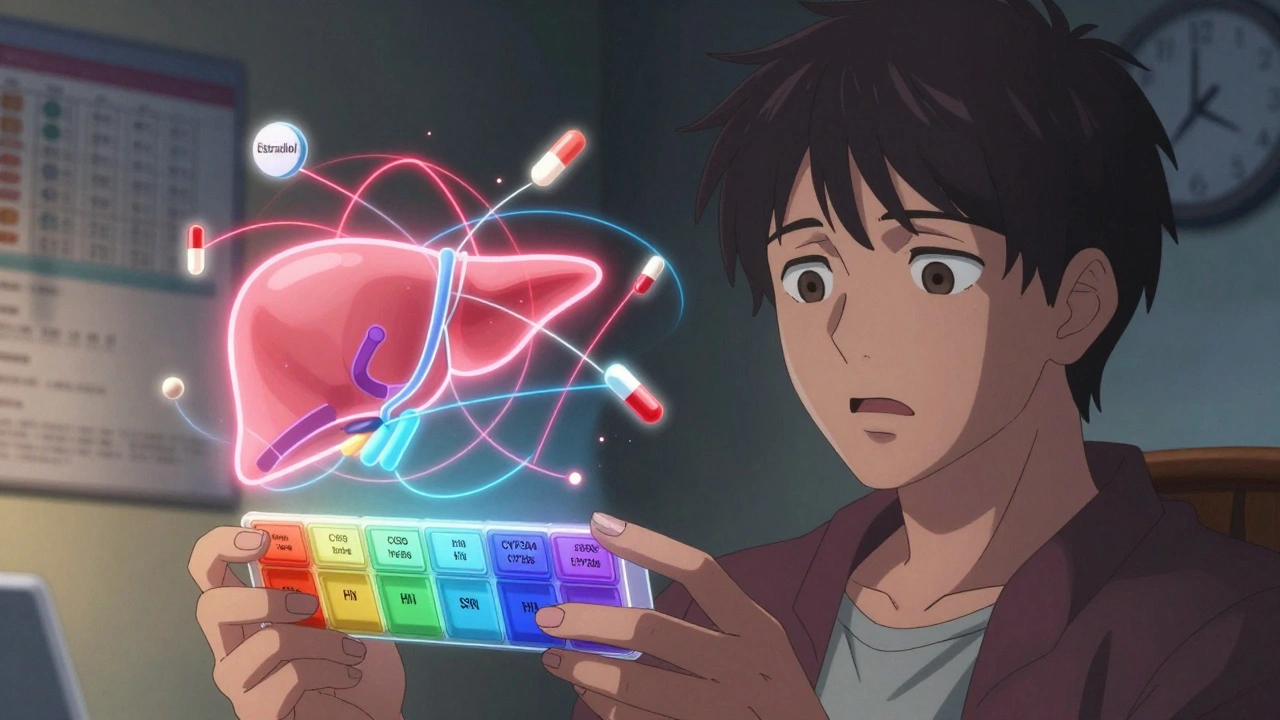
When you're on gender-affirming hormone therapy (GAHT), your body is changing in powerful ways. Whether you're taking estradiol to feminize or testosterone to masculinize, these hormones don't work in isolation. They interact with other medications you might be taking - and those interactions can change how well your hormones work, or even put your health at risk.
How GAHT Works and Why Interactions Matter
Gender-affirming hormone therapy isn't just about taking a pill. It's a carefully balanced system. Feminizing therapy usually combines estradiol (either as patches, pills, or gels) with an anti-androgen like spironolactone or cyproterone acetate. Masculinizing therapy relies on testosterone - delivered as gels, injections, or pellets. These hormones are processed by specific liver enzymes, especially CYP3A4 and CYP2D6. If another drug affects those same enzymes, it can boost or block your hormone levels without you even realizing it.
Why does this matter? Because if your estradiol drops too low, you might lose the physical changes you’ve worked toward. If testosterone gets too high, you risk blood clots, liver stress, or mood swings. And if you're on HIV meds, antidepressants, or even over-the-counter supplements, those can interfere - sometimes dangerously.
Key Interactions with HIV Medications
Transgender people are 3.4 times more likely to be living with HIV than cisgender people. That means many people on GAHT are also taking antiretroviral therapy (ART). And here’s the catch: some HIV drugs mess with hormone levels.
Enzyme-inducing drugs like efavirenz (used in some older HIV regimens) can slash estradiol levels by 30-50%. That’s not just inconvenient - it can mean your feminizing therapy stops working. On the flip side, drugs like cobicistat (found in boosted HIV combinations like darunavir/cobicistat) can spike estradiol levels by 40-60%. That might sound good, but too much estrogen raises your risk of blood clots and stroke.
The good news? Newer HIV drugs like dolutegravir (an integrase inhibitor) don’t cause major changes. Studies show estradiol levels stay stable, and no dose adjustments are needed. For testosterone, most ART drugs have little to no effect. The same goes for GnRH agonists like leuprolide - they don’t interfere with any HIV meds.
PrEP is another big one. The most common PrEP pill, Truvada (tenofovir/emtricitabine), has been studied in over 170 transgender people. Results? No meaningful change in hormone levels or PrEP effectiveness. Your protection against HIV stays strong, and your hormone therapy keeps working as expected.
Psychiatric Medications: The Hidden Risk
Transgender individuals are 2.5 times more likely to experience depression, anxiety, or PTSD than cisgender people. That means many are on SSRIs, SNRIs, or mood stabilizers. But here’s what few providers talk about: these drugs can change how your hormones are broken down.
Fluoxetine (Prozac) and paroxetine (Paxil) inhibit CYP2D6 - the same enzyme that helps clear estradiol. That means your estrogen levels can creep up, even if you’re not taking more. You might notice breast tenderness, mood swings, or swelling you didn’t expect.
On the other hand, carbamazepine (Tegretol) and phenytoin (Dilantin) - used for seizures or bipolar disorder - activate CYP3A4. That enzyme breaks down estradiol faster. So even if you’re taking your usual dose, your body might be clearing it too quickly. You could start losing the effects of your hormone therapy without knowing why.
Testosterone doesn’t have as many documented interactions, but that doesn’t mean it’s safe. One study found that 17 out of 12,000 people on testosterone needed higher doses of their antidepressants within six weeks - likely because testosterone changed how their brain processed serotonin. No one knows why yet. But if you start feeling more depressed or anxious after starting testosterone, don’t assume it’s just "adjustment." Talk to your provider. Your meds might need tweaking.
Other Common Medications to Watch For
It’s not just HIV and psychiatric drugs. Many everyday medications can interfere.
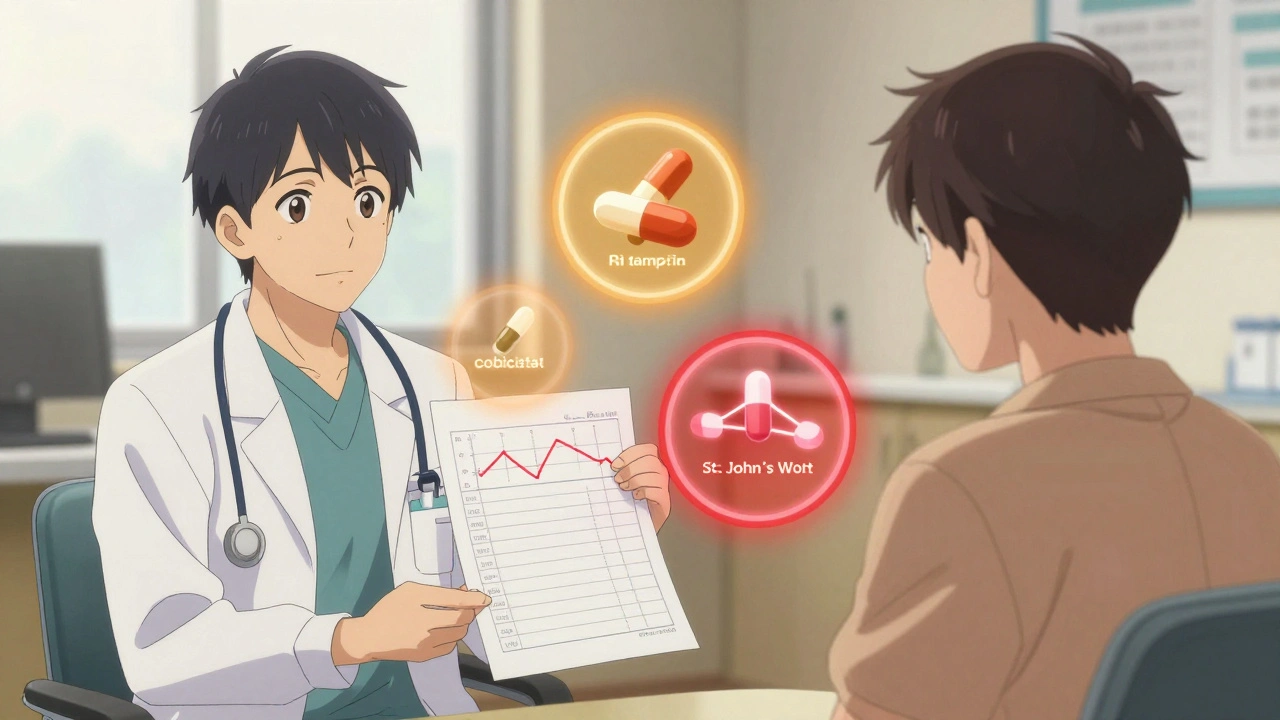
- Antibiotics: Rifampin (used for TB) is a strong CYP3A4 inducer. It can drop estradiol levels significantly. If you’re on rifampin, you’ll need higher hormone doses - or a switch to transdermal estradiol, which bypasses the liver.
- Seizure meds: Besides carbamazepine, valproate and topiramate can also reduce hormone effectiveness. Keep your endocrinologist in the loop if your neurologist changes your regimen.
- St. John’s Wort: This herbal supplement is a major CYP3A4 activator. It’s sold as "natural," but it can make your estradiol therapy fail. Avoid it completely while on GAHT.
- Blood thinners: Estradiol increases clotting risk. If you’re on warfarin, your INR may drop. You’ll need more frequent blood tests.
- Thyroid meds: Estrogen can raise thyroid-binding proteins, making your free thyroid hormone levels appear low. That doesn’t mean you need more levothyroxine - your provider just needs to check free T4, not total T4.
What You Can Do Right Now
You don’t need to guess. Here’s what actually works:
- Make a full list of everything you take. Include prescriptions, OTC meds, vitamins, supplements, and herbal products. Write down the dose and how often you take it.
- Bring that list to every appointment. Not just your endocrinologist - your psychiatrist, dentist, GP, even your pharmacist. Ask: "Could this interact with my hormones?"
- Ask for hormone level checks. If you start a new med, get your estradiol or testosterone levels tested 4-6 weeks later. A change of 20% or more means something’s off.
- Know your delivery method. Transdermal estradiol (patches, gels) avoids the liver, so it’s less likely to interact with CYP3A4 drugs than oral pills. If you’re on a risky combo, ask if switching helps.
- Don’t stop meds without talking to your team. Stopping HIV meds or antidepressants suddenly can be dangerous. Work with your providers to adjust safely.

What’s New in 2025
The science is catching up. The NIH-funded Tangerine Study, which began in 2021, is tracking 300 transgender adults on 12 common psychiatric drugs alongside GAHT. Early results, expected in mid-2025, could finally give us clear dosing guidelines.
Also, Gilead Sciences now requires all new PrEP trials to include transgender participants - something they didn’t do until 2022. That’s changing the data landscape fast.
But gaps remain. We still don’t know much about interactions with long-acting injectable PrEP (cabotegravir) or newer antidepressants like brexanolone. There are only two published case reports for those combinations - not enough to draw conclusions.
Bottom Line: Safety Is Possible - But It Takes Work
Gender-affirming hormone therapy is one of the safest medical treatments out there when monitored properly. But safety doesn’t happen by accident. It happens when you speak up, track your meds, and insist on being heard.
Too many people are told, "It’s probably fine," or "We don’t have data." But the data is growing. And you deserve care based on what we know - not what we don’t.
If you’re on GAHT and another medication, don’t assume everything’s okay. Ask for a review. Get your levels checked. Find a provider who knows this stuff. Your body is changing - make sure your meds are helping, not hurting.
Can I take birth control pills with feminizing hormone therapy?
No. Combined estrogen-progestin birth control pills are not recommended with feminizing hormone therapy. They add extra estrogen, which increases your risk of blood clots, stroke, and heart attack. If you need contraception, use progestin-only methods like the implant, IUD, or injection - or non-hormonal options like condoms or copper IUDs. Always talk to your provider before choosing.
Does testosterone affect my liver?
Oral testosterone (like methyltestosterone) can stress the liver and is no longer recommended. Injectable or transdermal testosterone (gels, patches, pellets) are much safer for the liver. Still, your provider should check your liver enzymes every 6-12 months. If you drink alcohol regularly or have hepatitis, extra monitoring is needed.
Can I take melatonin with GAHT?
Yes. Melatonin doesn’t interfere with estrogen or testosterone metabolism. It’s safe to use for sleep. Some people on GAHT report better sleep after starting hormones - others need help. Melatonin is a low-risk option if you’re struggling. Avoid high doses (over 5 mg) unless directed by your doctor.
What if I need surgery? Do I stop my hormones?
Usually not. Stopping hormones before surgery increases the risk of depression, dysphoria, and even suicidal thoughts. For most surgeries, you can keep taking testosterone or estradiol. The only exception is major pelvic or abdominal surgery with high clot risk - your surgeon may ask you to pause estradiol for 2 weeks before and after. Always discuss this with your endocrinologist and surgical team together.
Are bioidentical hormones safer than synthetic ones?
No. "Bioidentical" just means the molecule matches what your body makes - but it doesn’t change how your liver processes it. Estradiol from a pharmacy and estradiol from a compounding clinic are metabolized the same way. The risk of interactions is identical. Stick to regulated, FDA-approved products. Compounded hormones aren’t tested for purity or consistency, and they can be dangerous.
How often should I get my hormone levels checked?
When you first start, check every 3 months until levels stabilize. After that, every 6-12 months is typical - unless you start a new medication, change your dose, or feel symptoms like mood swings, fatigue, or swelling. If you’re on CYP3A4-modulating drugs (like rifampin or certain HIV meds), check every 4-6 weeks after the change.
Next Steps: What to Do Today
If you’re on GAHT and any other medication, here’s your action plan:
- Write down every pill, patch, injection, and supplement you take.
- Call your pharmacy and ask them to run a drug interaction check on your hormone therapy.
- Book an appointment with your endocrinologist or gender clinic - even if you feel fine.
- Ask: "Could any of my meds be affecting my hormone levels?"
- Request a blood test for estradiol or testosterone if it’s been over 6 months.
You’re not overreacting. You’re being smart. And in a world where transgender health is still overlooked, that’s how you protect yourself - one question, one test, one conversation at a time.
Comments
Ariel Nichole
Just wanted to say this is one of the clearest, most helpful guides I’ve read on GAHT interactions. I’ve been on estradiol for two years and just started PrEP last month - I was worried, but now I feel way more confident. Thanks for laying it all out like this.
Kaitlynn nail
It’s fascinating how pharmaceutical capitalism weaponizes enzyme pathways to keep us dependent. The fact that we’re still treating hormones like they’re just ‘meds’ instead of identity-affirming biochemistry is… tragic.
Rebecca Dong
Wait… so you’re telling me the government and Big Pharma are secretly using CYP3A4 to control trans people’s bodies? I knew it. They don’t want us to look ‘too feminine’ or ‘too masculine’ - it’s about maintaining the binary. That’s why they don’t want you switching to transdermal! It bypasses their control!
Nikki Smellie
Dear Author, I am writing to express my profound concern regarding the potential for pharmaceutical-grade estrogen to induce subliminal cognitive shifts in the hypothalamic-pituitary-adrenal axis, particularly when co-administered with unregulated supplements such as St. John’s Wort (which, by the way, is not a ‘herb’-it’s a bioengineered neuro-modulator disguised as nature). I request a full audit of your sources.
Neelam Kumari
Wow. So you’re telling me people actually believe this? You’re giving out medical advice like it’s a recipe for pancakes. Next you’ll tell me melatonin is ‘safe.’ LOL. I’ve seen three trans people end up in the ER after ‘safe’ hormone combos. You’re lucky you’re not sued.
Queenie Chan
I love how you framed this - not as a clinical manual, but as a survival guide. The way you called out ‘bioidentical’ as a marketing trap? Chef’s kiss. I’ve spent years untangling compounding clinic lies. Honestly, the fact that we’re still having this conversation in 2025 feels like a punch to the gut… but at least we’re talking.
Stephanie Maillet
It’s interesting… how we’ve come to see our bodies as systems that must be negotiated, calibrated, balanced… like a delicate engine… and yet, we are told, over and over, that our desires are irrational… that our needs are ‘experimental’… but here we are… thriving… with science… on our side…
David Palmer
Bro I just took testosterone and now I’m on Zoloft and I feel like a robot. Is this normal? Or am I getting ghosted by my own brain?
Jimmy Kärnfeldt
Hey, I’m right there with you - started T last year, added sertraline after a rough patch, and yeah, the emotional flatline hit hard. My doc switched me to bupropion and it’s been night and day. No magic fix, but sometimes it’s just about finding the right combo. You’re not broken. Just adjusting.
Courtney Blake
Why do we even need this? If you’re gonna take hormones, just take them. Why do you need a 2000-word guide? It’s not rocket science. Stop overcomplicating your identity with pharmaceutical jargon.
Lisa Stringfellow
Interesting. So this article says ‘ask your provider’… but what if your provider doesn’t know? What if they’re just guessing? What if they’ve never treated a trans person before? This feels like a comfort blanket for people who don’t want to admit the system is broken.
Kristi Pope
My favorite part? The ‘write down everything you take’ advice. I used to think I was being dramatic when I showed my pharmacist my 12-item list. Now I know I was just being smart. Seriously - do this. It saved me from a bad interaction with rifampin last year. You’re not being annoying. You’re being your own advocate.
Eddie Bennett
Just read this after my endo said my estradiol levels dropped 40% after I started my new TB meds. I didn’t know until I read this. Thank you. I’m getting a patch now. You just saved me months of confusion.