
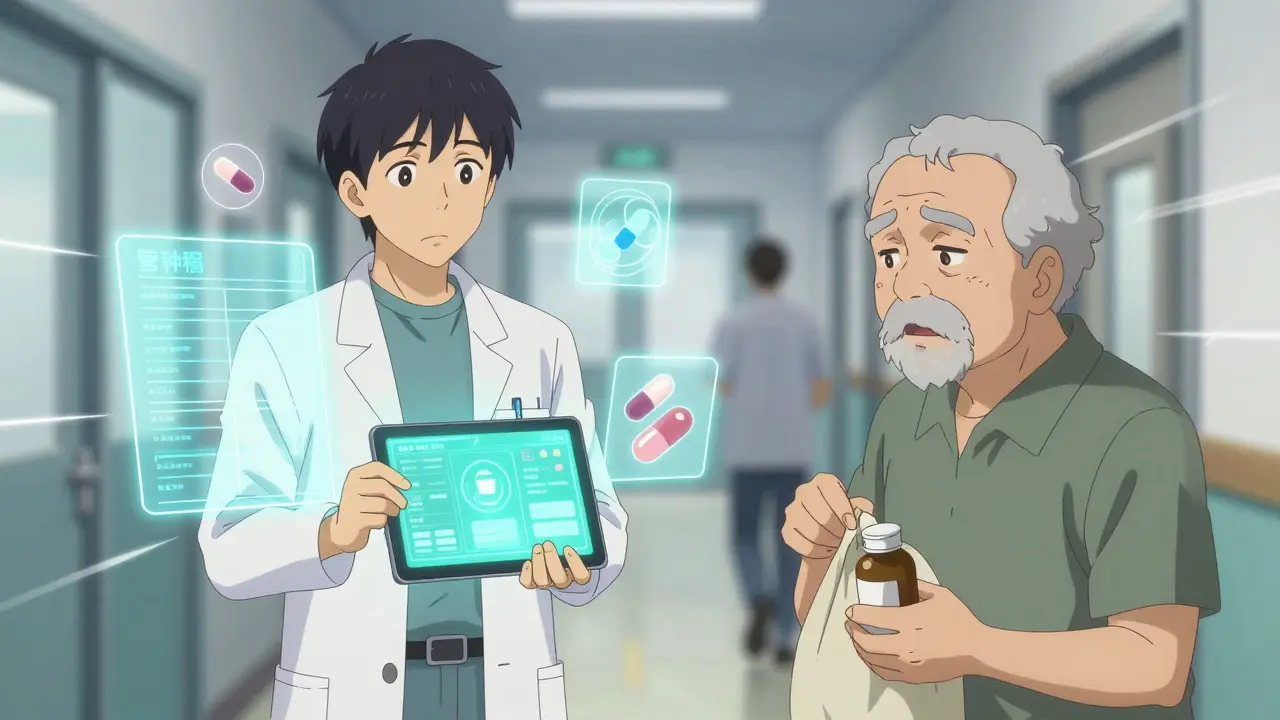
Every year, medication errors during care transitions send hundreds of thousands of patients back to the hospital - not because their condition got worse, but because the wrong pill was given, or the right one was missed. This isn’t rare. It’s systemic. Around 60% of all medication mistakes happen when patients move between hospitals, nursing homes, clinics, or home care. And most of these errors are preventable.
Why Medication Errors Happen During Transitions
Think about what happens when someone leaves the hospital. They’re handed a stack of papers with new prescriptions. Maybe they’re told to stop one drug, start another, or change the dose. But did the hospital tell their family doctor? Did the pharmacy get the right list? Did the patient even understand what they’re supposed to take? The problem isn’t just bad paperwork. It’s broken communication. A 2023 study found that 78% of medication errors during transitions come from information gaps between providers. A patient might be on warfarin at home, but the admitting nurse doesn’t know because the hospital’s system didn’t pull in data from their community pharmacy. Or worse - the EHR shows they’re on it, but the pharmacy records say they stopped it six months ago. That mismatch can cause a dangerous bleed. Even when systems are in place, people cut corners. One internal medicine resident in Boston told the American College of Physicians forum that her hospital’s electronic reconciliation tool adds 12 to 15 minutes per patient at admission. With 20 patients a day, that’s five extra hours of work. So staff skip steps. They rely on memory. They ask patients, “What meds are you on?” - and take the answer at face value, even if the patient says, “I think I take that blue pill once a day.”What Medication Reconciliation Actually Means
Medication reconciliation isn’t just copying a list from one form to another. It’s a process - a careful, step-by-step check that makes sure every medication a patient takes is accounted for, understood, and correctly ordered at every handoff: admission, transfer, and discharge. The Joint Commission has required this since 2005. The World Health Organization calls it a core part of its global safety campaign, Medication Without Harm. And here’s how it works in practice:- Get the best possible medication history. Don’t just ask the patient. Call their pharmacy. Check their primary care records. Look at old discharge summaries. Use tools that pull data from multiple sources.
- Create a list of what’s currently prescribed. Include over-the-counter drugs, vitamins, herbal supplements - everything. Patients often forget these, but they can interact dangerously with prescriptions.
- Compare it to what’s ordered. Is the patient still supposed to take metformin if their kidney function dropped? Should they really be on two blood thinners? This is where clinical judgment kicks in.
- Document and communicate the changes. The new list must go to the next provider - whether it’s a rehab center, a home nurse, or the patient’s own doctor. And the patient needs to understand it.
Technology Helps - But It’s Not a Fix
EHRs, barcode scanning, and clinical decision support tools have cut medication errors by nearly half in some hospitals. But they’re not magic. In fact, when new systems are rolled out, errors often spike. The MARQUIS study found that during the first six months after an EHR upgrade, medication discrepancies increased by 18%. Why? Because staff were learning a new system. They didn’t know where to find the right fields. They didn’t know who was responsible for what. And patients weren’t involved. The best results come from combining technology with human action. A 2023 study in the Journal of the American Pharmacists Association showed that when pharmacists lead reconciliation at discharge, post-hospital errors drop by 57%. And readmissions fall by 38% within 30 days. But here’s the catch: only 28% of facilities consistently involve patients in the process. And only 37% of U.S. hospitals can electronically share medication data with community pharmacies. That means most of the time, pharmacists are still calling pharmacies by phone - manually - to verify what a patient is really taking.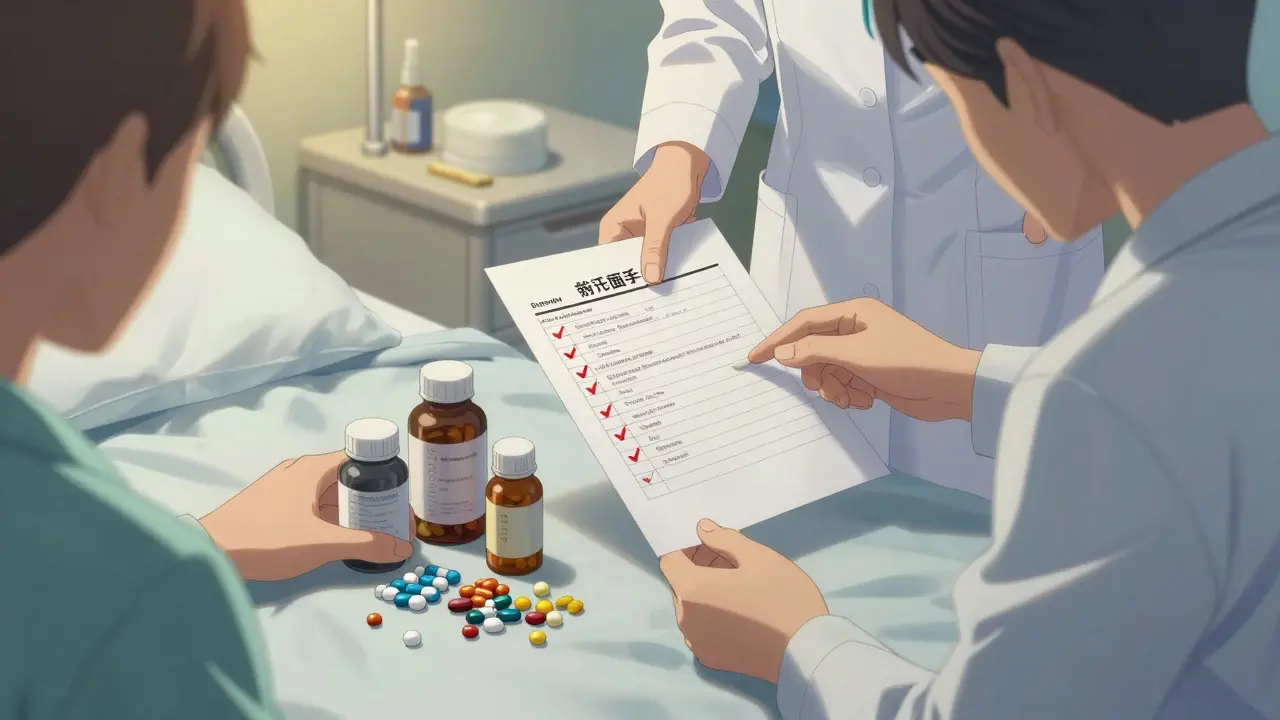
The Role of Pharmacists and Clear Roles
This isn’t a task for nurses or doctors to squeeze in between rounds. Medication reconciliation needs ownership. The American Society of Health-System Pharmacists says facilities with dedicated transition pharmacists see 53% fewer adverse drug events. One pharmacist in Chicago told me: “Catching a duplicate anticoagulant order during discharge that would have caused a major bleed is why I do this work.” That’s not a fluke. That’s a result of having someone whose job it is to double-check every dose, every interaction, every gap. But roles must be clear. The MARQUIS study found that when staff were trained to take medication histories but no one was assigned responsibility, harmful discrepancies actually went up by 15%. That’s worse than doing nothing. The fix? Assign one person - usually a pharmacist - to own reconciliation at each transition point. Give them time. Give them access to the right systems. And make sure they’re part of the discharge planning team from day one.What Patients Need to Know
Patients aren’t just passive recipients. They’re the last line of defense. A 2024 Kaiser Family Foundation survey found that 72% of patients don’t understand why their medication list matters during transitions. But 85% of those who actually participated in the reconciliation process - who were asked to bring their pills to the hospital, who were shown the updated list, who were told why changes were made - felt more confident. Simple actions make a difference:- Ask patients to bring all their medications - bottles and all - to every appointment.
- Give them a printed, plain-language list of what to take, when, and why.
- Ask them to repeat back the changes in their own words.
- Connect them with their pharmacist before they leave the hospital.
Implementation Is Hard - But Doable
You can’t fix this overnight. Most hospitals need 6 to 9 months to roll out a full reconciliation program. The AHRQ’s MATCH toolkit lays out a 12-step plan that includes training, workflow redesign, and role definition. Here’s what works:- Start with high-risk patients. Those on five or more medications, with kidney or liver issues, or taking blood thinners. These are the ones most likely to be harmed.
- Embed reconciliation into existing workflows. Don’t add a new step. Build it into admission paperwork, shift handoffs, and discharge checklists.
- Measure what matters. Track how many discrepancies you catch. How many readmissions drop? How many patients report understanding their meds?
- Use the MATCH toolkit. Hospitals that followed all 159 recommendations saw a 63% drop in errors - far better than those relying only on EHRs.
What’s Next
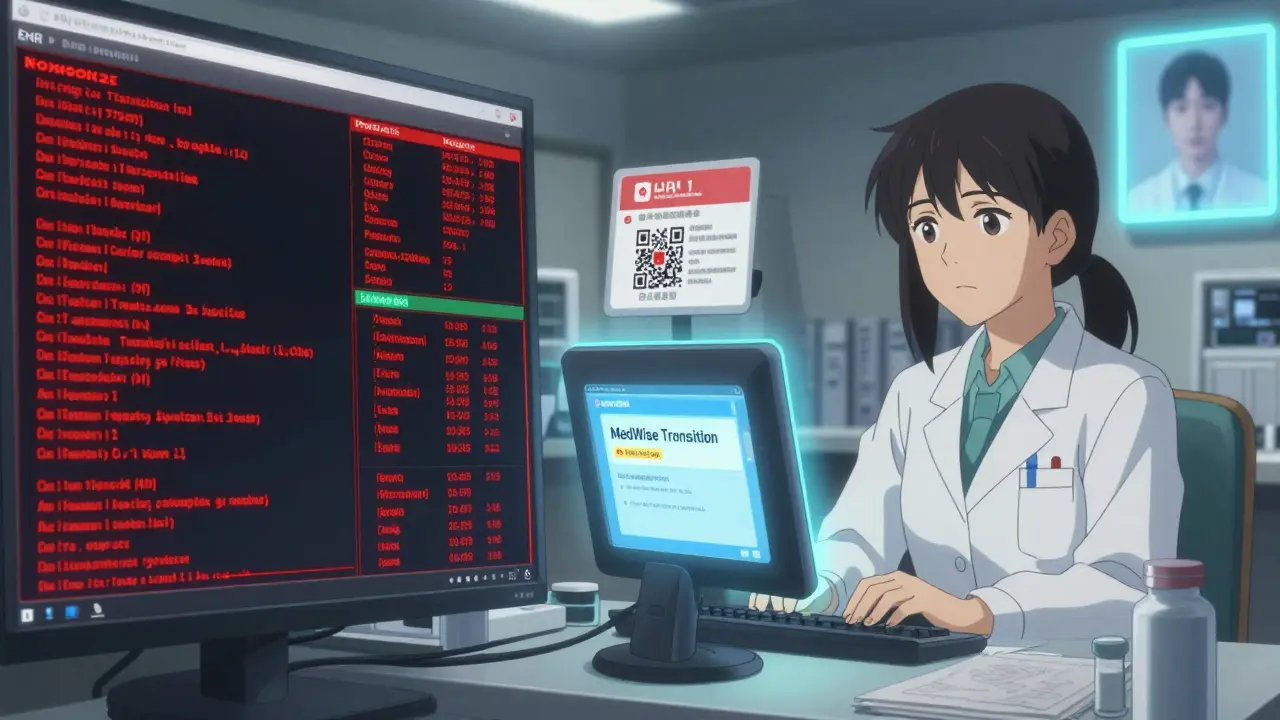
The future is moving fast. In February 2024, the Institute for Safe Medication Practices released Best Practice 21, which now explicitly targets transitions of care. The WHO’s second phase of Medication Without Harm, launched in late 2024, sets a goal to cut harm in high-risk transitions by 30% by 2027. New tools are emerging too. MedWise Transition, an AI-powered reconciliation system cleared by the FDA in August 2024, reduced discrepancies by 41% in a 12-hospital pilot. It flags interactions, duplicates, and dose errors in real time. But no tool replaces a well-trained team and a patient who knows their own meds. The goal isn’t perfection. It’s protection. Every error prevented is someone who doesn’t end up back in the ER. Someone who doesn’t have a stroke because they were double-dosed on aspirin. Someone who gets to go home - safely.Frequently Asked Questions
What is medication reconciliation and why is it important during discharge?
Medication reconciliation is the process of comparing a patient’s current medications with what’s been ordered for them during a care transition - like going from hospital to home. It’s crucial because up to 60% of medication errors happen during these handoffs. Without it, patients might get duplicate drugs, wrong doses, or miss critical medications entirely - leading to hospital readmissions, dangerous side effects, or even death.
Who is responsible for medication reconciliation at discharge?
Pharmacists are the most effective professionals to lead this process. Studies show that when pharmacists manage discharge reconciliation, medication errors drop by 57% and readmissions fall by 38%. But responsibility must be clearly assigned. If no one owns the task, staff may skip steps, leading to more errors. Nurses and physicians can help gather information, but the final review and verification should be done by someone trained in medication therapy management.
Can electronic health records (EHRs) prevent all medication errors?
No. While EHRs with clinical decision support can reduce errors by up to 32%, they can also increase discrepancies during implementation - by as much as 18% in the first six months. Many systems don’t talk to community pharmacies, so pharmacists still have to call them manually. EHRs are tools, not solutions. They work best when combined with trained staff, clear workflows, and patient involvement.
How can patients help prevent medication errors?
Patients can bring all their medications - including vitamins and supplements - to every appointment. They should ask for a written, easy-to-read list of what to take after discharge. They should be asked to repeat back their new regimen in their own words. Studies show that when patients are involved, 85% feel more confident about their meds, and errors drop. Don’t assume staff know what you’re taking - speak up.
What are the biggest challenges in implementing medication reconciliation?
The biggest challenges are time, communication gaps, and unclear roles. Staff often say they don’t have enough time - reconciliation can take 15-20 minutes per patient, but many facilities only allow 8-10. Many hospitals can’t electronically share data with community pharmacies, forcing staff to make dozens of phone calls. And without clear ownership - like assigning one pharmacist to lead the process - errors increase. Resistance from physicians and poor EHR integration also slow progress.
Are there any new tools or technologies improving medication safety?
Yes. In August 2024, the FDA cleared MedWise Transition, an AI-powered tool that analyzes a patient’s full medication list and flags potential interactions, duplications, and inappropriate dosing. In a 12-hospital pilot, it reduced discrepancies by 41%. Other tools include automated alerts in EHRs that trigger when a patient’s medication list doesn’t match pharmacy records. But these tools are most effective when used by trained staff - not as replacements for human judgment.
Comments
Monte Pareek
Let me tell you something real - medication reconciliation isn’t a checklist, it’s a culture. I’ve seen hospitals spend millions on EHRs and still have nurses guessing what patients are taking because no one bothered to train them on how to use the damn system. The real win? When a pharmacist walks into a room with a patient’s full med list, including that fish oil they got from the gas station, and catches a warfarin interaction before discharge. That’s not tech. That’s accountability. And it’s not optional. It’s the difference between someone going home and someone ending up in the ICU because someone thought ‘I’ll just ask later.’
Stop treating this like admin work. It’s clinical work. And if your hospital doesn’t have a pharmacist leading discharge reconciliation, you’re not just cutting corners - you’re gambling with lives.
Dev Sawner
It is a well-documented fact that 60% of medication errors occur during transitions, as per the Joint Commission’s 2023 meta-analysis. The root cause, however, is not technological deficiency but systemic negligence in adhering to standardized protocols. The MARQUIS study, published in the Journal of Patient Safety, clearly indicates that human error rates increase when responsibilities are ambiguously distributed. Therefore, the solution is not additional software, but strict enforcement of WHO’s Medication Without Harm guidelines, with penalties for non-compliance.
Furthermore, patient involvement is statistically insignificant unless mediated by certified medication therapy management professionals. The notion that patients can reliably self-report their regimens is a dangerous fallacy, especially in populations with low health literacy. Empowerment without education is merely performative.
Connie Zehner
OMG I just had to comment!! I’m a nurse and this is SO TRUE 😭 My grandma got discharged last month and they gave her a new script for blood pressure but didn’t tell her to stop the old one?? She took both for 3 days and ended up in the ER 😭 I had to call the hospital 7 times and they acted like it was no big deal 😤 I’m so tired of this!!
Also, why don’t they just use like, a QR code on the pill bottle that links to a video?? Like, my cousin’s dog has a microchip that tells his whole medical history - why can’t people??
Kelly Mulder
Let’s be brutally honest - most hospitals treat reconciliation like a box to tick. The ‘printed list’ they hand you? It’s printed in 6-point font with no bolding, no color coding, and no context. Meanwhile, the pharmacy gets a faxed copy that’s been scanned so poorly the ‘5mg’ looks like ‘50mg.’ And you wonder why people die? It’s not incompetence - it’s institutional contempt. They don’t care. They’re overworked, underpaid, and the system is designed to fail. And don’t even get me started on the ‘patient education’ pamphlets written by interns who think ‘anticoagulant’ is a type of dessert.
Kitt Eliz
YESSSSS THIS IS THE ENERGY WE NEED!! 🙌💊 Pharmacists are the unsung heroes of discharge planning and we need to stop treating them like glorified pill counters. When I worked in Chicago, our transition pharmacist caught a duplicate DVT prophylaxis order that would’ve turned a 78-year-old into a human pincushion. That’s not luck - that’s expertise. We need to fund these roles like we fund ER trauma teams. Stop asking nurses to do 3 jobs at once. Give pharmacists the time, the tools, and the authority. And yes - patients bringing their meds in a bag? That’s not ‘quirky,’ that’s PROTOCOL. 🚨 Let’s make this the new standard - not the exception.
Sahil jassy
Been doing this for 15 years in rural India. No EHR, no barcode scanners, just a notebook and a phone. You learn to listen. You learn to ask ‘what color is the pill?’ and ‘who gave it to you?’ Sometimes the answer is ‘my son, he bought it from the market.’ That’s your red flag. You don’t need fancy tech. You need someone who cares enough to follow up. I’ve saved lives just by calling the local pharmacy and asking if they sold them warfarin last week. Simple. Human. Effective.
Kathryn Featherstone
I work in a small clinic and we started having patients bring their meds in a ziplock bag on discharge day. It sounds silly, but it changed everything. One woman brought 17 bottles - half were expired, three were from different doctors, and one was her neighbor’s blood pressure med. We caught a dangerous interaction between her new antidepressant and the OTC cold pill she’d been taking for months. No tech. Just a quiet conversation. That’s reconciliation. Not a form. Not a system. A moment of attention.
anthony funes gomez
Medication reconciliation as a ritual - it’s a modern sacrament in a system that has forgotten the sanctity of the body. The EHR is a cathedral built on sand, its arches supported by the prayers of overworked clerks who type faster than they think. We mistake automation for wisdom. We mistake data for understanding. But the pill, the dose, the timing - these are not data points. They are thresholds between life and death. And when we outsource our moral responsibility to algorithms, we become complicit in the erosion of care. The pharmacist who calls the pharmacy? That’s not a job. That’s a vow.
Marsha Jentzsch
Okay but have you ever wondered if this is all a big pharma scam?? Like… what if they WANT people to mess up their meds so they keep coming back for more pills?? I read this one blog that said the FDA approves drugs just to make sure hospitals have to keep doing reconciliation to keep the money flowing. And why do they never tell you about the side effects? It’s all controlled. I saw a video of a nurse laughing while giving someone a new script - she knew what she was doing. They’re all in on it.
Henry Marcus
They say ‘technology helps’ - but let’s be real, the EHR is a dumpster fire wrapped in a PowerPoint. I’ve seen systems that auto-fill ‘aspirin’ into every discharge list because the default setting is ‘cardiac.’ One guy got aspirin after a GI bleed. He survived. Lucky. Meanwhile, the ‘patient education’ video is narrated by a robot voice that says ‘take this medication at the same time every day’ while playing elevator music. It’s not healthcare. It’s corporate theater. And the real solution? Fire the vendors. Hire the pharmacists. And let the patients hold the damn bottles.
Janelle Moore
They don’t want you to know this, but the real reason medication errors are so common is because the government doesn’t fund proper training - it’s all about saving money. They’d rather you die quietly than spend $200K on a pharmacist. And the QR code thing? That’s just a distraction. The truth is, they’re hiding something. I’ve seen the memos. It’s not about safety. It’s about liability. They don’t want you to know how many people die because of this. And they’ll keep lying until you stop asking.