
Knowing how to dispose of expired EpiPens, inhalers, and medicated patches isn’t just about cleaning up your medicine cabinet-it’s about keeping your family, your community, and the environment safe. These aren’t ordinary pills you can toss in the trash. Each one carries risks: sharp needles, pressurized chemicals, or powerful drugs that can harm kids, pets, or waterways if handled wrong. And yes, improper disposal is more common than you think. A 2022 survey by the Asthma and Allergy Foundation found that 42% of people threw expired EpiPens in the regular trash. That’s not just careless-it’s dangerous.
Why You Can’t Just Toss Them
EpiPens contain a needle that’s still active even after use. If someone picks up a discarded auto-injector from the trash, they could get stuck. Inhalers? Those little canisters are pressurized. If they’re crushed, thrown into a compactor, or left near heat, they can explode. And medicated patches? Even after they’ve been used, they still hold enough medication to cause an overdose if a child sticks it to their skin. The FDA reports that 12% of accidental poisonings in kids involve improperly thrown-away meds. This isn’t a hypothetical risk. It’s happening right now, in neighborhoods across the country.How to Dispose of Expired EpiPens
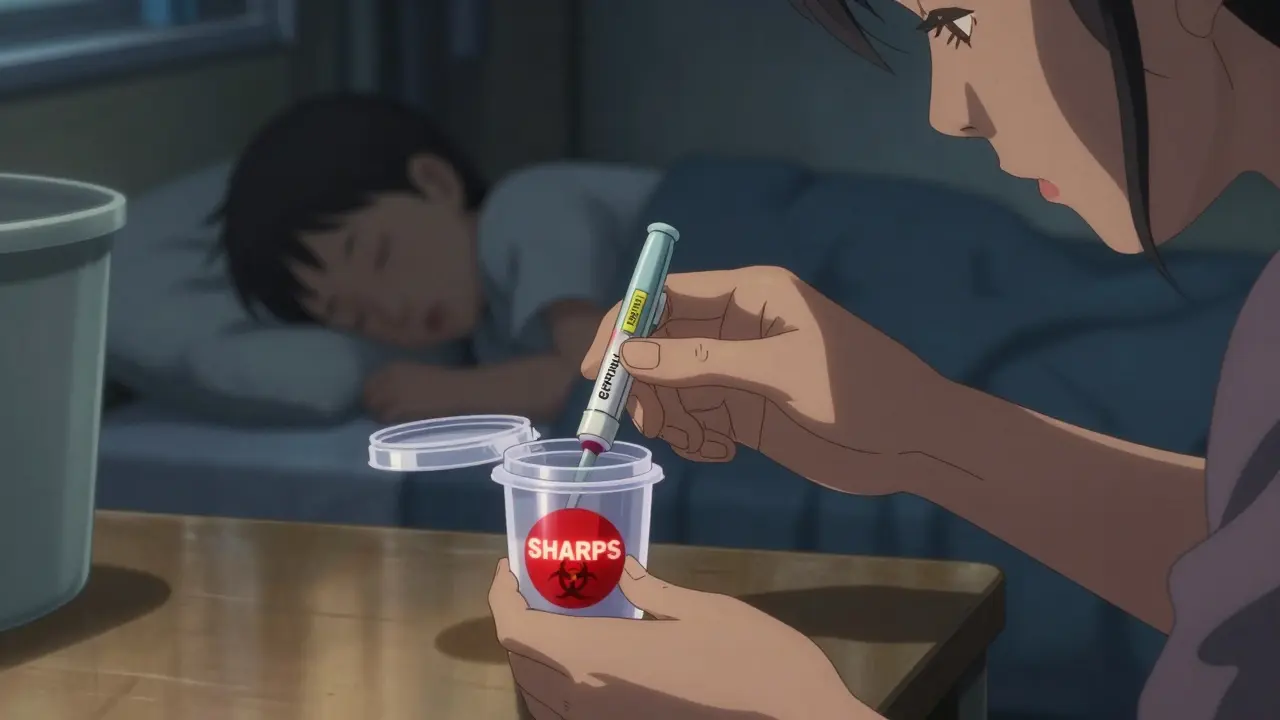
EpiPens are classified as medical sharps by the FDA. That means they need the same handling as syringes or lancets. The safest option is to return them to the place where you got them-your doctor’s office, clinic, or pharmacy. Many allergists keep sharps containers specifically for expired auto-injectors. If you’re getting a new EpiPen, ask if they’ll take the old one. No questions asked. One Reddit user shared, “My allergist’s office has a sharps bin specifically for expired EpiPens-they took mine no questions asked.” If your provider doesn’t offer this, check for a DEA-registered drug take-back location. The DEA’s National Take Back Initiative lists over 14,000 collection sites nationwide. You can find one near you at takebackday.dea.gov. Hospitals and some pharmacies also run drop-off programs. In states like California, you’re required to use a certified sharps collection center or mail-back program. Texas, on the other hand, allows disposal in household trash-if you contain it properly. For home storage before disposal, put the EpiPen in a hard plastic container like an empty laundry detergent bottle. Screw the lid on tight. Label it clearly: “SHARPS,” “BIOHAZARD,” and “DO NOT RECYCLE.” Never put loose EpiPens in a recycling bin. Even an empty device still has a sharp needle inside.What to Do With Expired Inhalers
Inhalers are trickier. The canister isn’t just empty plastic-it’s pressurized with propellant gas. If punctured, it can release that gas into the air. Some propellants are greenhouse gases. The American College of Allergy, Asthma, and Immunology estimates 300 million inhalers are thrown away every year in the U.S. alone. Most end up in landfills or incinerators, contributing to emissions. The best move? Contact your local waste management department. Some cities, like New York City, have special drop-off sites for aerosols. Walgreens and CVS accept inhalers at select locations, but not everywhere. A 2022 survey found only 47% of Walgreens stores took them. Don’t assume your local pharmacy does-call ahead. If no take-back option exists, remove the metal canister from the plastic mouthpiece. The plastic part can go in recycling if your program accepts #1 or #2 plastics. The metal canister? Check with your city’s hazardous waste program. Some allow it in regular trash if you puncture it first with a can puncturing device (sold at hardware stores). But never do this unless you’re sure it’s allowed.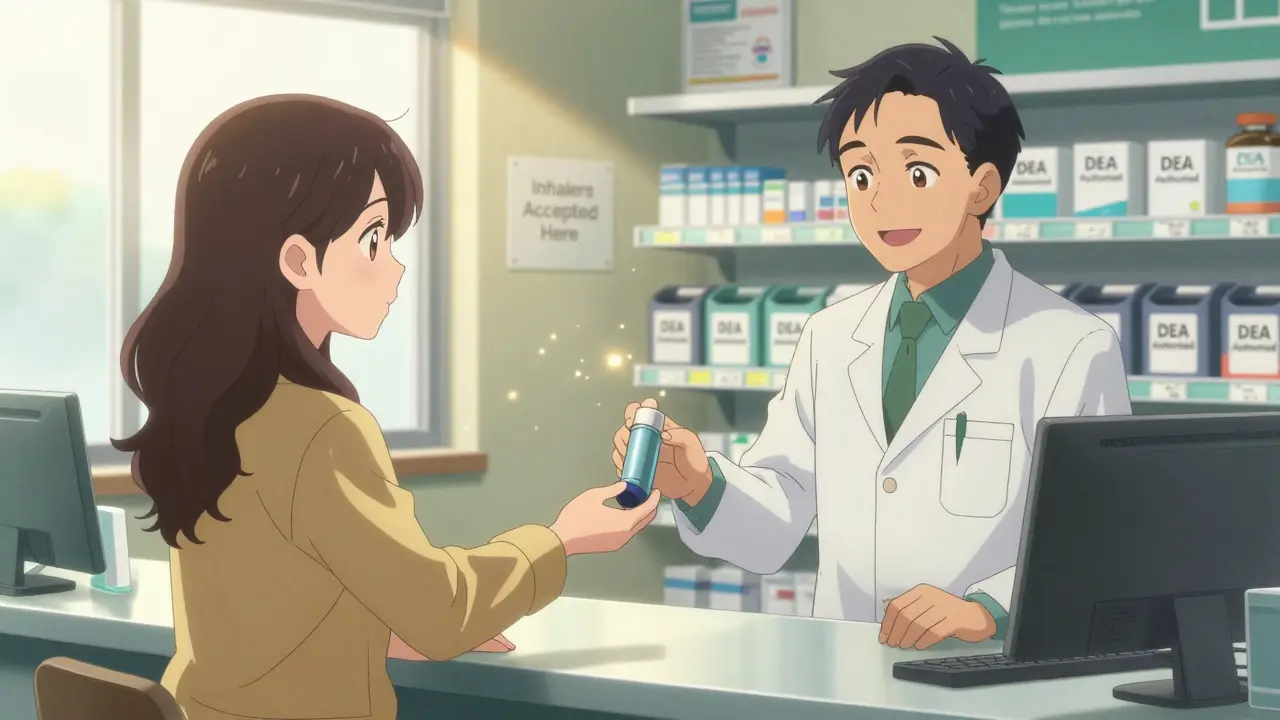
Disposing of Medicated Patches
Medicated patches-like nicotine, fentanyl, or pain relief patches-are among the most dangerous if thrown away carelessly. Even after use, they retain up to half their original dose. That’s enough to kill a child or pet. The FDA has a flush list of medications that should be flushed immediately down the toilet. Fentanyl patches are on that list. So are some opioids. Why? Because they’re so potent, and accidental exposure can be fatal. If your patch is on the flush list, fold it in half with the sticky sides together and flush it. No waiting. No storing. Flush it now. If it’s not on the list (like a nicotine patch), fold it in half, sticky side to sticky side, and put it in a sealed container. Then mix it with something unpleasant-used coffee grounds, kitty litter, or dirt. Put that in a sealed bag and throw it in the trash. This makes it unappealing and hard to retrieve. Some pharmacies now offer DisposeRx® packets. These are little pouches you add water to, and they turn meds into a gel that can’t be reused. But CVS says these aren’t recommended for patches. Stick with folding and flushing or mixing with litter.What About Take-Back Days?
The DEA runs two National Prescription Drug Take Back Days each year-usually in April and October. In October 2022 alone, over 985,000 pounds of meds were collected across 5,800 locations. That’s more than half a million EpiPens, inhalers, and patches safely removed from homes. Law enforcement agencies, police stations, and some pharmacies host these events. You don’t need an ID. You don’t need a prescription. Just bring your expired or unused meds in a bag. They’ll take everything: pills, patches, inhalers, even EpiPens. If you miss the big days, don’t wait. Use the DEA’s online locator to find permanent drop-off sites near you. Rural areas have fewer options-only 37% of rural counties have permanent disposal locations, compared to 89% in cities. If you live in a rural area, ask your pharmacist or doctor if they can hold onto your expired devices until the next take-back event.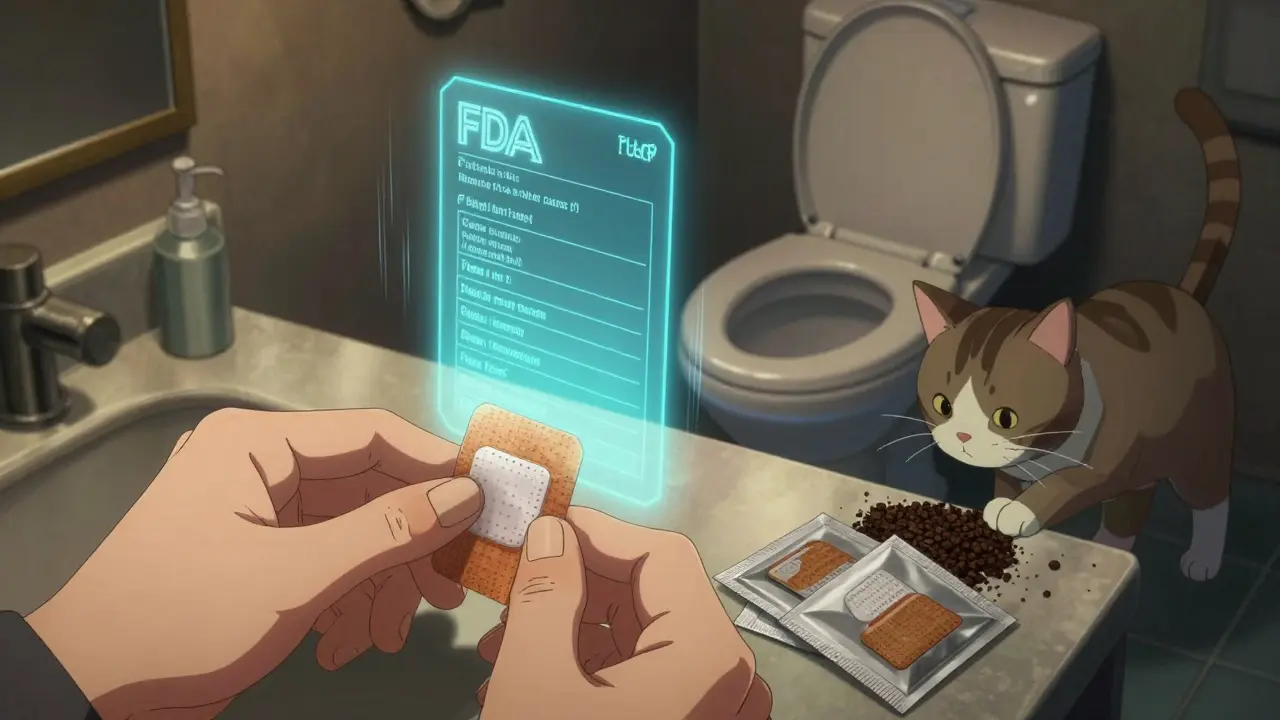
What Not to Do
Don’t flush anything unless it’s on the FDA’s flush list. Flushing non-listed meds contaminates waterways. The USGS found pharmaceuticals in 80% of tested streams and rivers. Don’t put sharps in recycling bins. Don’t break open inhalers. Don’t leave patches lying around. Don’t assume your local trash service handles medical waste. And don’t wait until you have five expired devices to deal with them. Check your medicine cabinet once a month. Set a reminder on your phone: “Check expiration dates.”What’s Changing?
The rules are getting stricter-and better. California passed SB 212 in January 2024, requiring drug makers to pay for disposal programs. Mylan, the maker of EpiPens, started adding QR codes to packaging that link directly to disposal instructions. More pharmacies are installing take-back bins. The EPA is pushing new rules under the Resource Conservation and Recovery Act to treat pharmaceutical waste more like hazardous material. These changes won’t fix everything overnight, but they’re moving us in the right direction.Final Checklist
- Check expiration dates monthly
- Store expired devices in a sealed, labeled sharps container
- Return EpiPens to your doctor or pharmacy first
- Use the DEA’s online locator to find drop-off sites
- Flush fentanyl patches immediately
- For other patches: fold sticky sides together, mix with coffee grounds or cat litter, seal in bag
- Call your city’s waste department before disposing of inhalers
- Never recycle EpiPens or inhalers
Proper disposal isn’t optional. It’s a responsibility. One misplaced patch, one broken inhaler, one unsecured EpiPen-could be the difference between safety and tragedy. Don’t wait for someone else to fix it. Do it yourself. Now.
Can I throw expired EpiPens in the regular trash?
No. EpiPens contain a needle and are classified as medical sharps. Throwing them in the trash risks injury to sanitation workers and children. If your state allows it (like Texas), you must place the EpiPen in a puncture-proof container, label it clearly as "SHARPS" and "BIOHAZARD," and seal it tightly. Even then, it’s safer to use a take-back program.
Do pharmacies take back expired inhalers?
Some do, but not all. Walgreens and CVS accept inhalers at select locations, but availability varies by state. A 2022 survey found only 47% of Walgreens stores accepted them. Always call ahead. If your pharmacy doesn’t take them, check with your city’s hazardous waste program or look for a DEA take-back site.
Why should I flush fentanyl patches?
Fentanyl patches contain a highly potent opioid. Even after use, they retain enough medication to cause a fatal overdose if a child or pet finds and sticks it to their skin. The FDA lists fentanyl patches as one of the few medications that should be flushed immediately to prevent accidental exposure. This is the only exception to the rule against flushing meds.
Can I recycle the plastic part of an inhaler?
Sometimes. Remove the metal canister (which contains the medicine and propellant) and check the recycling code on the plastic mouthpiece. If it’s #1 or #2 plastic and your local recycling program accepts it, you can recycle the plastic. But never recycle the metal canister-it must be disposed of as hazardous waste or taken to a special collection site.
Are there free disposal programs for EpiPens?
Yes. DEA-registered take-back sites, hospitals, and many allergist offices accept expired EpiPens at no cost. The DEA’s National Take Back Day events are free and open to the public. Some pharmacies also offer free sharps disposal bins. You don’t need insurance or a prescription-just bring the device. If you’re unsure, call your local pharmacy or visit takebackday.dea.gov.
Comments
Chris Crosson
Just wanted to say this post saved my life last year. My kid found an old fentanyl patch in the couch cushion-thank god we’d already read up on this stuff. I didn’t even know patches could still be lethal after use. Now I check my cabinet every Sunday. Simple habit, huge difference.
Kevin Siewe
For anyone in rural areas: my local pharmacy started keeping a sharps container behind the counter. No questions, no forms, just drop it in. They even give you a free replacement container if you pick up a new EpiPen. Small things like this make compliance way easier than waiting for a national event.
Elaine Parra
Let’s be real-this whole ‘dispose responsibly’ campaign is just corporate greenwashing. Drug companies make billions off these devices and then pretend they care about the environment. If they really wanted to fix this, they’d design non-pressurized inhalers and biodegradable patches. But nope. Profit over planet. Again.
Chris Farley
So now we’re criminalizing people for having expired meds? What’s next-jail time for keeping an old Advil? This is how authoritarianism creeps in. ‘Don’t flush, don’t recycle, don’t toss, don’t breathe.’ They want us to live in sterile, compliant bubbles. I’m keeping my EpiPen in a sock drawer. Let them come get it.
Anil Arekar
As someone from India, I must say this level of public health awareness is commendable. In many parts of South Asia, expired medications are often stored indefinitely or discarded carelessly. The clarity of your guidelines-especially regarding fentanyl patches and sharps containment-is invaluable. Perhaps this model could be adapted for low-resource settings with community pharmacy partnerships.
Rama Rish
just flush the damn patch if its on the list. i did. no regrets. my aunt almost lost her cat last year cause she tossed a patch in the trash. now she flushes. simple.
Mihir Patel
wait so i can recylce the plastic part of my inhaler?? i did that last week and felt so guilty 😅 i hope i didnt mess up the envirnment
Kevin Siewe
You’re good! Just make sure the metal canister is removed first. The plastic’s usually #1 or #2-most curbside programs take it. The canister? That’s the real hazard. Take it to a hazardous waste site or call your city. You did better than 90% of people.