
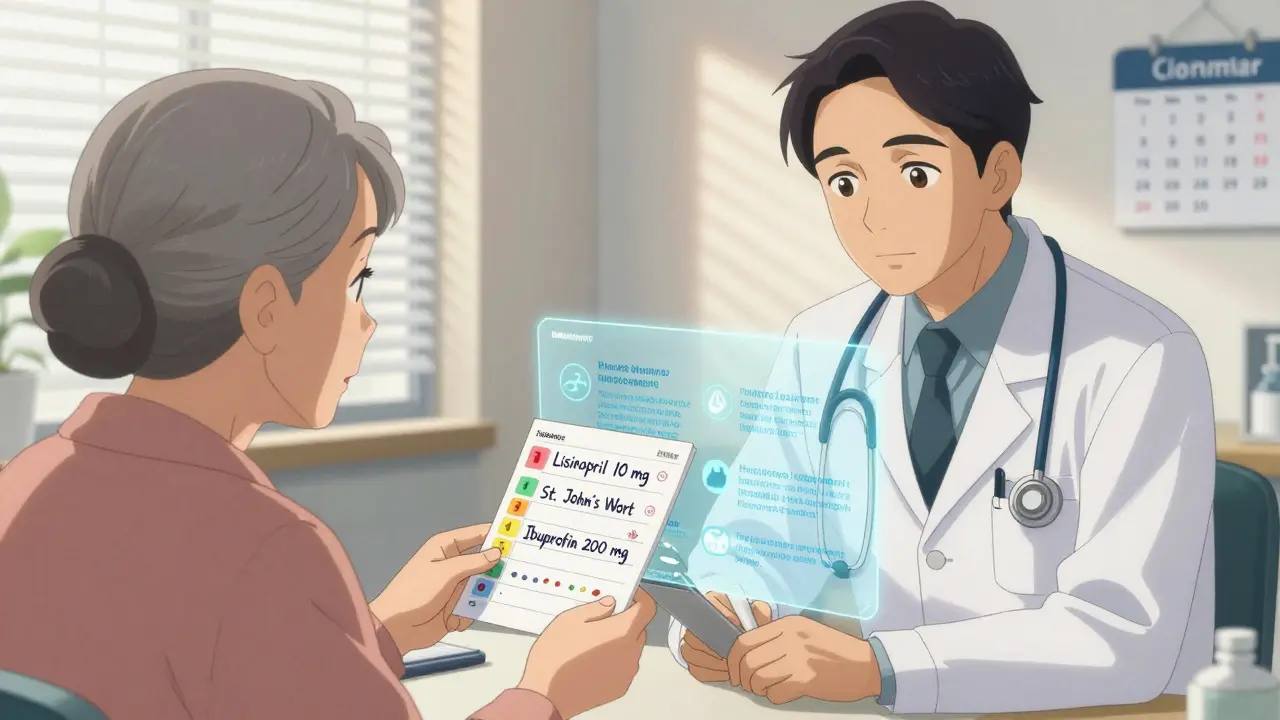
Every year, tens of thousands of people end up in the hospital because of drug interactions - many of which could have been avoided with a simple, updated list of everything they’re taking. It’s not just about prescriptions. It’s the vitamins, the herbal supplements, the painkillers you grab off the shelf, even the antacids you take after dinner. If you’re on five or more medications - and if you’re over 65, you likely are - this isn’t optional. It’s life-saving.
What Goes on a Complete Medication List?
A complete medication list isn’t just a scribble on a napkin. It needs details. For every item, write down:- Exact name - both brand and generic. Don’t write "blood pressure pill." Write "Lisinopril 10 mg" or "Norvasc 5 mg."
- Dosage - how much you take each time. "10 mg," not "one pill."
- Frequency - once daily? Twice a day? Every 8 hours?
- Route - taken by mouth? Injected? Applied to skin?
- Why you take it - "for high blood pressure," "for arthritis pain," "for sleep."
- Start date - when did you begin taking it?
- Prescribing provider - who wrote the prescription? Your GP? Cardiologist? Dentist?
- Special instructions - "Take on empty stomach," "Avoid grapefruit," "Take with food."
And don’t forget the stuff people leave out: over-the-counter meds like Tylenol, Advil, or Pepto-Bismol; vitamins like Vitamin D3 2000 IU; herbal supplements like St. John’s Wort or turmeric capsules; even eye drops or topical creams. These aren’t "just natural" - they can clash with your prescriptions. St. John’s Wort, for example, can make blood thinners like warfarin useless or dangerously strong. One missed item can be the difference between safety and a trip to the ER.
Why Paper Lists Often Fail
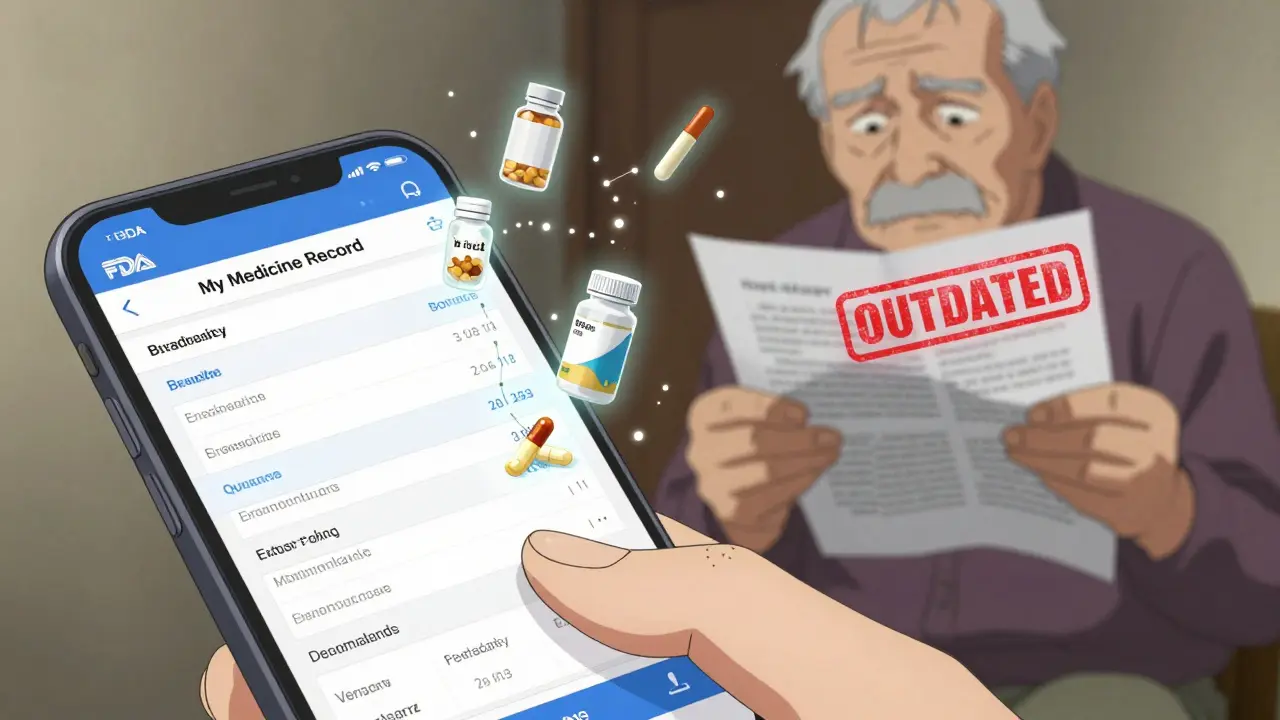
Many people keep a paper list in their wallet. It sounds simple. But here’s the problem: 62% of these lists are outdated or incomplete when used in emergencies, according to a 2022 study in the Journal of Patient Safety. People forget to update them. They lose them. They write "aspirin" but not "81 mg enteric-coated." They don’t include supplements because they don’t think they matter.And when you hand a doctor a folded-up piece of paper during a 10-minute appointment, they’re often too rushed to read it carefully. In fact, 63% of providers don’t even ask for a list unless the patient brings it up first - according to MedlinePlus data from 2023. That means you have to be the one to push for it.
Digital Lists Work Better - But Only If You Keep Them Updated
Smartphone apps like Medisafe or MyMeds are more accurate - 78% correct in studies - because they let you take a photo of your pill bottle, set reminders, and auto-update when you change doses. But here’s the catch: 23% of adults over 65 don’t own smartphones, according to Pew Research Center (2023). And even if you do use an app, if you don’t update it within 24 hours of a new prescription or a dose change, it’s useless.The best digital tool? The FDA’s free My Medicine Record form. It’s printable, fillable, and designed for real-world use. You can save it on your phone, email it to yourself, or print a copy to carry. No app required. No login. No tech skills needed.
Use One Pharmacy - It’s Your Secret Weapon
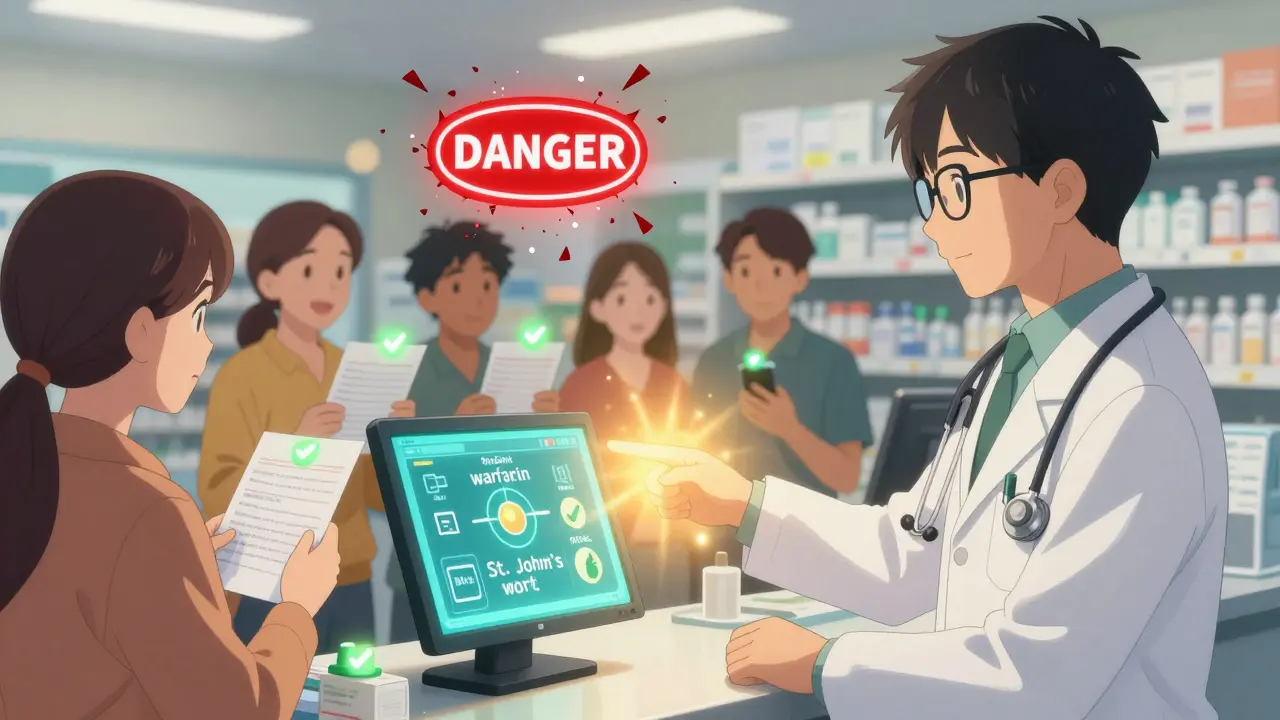
If you fill all your prescriptions at one pharmacy - not one for blood pressure, another for diabetes, another for pain - you gain a powerful safety net. Pharmacists are trained to spot interactions. Their systems check every new prescription against everything else you’re taking, including OTC meds and supplements you’ve told them about.Pharmacies catch 92% of major drug interactions, according to FDA data from 2022. That’s higher than most electronic health records. But only if you tell them everything. If you say, "I don’t take anything else," and then pop a melatonin capsule at night, they won’t know. So when you pick up a new script, say: "I’m on these other things - can you check for interactions?"
What Providers Don’t Tell You - But Should
Doctors don’t always know what’s in your medicine cabinet. A 2023 NIH study found that electronic health records capture only 45% of over-the-counter medications and supplements. That’s because patients rarely mention them. And providers rarely ask.Here’s what you need to say at every appointment - even if they don’t ask:
- "Here’s my updated medication list. I added the new one from the specialist last week."
- "I’m also taking Vitamin D, magnesium, and turmeric."
- "I take ibuprofen when my knees hurt."
- "Could any of these interact?"
- "Should I avoid any foods or drinks?"
Dr. Robert W. Hardy from Harvard Medical School calls failing to share a full list "the single most preventable cause of adverse drug events." And 43% of medication errors happen during transitions - like when you go from hospital to home, or switch doctors. That’s why you need to hand your list to every provider, every time.
Red Flags That Your List Is Out of Date
Ask yourself these questions monthly:- Have I started or stopped any meds in the last 30 days?
- Did my dose change?
- Did my doctor say "stop taking X" - but I still have the bottle?
- Did I buy a new supplement because "it’s good for my joints"?
- Did I take a different brand of ibuprofen because it was cheaper?
If you answered yes to any of those, your list is outdated. And outdated lists are dangerous. The Institute for Safe Medication Practices found that 52% of harmful errors come from medication lists that aren’t current.
What to Do When You’re Seeing Multiple Specialists
If you see a cardiologist, endocrinologist, rheumatologist, and GP - you’re at high risk for conflicting prescriptions. That’s why Dr. Susan L. Smith from ARS Healthcare recommends naming one provider as your medication coordinator. Usually, it’s your primary care doctor. They’re the one who sees the big picture.Send your updated list to them first. Ask them: "Can you review this and let me know if anything overlaps or clashes?" Then bring their feedback to your specialists. This cuts down on duplication - like being prescribed two different blood thinners - and catches hidden interactions.
Real Stories: When the List Saved a Life
On Reddit, a user named "MedSafetyMom" shared how she brought her full list - including St. John’s Wort - to her new cardiologist. He immediately stopped her warfarin dose. The herbal supplement was blocking the blood thinner’s effect. If she hadn’t mentioned it, she could’ve had a stroke. Three other doctors had missed it.On Yelp, over 200 reviews from independent pharmacies in 2023 credited pharmacists with catching dangerous interactions - one caught a deadly combo of metformin and a common cold medicine that raised lactic acid levels. Another noticed a patient was taking three different NSAIDs, putting them at risk for internal bleeding.
These aren’t rare cases. They’re preventable.
How to Make This Stick
You don’t need to be perfect. You just need to be consistent.- Take a photo of every pill bottle when you get a new script. Store them in a folder on your phone. That’s your backup.
- Update within 24 hours of any change - even if it’s just a new dose.
- Review monthly - sit down with a family member or friend and go through your list together.
- Carry a printed copy in your wallet or purse. Even if you use an app, have a paper version.
- Ask questions - "Is this safe with my other meds?" "Is there a cheaper version?" "Should I avoid anything?"
There’s no magic app or system that fixes everything. The only thing that works is you - showing up prepared, speaking up, and refusing to assume that someone else is watching out for you.
What’s Changing in 2026
New rules are coming. The 21st Century Cures Act now requires your health records to include your medication list. The FDA just updated labeling for 120 drugs to include clearer warnings about food and supplement interactions. AI tools like IBM Watson Health are now detecting 94% of serious interactions - but they still rely on the data you give them.By 2026, 75% of digital health systems will expect patients to input their OTC and supplement use through standardized forms. But until then? You’re still the most important part of the system.
Do I really need to include over-the-counter meds and supplements?
Yes. Over-the-counter drugs and supplements cause 30% of serious drug interactions, according to the FDA’s Adverse Event Reporting System. Things like St. John’s Wort, garlic supplements, and even high-dose Vitamin E can interfere with blood thinners, blood pressure meds, and antidepressants. Just because it’s "natural" or sold without a prescription doesn’t mean it’s safe with your other drugs.
What if I forget to bring my list to my appointment?
Don’t wait to be asked. Bring it every time - even if you think it’s the same as last visit. Providers are busy and often don’t review your history unless you remind them. If you forgot your list, call ahead and ask if they can pull up your record. But don’t rely on it - many systems don’t include your OTC meds or supplements. Your list is your best safety net.
Can my pharmacist help me with my medication list?
Absolutely. Pharmacists are trained to catch interactions that doctors might miss. If you fill all your prescriptions at one pharmacy, ask for a free medication review. Many offer this as part of Medicare Part D or private insurance. They’ll check for duplicates, dangerous combos, and even suggest cheaper or safer alternatives. Don’t wait for them to ask - go in and say, "Can you review all my meds?"
What if I take a lot of pills? How do I keep track?
Use a pill organizer with days and times labeled. Set phone reminders. Take a photo of your pill bottles and save them in a folder on your phone. For complex regimens, ask your pharmacist about medication synchronization - a program that lets you pick up all your prescriptions on the same day each month. It reduces confusion and helps you stay on track.
How often should I update my medication list?
Update it within 24 hours of any change - whether it’s a new prescription, a dose change, or stopping a medication. Also, review your entire list once a month. That’s when you’ll catch things you forgot, like a new supplement you started or an old pill you still have in the cabinet. Outdated lists are the #1 reason for preventable drug interactions.
Comments
Brittany Wallace
This is the kind of post that makes me believe in humanity again. 🌱 I’ve seen grandparents forget their meds, or take ‘natural’ supplements that clash with everything - and no one bats an eye. We treat health like a solo sport, but it’s a team game. Pharmacists, doctors, family, even the person at the grocery store who asks if you’re okay - we’re all part of the safety net. Thanks for reminding us to show up, speak up, and not assume someone else is holding the map.
Lori Jackson
The systemic incompetence here is staggering. Patients are expected to act as pharmacists, data entry clerks, and risk assessors while providers outsource liability to the layperson. The FDA’s My Medicine Record? A band-aid on a hemorrhage. The real issue is the fragmentation of care, the absence of interoperable EHRs, and the pathological disincentivization of comprehensive medication reconciliation. This isn’t patient education - it’s patient exploitation dressed as empowerment.
Angela Goree
I don't care what you call it-"natural," "herbal," "dietary supplement"-if it's in your body, it's a drug. And if you're taking it with warfarin or statins? You're playing Russian roulette with your life. I've seen too many people die because they thought "it's just turmeric" or "it's from the store." This isn't about being paranoid-it's about being American. We don't get to be lazy with our health. Period.
sharad vyas
In India, many elderly take Ayurvedic powders and home remedies without telling doctors. I once saw my uncle on blood thinner take ashwagandha for "energy"-no one warned him. He ended up in ICU. This post is not just useful-it’s urgent. Maybe we need community health workers to help translate these lists into local languages and explain why even "harmless" herbs matter. Small steps, big impact.
Sally Denham-Vaughan
I print mine out every month and keep it in my purse next to my keys. My mom’s 78 and still uses a paper list-she says the app "feels like a spy in her pocket." So we do it old-school. I take a pic of each bottle when we refill, write the date on the printout, and read it aloud together. She laughs at me, but last week the pharmacist caught she was doubling up on ibuprofen. Saved her stomach. And mine.
Shruti Badhwar
The notion that patients must bear the full burden of medication reconciliation is not merely inefficient-it is ethically indefensible. The onus should lie with the healthcare infrastructure to aggregate, validate, and cross-reference all pharmacological inputs-prescription, OTC, and supplement-through standardized, interoperable digital frameworks. The current model, which demands that elderly, cognitively overloaded individuals act as human databases, is a failure of institutional responsibility. Until electronic health records are mandated to include patient-reported supplement data with real-time alerts, we are not managing risk-we are merely redistributing it.
Dusty Weeks
i just started taking melatonin and forgot to tell my doc… now i’m paranoid every time i sneeze 😅 but seriously, this post scared me into updating my list. i had no idea st. john’s wort could wreck warfarin. i’ve been taking it for "mood" since 2020. yikes. thanks for the wake-up call. 🙏
Bill Medley
The data is unequivocal. Medication reconciliation at transitions of care reduces adverse drug events by up to 50%. Patient-held lists are not optional adjuncts-they are clinical necessities. Documentation must be standardized, portable, and universally accessible. Failure to implement this standard constitutes a breach of the duty of care.
Hank Pannell
What’s fascinating isn’t just the clinical risk-it’s the epistemological gap. We treat medication as a static list, but it’s a dynamic, evolving narrative of self-care, identity, and survival. That bottle of turmeric? It’s not just a supplement-it’s a ritual, a hope, a cultural anchor. The system ignores that. It wants clean data, not lived experience. But if we want to reduce harm, we have to meet people where they are-not where the algorithm thinks they should be. Maybe the real solution isn’t better apps… but better conversations. One human to another. No jargon. No forms. Just: "What are you taking, and why?" And then-really listening.