
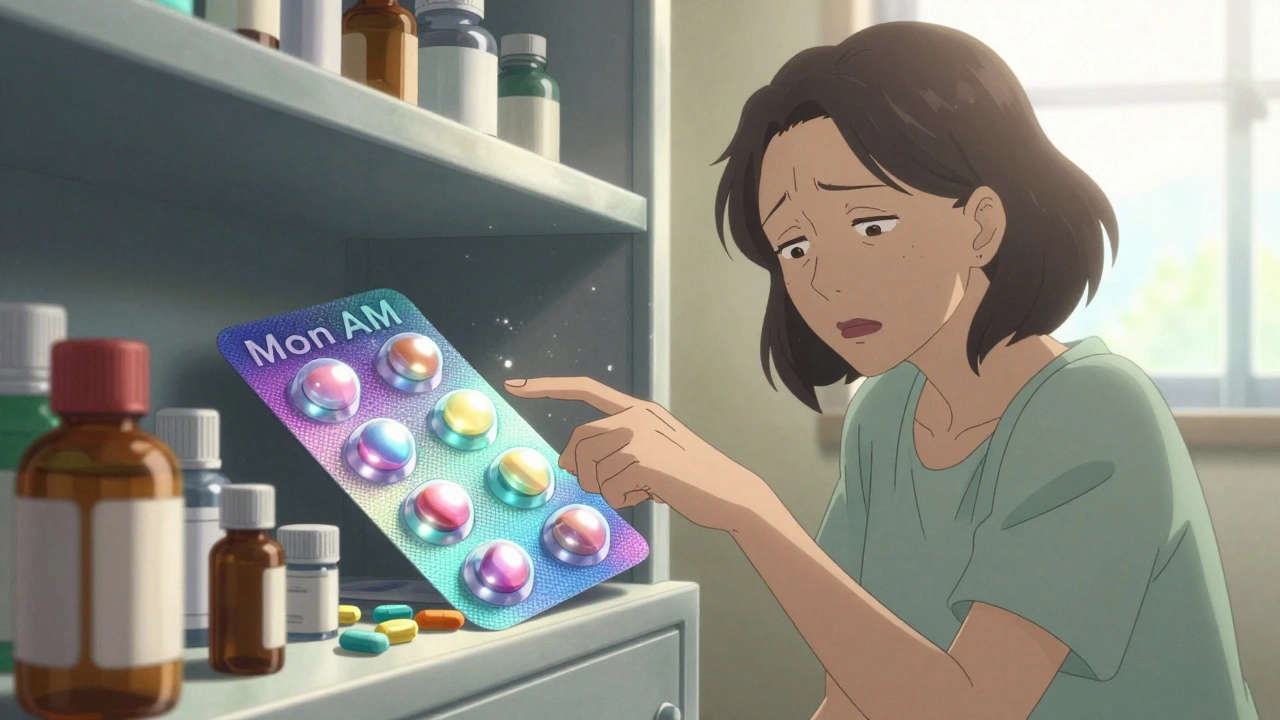
Every year, hundreds of thousands of people in the U.S. end up in the hospital because they took the wrong pill, too much of a pill, or missed a dose entirely. For many, it’s not laziness or forgetfulness-it’s confusion. A medicine cabinet full of bottles, similar-looking pills, and complex schedules can turn daily medication into a minefield. That’s where blister packs and pill organizers come in. They’re not fancy gadgets. They’re simple, proven tools that stop mistakes before they happen.
Why Medication Mistakes Happen
Most people don’t realize how easy it is to mess up meds. Imagine you’re taking five different pills. Some you take in the morning, some at night. One is red, another is white with blue dots. You’re tired. You’re distracted. You open a bottle, pour out a handful, and hope you got the right ones. That’s how overdoses and missed doses start. A 2022 study found that nearly half of people with chronic illnesses don’t take their meds as prescribed. That’s not just risky-it’s expensive. In the U.S. alone, medication errors cost the healthcare system between $100 billion and $289 billion every year. A lot of those costs come from preventable hospital visits. The fix isn’t more pills. It’s better organization.What Blister Packs Actually Are
Blister packs look like a sheet of plastic with small, sealed bubbles. Each bubble holds one pill, labeled with the day and time it’s meant to be taken-like "Mon AM," "Wed PM," or "Bedtime." They’re made by pharmacies, not bought off the shelf. You give your doctor’s prescription to a specialty pharmacy, and they sort every pill into the right bubble. No counting. No guessing. These aren’t the same as the plastic blister packs you see on store-bought painkillers. These are custom-made for you. Each pack covers 7 to 28 days. Some even have QR codes you can scan to hear a voice explain what the pill is for and why you need it. The FDA requires them to be tamper-evident and clearly labeled. That means if someone tries to open or swap a pill, you’ll know.How Blister Packs Prevent Mistakes
The power of blister packs is in the visuals. You don’t have to remember what you took. You just look. If the bubble is empty, you took it. If it’s still sealed, you didn’t. No mental math. No counting pills in your hand. A 2022 study tracking 180 patients with high blood pressure showed that those using blister packs had 23% better adherence than those using regular bottles. Their blood pressure improved more, too. Another study found that blister packs reduced medication errors by 67% compared to traditional vials. That’s not a small gain-it’s life-changing. For people with memory issues, dementia, or arthritis, this is huge. One caregiver on Reddit said switching her 82-year-old mother to blister packs cut missed doses from 3-4 per week to just 1-2 per month. She could now see exactly what was left. No more asking, "Did she take her heart pill?"How Pill Organizers Work (and Where They Fall Short)
Pill organizers are the simpler, cheaper option. You buy them at a drugstore for under $15. They usually have 7 compartments-one for each day. Some have 4 slots per day: morning, noon, evening, bedtime. The problem? You have to fill them yourself. That’s where mistakes creep in. You grab a bottle of pills, dump them into a tray, and hope you didn’t mix up the colors or doses. A 2021 study found that 37% of users reported mixing up pills while refilling their organizers. That’s nearly 4 in 10 people. Even worse, if your meds change-say, your doctor adds a new pill or drops one-you have to empty the whole organizer and start over. That’s risky. One caregiver on AgingCare.com said her dad with dementia kept taking extra doses because he thought he missed one. Switching to blister packs stopped the emergency room visits cold. Pill organizers are fine if you take one or two pills a day, and you’re sharp, consistent, and organized. But if you’re juggling five or more, or if memory is slipping, they’re not enough.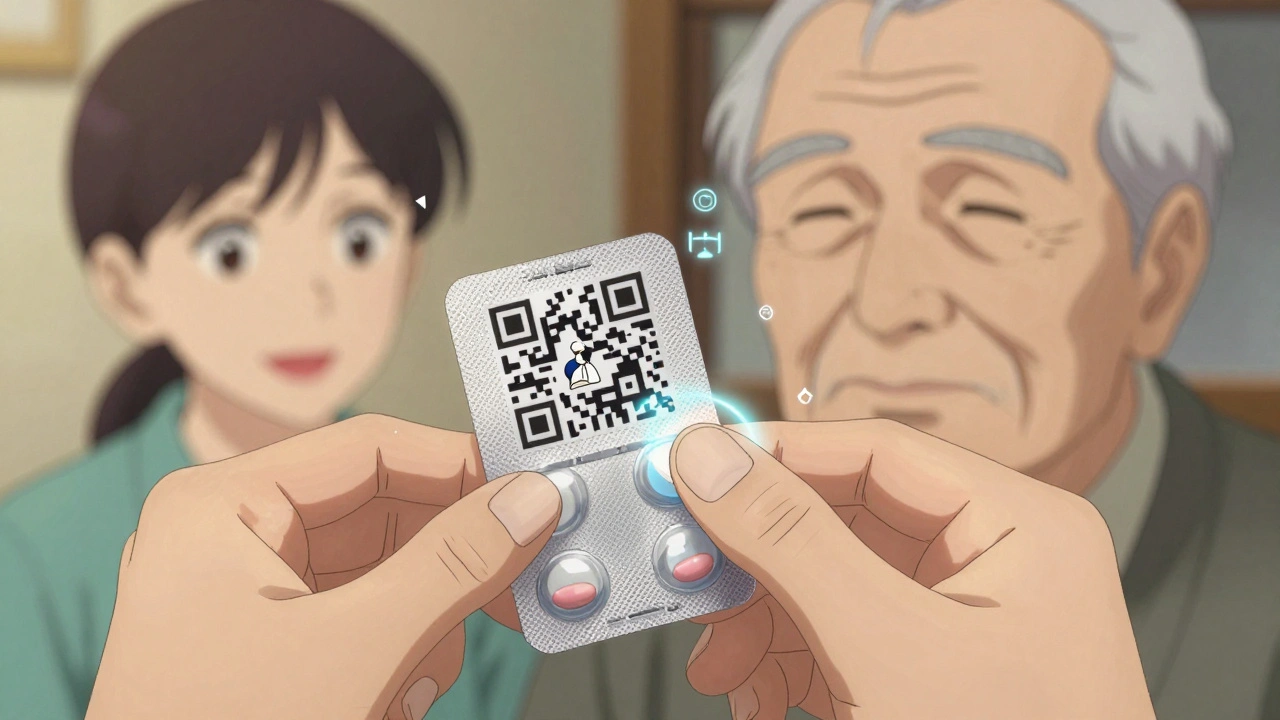
Blister Packs vs. Pill Organizers: The Real Difference
| Feature | Blister Packs | Pill Organizers |
|---|---|---|
| Who prepares it? | Pharmacy | You |
| Accuracy | 98% | 82% |
| Adherence improvement | 23-28% | 10-18% |
| Best for | 5+ meds, memory issues, complex schedules | 1-3 meds, simple routines |
| Cost per month | $45-$105 | $5-$15 (plus your time) |
| Medication changes | Requires repackaging | Easy to adjust |
| Smart features | QR codes, sensors, AI updates | None |
Who Should Use Blister Packs
You don’t need to be elderly to benefit. If you take four or more medications daily, the American Society of Health-System Pharmacists recommends blister packs. That includes people with diabetes, heart disease, depression, or multiple chronic conditions. They’re especially helpful if:- You’ve ever taken the wrong pill by accident
- You’ve missed doses because you forgot
- You have trouble reading small labels
- You’re caring for someone with dementia or memory loss
- You’re on a new medication regimen and feel overwhelmed
How to Get Started
Getting blister packs isn’t hard, but it takes a few steps:- Ask your doctor if you’re a candidate. Mention you want to reduce medication errors.
- Find a pharmacy that offers blister packaging. Many Medicare Advantage plans cover this service. Call your insurer and ask: "Do you cover custom blister packs for home use?"
- Send your full medication list to the pharmacy. Include dosages, times, and any special instructions.
- Wait 3-5 days for your first pack to be made. Some pharmacies deliver it to your door.
- Have a pharmacist or nurse show you how to use it. It takes less than 20 minutes.
What Blister Packs Can’t Do
They’re not magic. Blister packs don’t fix bad prescriptions. If your doctor gives you too many pills or ones that interact badly, the pack will just sort them neatly-and you’ll still be at risk. The FDA warns that 32% of people using blister packs still don’t understand why they’re taking certain meds. That’s why it’s crucial to talk to your pharmacist. Ask: "What is this for? What happens if I skip it?" Write it down. Keep that list with your pack. Also, blister packs can’t hold refrigerated meds like insulin or some antibiotics. If you need cold storage, you’ll still need a separate system.What’s New in 2025
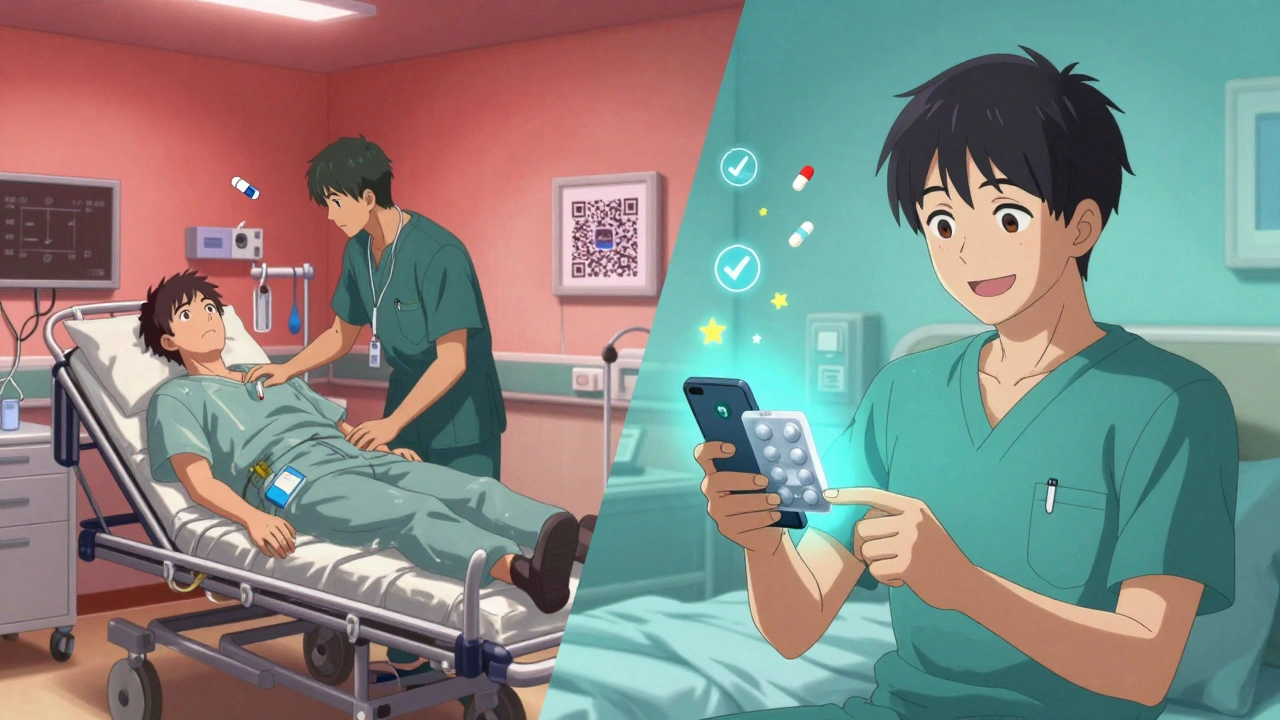
Technology is making blister packs smarter. In 2023, the FDA approved the first blister packs with QR codes that play video instructions when scanned. Now you can watch a 30-second clip explaining your pill right before you take it. Companies like AdhereTech have added sensors to blister packs. When you open a bubble, it sends a notification to your phone-or your caregiver’s phone-if you missed a dose. In a pilot study, this boosted adherence by 37%. By 2025, AI will automatically update your blister pack if your doctor changes your meds. No more waiting for a new pack. The system will detect the change, reorder your pills, and ship the updated pack within 48 hours.Real Results, Real People
A survey of 1,247 caregivers in 2023 found that 89% saw fewer mistakes after switching to blister packs. The top reasons? "Easy to double-check missed doses" (78%), "less chance of taking the wrong pill" (82%), and "huge time saver" (65%). One man in Michigan, who took 11 pills a day, went from 4 ER visits a year to zero after switching. His daughter said: "Before, I was checking his meds every night. Now I just look at the pack. If it’s empty, he’s good. If it’s full, I call him. It’s that simple."Final Thought: It’s Not About Convenience. It’s About Safety.
Blister packs and pill organizers aren’t about being neat. They’re about survival. One wrong pill can send you to the hospital. One missed dose can make your condition worse. These tools don’t just help you remember-they stop errors before they start. If you or someone you care for is on multiple medications, don’t wait for a mistake to happen. Talk to your pharmacist today. Ask about blister packs. They’re not expensive. They’re not complicated. They’re the most reliable way to keep your meds safe.Are blister packs covered by Medicare?
Original Medicare (Part A and B) doesn’t cover custom blister packs. But many Medicare Advantage plans (Part C) do, especially for people taking four or more daily medications. Call your plan’s customer service and ask: "Do you cover medication adherence packaging like blister packs?" If they say no, ask if they have a preferred pharmacy that offers it. Some pharmacies will bill your plan directly.
Can I make my own blister packs at home?
No. Blister packs require sterile, FDA-compliant equipment that only licensed pharmacies have. Trying to seal pills in plastic at home won’t be safe or legal. It also won’t have tamper-evident features or accurate labeling. If you can’t afford pharmacy-made packs, talk to your pharmacist about low-cost alternatives like color-coded pill organizers with alarms.
How long do blister packs last?
Most blister packs are made for 7 to 28 days, depending on your regimen. Some last up to 90 days if your meds are stable. The packaging is designed to protect pills from moisture and light, but once you open a bubble, you should take the pill right away. Don’t leave opened bubbles sitting out for days-humidity can damage the medication.
What if I need to change my meds?
If your doctor changes your prescription, you’ll need a new blister pack. Most pharmacies will process the update within 2-3 days. Some newer systems use AI to detect changes in your prescription and automatically send you a new pack without you having to call. Ask your pharmacy if they offer that service. In the meantime, keep your old pack and use it as a reference until the new one arrives.
Are there easy-open blister packs for people with arthritis?
Yes. Many pharmacies now offer "easy-open" blister packs with perforated edges or peel-back seals. Some even come with a small plastic tool to help pop out pills without squeezing hard. If your current pack is hard to open, ask your pharmacy for the easy-open version. It’s the same medication-just easier to access.
Comments
Cole Newman
Bro, you think blister packs are the answer? Try telling that to my grandma who still uses a cereal box with ziplocs labeled in Sharpie. She’s 89 and still outsmarts every smart pill system. Also, who’s paying for these $100/month packs? Medicare won’t cover it unless you’re on 5+ meds AND have a doctor who actually cares. Most docs just hand you a script and say 'take it.'
Willie Onst
Honestly, this hit home. My dad’s on 8 meds, and I used to spend Sunday nights sorting pills like a chemist. Then we switched to blister packs - and yeah, it’s not magic, but it’s peace of mind. He doesn’t ask me every night if he took his blood pressure pill anymore. Just look at the pack. Empty? Good. Full? I call. Simple. No drama. No panic. Just… safety.
Also, the QR code thing? Genius. He watches the 30-second clip before he swallows. Says it helps him feel less like a walking pharmacy.
Lauren Scrima
Oh, so now we’re just gonna hand over our autonomy to a pharmacy that’s gonna ‘sort’ our pills… while charging us $100/month? And you think this is ‘safety’? What about the 32% who still don’t know WHY they’re taking the meds? You’re not solving the problem - you’re just making the mistake prettier. And don’t get me started on the ‘AI updates’ - that’s just Big Pharma’s next subscription trap.
Rawlson King
The data here is misleading. 23% adherence improvement? Compared to what? People who don’t use anything? That’s not a fair baseline. The real comparison should be between blister packs and well-designed pill organizers with alarms - which cost $20 and don’t require a pharmacy intermediary. Also, the FDA doesn’t 'require' tamper-evident features on all blister packs - only those distributed by licensed pharmacies under specific conditions. This reads like a pharmaceutical ad.
Constantine Vigderman
OMG YES!!! I just got my first blister pack last week and my life is CHANGED!!! I take 7 meds and used to mix up the blue ones with the green ones - now I just look and it’s like, ‘ohhh, today’s the one with the little sun symbol’ 😊 I even got my mom to switch and she cried because she finally feels like she’s not failing at being a grown-up. The QR code thing is wild - it talks to you like a nice auntie! 10/10 would recommend. Also, my phone buzzes if I miss a dose. It’s like my meds have a guardian angel. 🙏
Tyrone Marshall
I’ve been a pharmacist for 22 years, and I’ve seen this play out a thousand times. Blister packs aren’t a fix - they’re a bandage. The real issue is fragmented care. One doctor prescribes this, another prescribes that, no one talks to the pharmacist, and the patient gets stuck in the middle. Blister packs help with execution, but not with the root cause: bad coordination. If you’re on more than 4 meds, you need a care coordinator - not a plastic tray. Talk to your pharmacist about medication therapy management (MTM). It’s free under Medicare Part D. Use it.
Emily Haworth
Wait… so you’re telling me the government is letting pharmacies put QR codes on pills? That’s just the beginning. Next thing you know, they’ll be embedding microchips. Or tracking when you open them. Or selling your data to insurers who’ll raise your rates if you ‘miss’ a dose. I’m not paranoid - I’ve seen the documentaries. This isn’t about safety. It’s about control. And who’s gonna pay for the ‘AI updates’? You think they’re doing this out of the goodness of their hearts? 🤖💊 #BigPharmaIsWatching
Yatendra S
Interesting. In India, we use color-coded boxes with handwritten labels. No QR codes. No AI. Just family. My mother-in-law takes 6 pills a day. We all sit together every morning. We count. We talk. We laugh. She remembers because she’s not alone. Technology is nice. But human presence? That’s the original adherence system. Maybe we’ve overcomplicated it.
kevin moranga
I’ve been pushing this for years - seriously, if you’re on more than three meds, you owe it to yourself to ask your pharmacist about blister packs. I used to be the guy who’d take his blood pressure pill at 2 a.m. because he thought it was ‘bedtime’ - and I’d feel fine, so I didn’t think it mattered. Until I ended up in the ER with a BP of 210/120. That’s when I switched. And let me tell you - the difference isn’t just about remembering. It’s about confidence. You stop living in fear of ‘did I take it?’ and start living like you’re not a walking medical error waiting to happen. It’s not expensive - it’s priceless. And yeah, the easy-open ones? Total game-changer for my arthritic hands. I didn’t even know they existed until I asked. So ask. Seriously. Ask. Ask. Ask. And if they say no, call again. And again. And then call your insurance. You’re worth it.
Alvin Montanez
Let’s be real - this whole system is a scam designed to make people feel like they’re doing something responsible while the healthcare industry quietly shifts responsibility onto the patient. You think a blister pack fixes a bad prescription? No. It just makes it easier to take the wrong combination safely. And who’s responsible when you overdose on a pill you didn’t understand? YOU. Because you were too lazy to ask your doctor what it was for. And now you’re blaming the system because you didn’t do your homework. This isn’t innovation - it’s enabling. Stop outsourcing your brain to a plastic sheet. Learn your meds. Understand them. Or don’t take them. But don’t pretend a bubble with a label makes you responsible.