
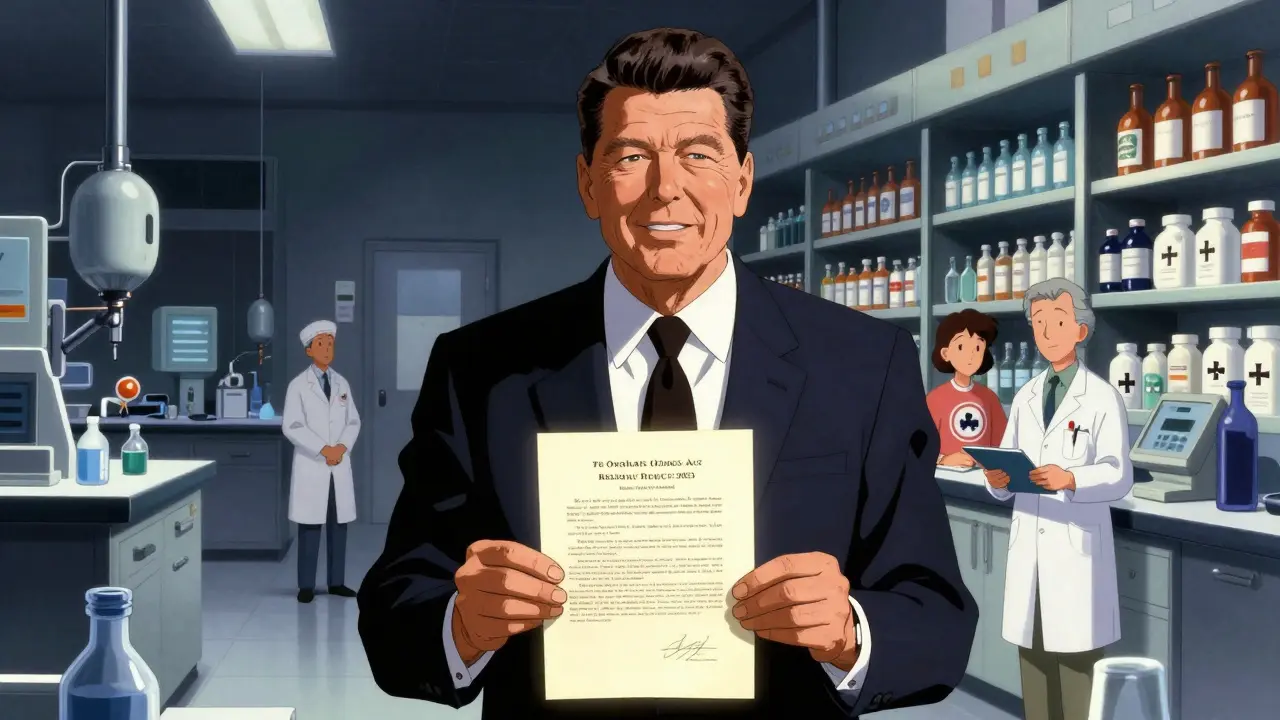
Orphan drug exclusivity is a regulatory mechanism created by the U.S. Orphan Drug Act of 1983 to incentivize development of treatments for rare diseases. Before this law, pharmaceutical companies rarely developed medicines for conditions affecting fewer than 200,000 people in the U.S. because there was no financial incentive. The Orphan Drug Act of 1983 was signed by President Ronald Reagan on January 4, 1983, and has since become one of the most successful pharmaceutical laws in history. Today, it's the reason over 500 rare disease drugs have been approved since 1983-up from just 38 in the decade before its passage.
How the U.S. system works
The core of orphan drug exclusivity is a seven-year market protection period starting from the date the FDA the U.S. Food and Drug Administration approves a drug for a specific rare disease. During this time, the FDA cannot approve another company's application for the same drug to treat the same condition unless the new drug shows clinical superiority. This means the first company to get approval gets exclusive rights to sell it for that use. It's a 'winner takes all' race-multiple companies can apply for orphan designation for the same drug-disease pair, but only the first to market wins the exclusivity.
Importantly, this protection applies only to the specific disease indication. If a drug has multiple uses, orphan exclusivity covers just the rare disease part. For example, a drug approved for both a rare condition and a common one would have protection only for the rare use. Generics could still enter the market for the non-orphan indication. Sponsors usually apply for orphan designation during Phase 1 or early Phase 2 clinical trials. The FDA reviews these applications in about 90 days, with a 95% approval rate when the disease clearly affects fewer than 200,000 people.
US vs EU: Global differences
While the U.S. offers seven years of exclusivity, the European Union takes a different approach. The European Medicines Agency (EMA) the EU's regulatory body for medicines grants ten years of market protection for orphan drugs. The EU also allows a two-year extension if the company completes pediatric studies. However, the EU can reduce exclusivity to six years under specific circumstances, which the U.S. doesn't do.
| Feature | United States | European Union |
|---|---|---|
| Exclusivity Period | 7 years from FDA approval | 10 years from EMA approval |
| Pediatric Extension | No extension | 2-year extension for pediatric studies |
| Reduction Clause | None | Can reduce to 6 years under specific conditions |
| Clinical Superiority Requirement | Yes for subsequent approvals | Yes for subsequent approvals |

Challenges and controversies
Despite its success, orphan drug exclusivity faces criticism. Some companies have exploited the system by seeking multiple orphan designations for drugs that already have large non-orphan markets. Take Humira a widely used autoimmune drug, which received orphan designations for several indications despite being used by millions of patients. Critics argue this creates artificial monopolies that drive up drug prices.
Another issue is the 'same drug' determination. When a second company tries to bring a similar drug to market for the same rare condition, they must prove clinical superiority-a high bar that's rarely met. Since 1983, only three cases have successfully met this standard. The 2019 approval of Ruzurgi a drug for Lambert-Eaton myasthenic syndrome highlighted these complexities. The FDA approved it for a specific rare condition, but questions arose about whether it could be used for other indications without violating exclusivity.
Patient advocacy groups have mixed views. A 2022 survey by the National Organization for Rare Disorders found 78% consider orphan exclusivity essential for drug development, but 42% worry about resulting high drug costs. This tension between incentivizing innovation and ensuring affordability remains unresolved.
Impact on drug development
Orphan drug exclusivity has transformed the rare disease landscape. Global orphan drug sales reached $217 billion in 2022, accounting for 24.3% of all prescription drug sales. Oncology dominates this space, with 43.7% of orphan drug approvals between 2010-2020. The top 10 orphan drugs generated $95.3 billion in 2022 alone, though Humira's massive sales come from its non-orphan uses.
Industry trends show accelerating growth. The FDA approved 434 orphan designations in 2022-up from 127 in 2010. Deloitte predicts 72% of new FDA-approved drugs will have orphan status by 2027. However, regulators are scrutinizing potential misuse. In May 2023, the FDA issued draft guidance clarifying 'same drug' determinations to prevent 'salami slicing'-where companies seek multiple designations for minor variations of the same drug. As of October 2023, the FDA's Orphan Products Portal shows 6,542 orphan designations granted since 1983, with 1,085 approvals representing a 16.6% success rate.
Future outlook
The future of orphan drug exclusivity is evolving. The European Commission is reviewing whether to reduce the EU's exclusivity period from ten to eight years for drugs with high market uptake. Meanwhile, the U.S. continues to refine its system. Despite debates, 94% of biopharmaceutical companies say orphan exclusivity is critical for their rare disease development strategies. As medical science advances and more genetic conditions are identified, this regulatory tool will remain vital-though balancing innovation incentives with fair pricing will be key.
Frequently Asked Questions
How long does orphan drug exclusivity last in the U.S.?
In the United States, orphan drug exclusivity provides seven years of market protection starting from the date of FDA approval for a specific rare disease indication. This means no other company can market the same drug for that condition during this period unless they prove clinical superiority.
Can a drug have multiple orphan designations?
Yes, a single drug can receive orphan designation for different rare disease indications. Each indication gets its own seven-year exclusivity period. For example, a drug might be approved for two separate rare conditions, each with its own protection timeline. However, the exclusivity applies only to the specific indication, not the entire drug.
What is 'clinical superiority' in orphan drug exclusivity?
Clinical superiority means a new drug must offer a significant therapeutic advantage over the existing approved drug for the same rare disease. This could include better effectiveness, fewer side effects, or a safer dosing regimen. The FDA requires substantial evidence for this, and it's rarely met-only three cases have succeeded since 1983.
Why do some companies seek multiple orphan designations?
Companies sometimes seek multiple orphan designations for different indications of the same drug to extend market protection. This practice, known as 'salami slicing,' can create longer monopolies. While it's legal, regulators are now scrutinizing it more closely to ensure it doesn't undermine the original intent of the Orphan Drug Act.
How does orphan drug exclusivity compare to patent protection?
Patent protection typically lasts 20 years from filing but covers the drug's chemical structure or method of use, regardless of the disease. Orphan exclusivity is specific to a rare disease indication and lasts seven years in the U.S. Unlike patents, orphan exclusivity doesn't require the drug to be novel-it applies even if the drug is already on the market for other uses. However, patents often provide longer protection, and most drugs rely on patents as their primary market exclusivity.
Comments
divya shetty
While the Orphan Drug Act was designed to incentivize rare disease treatments, it's now being weaponized by big pharma. Companies like AbbVie have repeatedly sought orphan status for drugs like Humira for multiple indications despite widespread use.
This is a clear abuse of the system, leading to exorbitant costs for patients. Regulatory bodies must act immediately to close these loopholes and restore the law's original intent.
Phoebe Norman
Orphan drug exclusivity drives R&D investment but requires balance Clinical superiority thresholds are necessary to prevent redundant approvals yet can stifle innovation if too stringent The FDA's same drug determination process needs refinement to avoid regulatory gaming while maintaining patient access
Jennifer Aronson
The US and EU approaches to orphan drug exclusivity present interesting contrasts. While the US offers seven years of market protection, the EU provides ten years with a pediatric extension. Both systems have merits but require continuous evaluation to ensure they effectively incentivize innovation without compromising affordability.
Kate Gile
Orphan drug exclusivity has transformed rare disease treatment landscapes. The seven-year protection period allows companies to recoup R&D costs while still fostering competition. This balance has led to over 500 approved drugs since 1983, saving countless lives. It's a testament to well-designed policy driving real-world impact.
Johanna Pan
The EU's 10-year exclusivity with pediatric extension is a great model. However, the US system's simplicity has driven more approvals. Despite some misuse, this law has saved lives. We need to keep the balance right. Maybe adjust the system but don't lose progress.
Sam Salameh
US system is the best! Seven years exclusivity drives innovation better than EU's 10. America leads in medical breakthroughs because of policies like this. We should export this model globally. It's simple, effective, and protects patients. No other country does it better.
Nancy Maneely
OMG the way companies game the system is insane! Like Humira getting orphan designations for common diseases. It's a scam! The FDA needs to clamp down hard. #ScamAlert
Albert Lua
From a global perspective, US and EU differ significantly. EU's 10-year period with pediatric incentives is patient-focused, but US's faster approvals get drugs to market quicker. Both systems have strengths; we should learn from each other to improve rare disease treatment access worldwide.
Dr. Sara Harowitz
This exclusivity system is critical-without it, no rare disease drugs would exist! However, some companies exploit it by 'salami slicing'-seeking multiple designations for minor variations. The FDA must enforce stricter rules immediately! It's irresponsible to allow such abuses!
Pamela Power
The current orphan drug framework is a disaster for patient access. Drug companies are milking the system for billions while charging exorbitant prices. It's a disgrace that we allow this exploitation-regulators must step in now! This isn't innovation; it's corporate greed.
anjar maike
Orphan drug exclusivity is crucial but needs reform. Companies abuse it for common diseases. FDA must tighten criteria to prevent misuse. 🤔
Bella Cullen
Companies exploit this for common diseases.
Katharine Meiler
The orphan drug exclusivity model has driven significant innovation. However, the 'same drug' determination process needs refinement to prevent regulatory gaming. A balanced approach is necessary for sustainable development.
Lana Younis
The US and EU approaches to orphan drugs differ significantly. EU's 10-year period with pediatric extension is more comprehensive, but the US system's simplicity has led to more approvals. It's a trade-off between innovation and access. We need to keep improving this system without losing the progress made.