
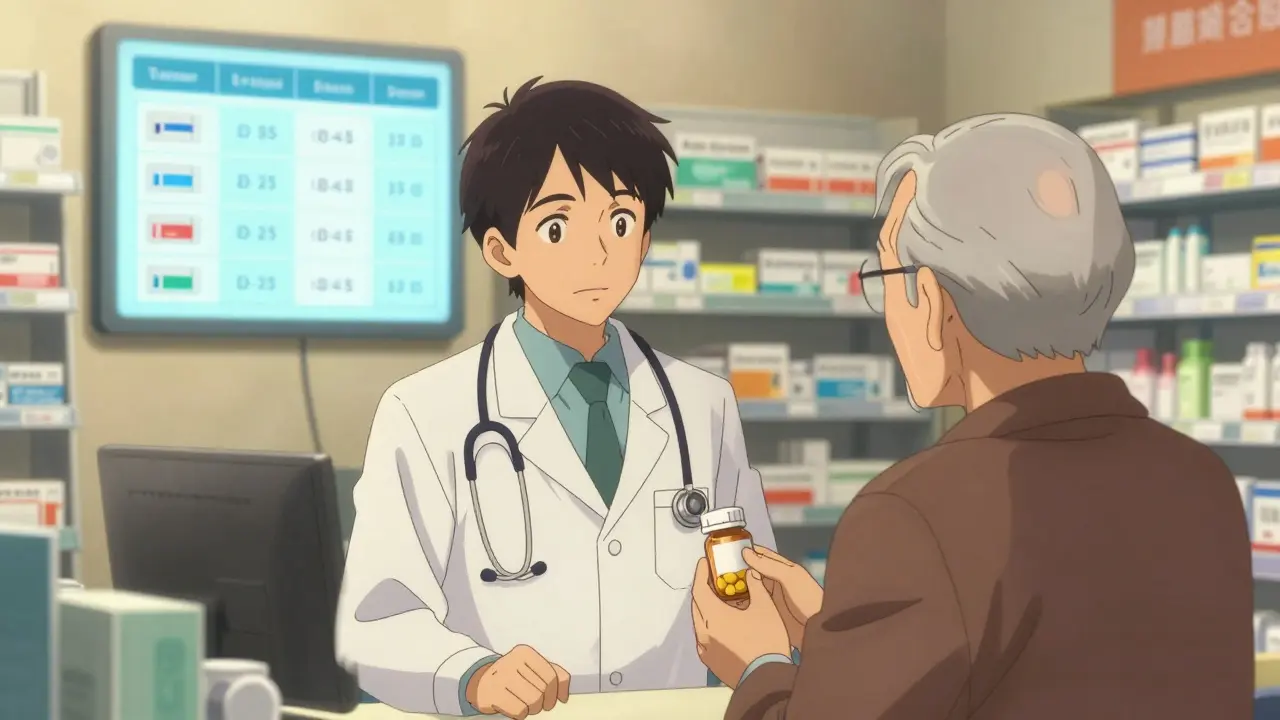
When you walk into a pharmacy to pick up your prescription, you might assume the pharmacist just hands you the bottle and says, "Take as directed." But that’s not the full story anymore. Across the U.S., pharmacists are doing far more than filling prescriptions. In many states, they can change your medication, prescribe new ones, test for conditions like strep throat or flu, and even manage chronic diseases like diabetes or high blood pressure-all without a doctor’s direct order. This shift isn’t accidental. It’s the result of state laws changing to meet real needs: doctor shortages, rural access gaps, and the growing recognition that pharmacists are trained medication experts who can step in where doctors can’t.
What Exactly Is Pharmacist Substitution Authority?
Pharmacist substitution authority means the legal right to swap, adjust, or even start a medication without going back to the prescriber. It’s not the same everywhere. In every state, pharmacists can switch a brand-name drug for a generic version if the doctor didn’t write "dispense as written." That’s been standard for decades. But now, some states let pharmacists do much more.
Therapeutic interchange is one of the biggest leaps. Instead of just swapping one pill for another identical one, pharmacists can replace a drug with a different one in the same class-like switching from one statin to another for cholesterol-if it’s safer, cheaper, or better suited to the patient. Only three states-Arkansas, Idaho, and Kentucky-have full therapeutic interchange laws. In Kentucky, the doctor must write "formulary compliance approval" on the prescription. In Idaho and Arkansas, they must say "therapeutic substitution allowed." And in all three, the pharmacist must tell the original doctor and get the patient’s consent before making the switch.
Prescription adaptation is another tool. In states that allow it, pharmacists can tweak an existing prescription-change the dose, switch the frequency, or extend the refill-without calling the doctor. This is huge for people in rural areas who live hours from a clinic. Instead of driving 80 miles to get a tiny adjustment, they can walk into their local pharmacy and leave with a corrected script.
Collaborative Practice Agreements: The Hidden Backbone
Behind most expanded pharmacist roles are something called Collaborative Practice Agreements (CPAs). These are formal, written agreements between a pharmacist and one or more doctors that outline exactly what the pharmacist can do. They’re not optional in most states-they’re required. CPAs spell out what drugs the pharmacist can prescribe, what conditions they can treat, when they must refer a patient to a doctor, and how they document everything in the medical record.
States are moving toward more autonomy in these agreements. In 2025, several states updated their CPA rules to let pharmacists lead more of the clinical decisions, with less direct doctor oversight. For example, a CPA might allow a pharmacist to adjust blood pressure meds based on home readings, or start a patient on fluoxetine for depression after a screening, as long as they follow the protocol. The pharmacist doesn’t need to call the doctor for every change-just document it and refer if things get complicated.
These agreements are why you can now get a flu shot, a strep test, or even a prescription for birth control at your pharmacy in places like Maryland, California, and Maine. In Maryland, pharmacists are legally recognized as providers, and Medicaid must pay for their services. In California, they don’t "prescribe"-they "furnish"-but the effect is the same.
State-by-State Differences: It’s a Patchwork
There’s no national standard. What’s legal in Oregon might be illegal in Texas. Here’s how it breaks down:
- Generic substitution: Allowed in all 50 states. No doctor approval needed unless "dispense as written" is marked.
- Therapeutic interchange: Only Arkansas, Idaho, and Kentucky have full laws. Other states may allow it under CPAs but not by default.
- Prescription adaptation: Available in 30+ states, often limited to chronic conditions like asthma, diabetes, or hypertension.
- Independent prescribing: All 50 states allow pharmacists to prescribe or dispense at least one type of medication under a statewide protocol. Common examples: emergency contraception, naloxone (for opioid overdose), nicotine replacement, and birth control.
- Diagnostic testing: Pharmacists in 47 states can perform CLIA-waived tests-like rapid strep, flu, or COVID-19-and treat the results under protocol.
New Mexico and Colorado are leaders in flexibility. Instead of passing new laws for every new service, their boards of pharmacy can update protocols on their own. That means if a new drug is approved for pharmacist use, they can add it without waiting for the legislature.
Why This Matters: Access, Equity, and Efficiency
Over 60 million Americans live in areas with too few doctors-called Health Professional Shortage Areas. In these places, pharmacies are often the only health access point. A pharmacist who can prescribe naloxone can save a life before an ambulance arrives. One who can give birth control on the spot removes barriers for women who can’t get an appointment for weeks. A pharmacist who adjusts a diabetic’s insulin dose based on daily glucose logs can prevent hospitalization.
It’s not just about convenience-it’s about equity. Low-income patients, elderly people without transportation, and those without insurance benefit the most. A 2023 study from the National Conference of State Legislatures found that states with prescription adaptation laws saw a 30% drop in unnecessary clinic visits for minor medication tweaks.
And it’s working. Pharmacist-managed care for hypertension has been shown to lower blood pressure as effectively as doctor-led care, according to multiple clinical trials. For asthma and diabetes, pharmacist interventions reduce ER visits and hospital stays.

The Pushback: Concerns and Conflicts
Not everyone agrees. The American Medical Association still argues that pharmacists aren’t trained like physicians and that expanding their authority could lead to fragmented care. They worry about corporate pharmacies pushing scope expansion for profit, not patient care.
There are real risks. Without clear protocols, a pharmacist might miss a dangerous drug interaction. Without proper training, they might misdiagnose a symptom. That’s why every state that allows expanded authority also requires specific training, documentation rules, and referral pathways. In Idaho, pharmacists must clearly explain to patients that the drug they’re getting is different from what was prescribed-and that the patient can refuse. That’s not just legal; it’s ethical.
Reimbursement is another huge hurdle. Just because a pharmacist can prescribe doesn’t mean insurance will pay for it. Many insurers still classify pharmacists as "dispensers," not "providers." So even if you get a flu shot or a new prescription at the pharmacy, your plan might not cover it. That’s why federal legislation like the Ensuring Community Access to Pharmacist Services Act (ECAPS) is so critical. If passed, it would require Medicare to pay for pharmacist services-opening the door for private insurers to follow.
What’s Next?
In 2025, 211 bills were introduced across 44 states to expand pharmacist authority. Sixteen of them became law. That’s faster than any previous year. The trend is clear: pharmacists are becoming frontline clinicians.
The future will likely see more states adopt independent prescribing for common conditions. More CPAs will be signed. More tests will be added to the list of what pharmacists can perform. And if ECAPS passes, reimbursement will finally catch up to practice.
For patients, this means faster care, fewer trips, and more personalized attention. For pharmacists, it’s a long-overdue recognition of their expertise. For the system, it’s a practical solution to a growing crisis in access.
The question isn’t whether pharmacists should have more authority-it’s how fast we can make sure every state has the tools, training, and payment systems to let them use it safely and effectively.
Can a pharmacist change my prescription without asking my doctor?
Only in specific situations. In every state, pharmacists can swap a brand-name drug for a generic one unless the doctor says "dispense as written." For more significant changes-like switching to a different drug in the same class or adjusting the dose-they need either a Collaborative Practice Agreement with your doctor or a state law that allows therapeutic interchange or prescription adaptation. Even then, they must notify your doctor and get your consent.
Can I get birth control from a pharmacist without a doctor’s prescription?
Yes, in 23 states and Washington, D.C., pharmacists can prescribe and dispense birth control to people 18 and older without a prior prescription. States like Maryland, California, Oregon, and Colorado allow this under statewide protocols. You’ll usually need to fill out a health screening form and talk to the pharmacist about your medical history. It’s not available everywhere yet, but it’s expanding fast.
Are pharmacists trained enough to prescribe medications?
Pharmacists complete six years of education after high school-four years of undergraduate study and two years of professional pharmacy school (Pharm.D.). Many also complete one to two years of clinical residency. Their training focuses heavily on drug interactions, dosing, side effects, and patient counseling. While they don’t diagnose diseases like doctors do, their expertise in medication therapy is deep. States that allow prescribing require additional certification in areas like clinical pharmacology or disease state management.
Why can’t I get a new prescription for antibiotics from my pharmacist?
Most states don’t allow pharmacists to prescribe antibiotics because they require a diagnosis-which is outside current scope. Antibiotics need to be targeted correctly, and misusing them contributes to resistance. Even in states with broad authority, antibiotics are usually excluded from protocols. Pharmacists can, however, prescribe for conditions like strep throat (after a rapid test), urinary tract infections (in some states), and skin infections under strict protocols. But for anything complex, they’re required to refer you to a doctor.
Will my insurance cover services from a pharmacist?
It depends. Many insurance plans cover immunizations, rapid tests, and birth control if provided by a pharmacist. But for other services-like adjusting your blood pressure meds or managing your diabetes-coverage is inconsistent. Medicare doesn’t pay for most pharmacist services yet, unless you’re in a pilot program. The pending ECAPS federal bill would change that by requiring Medicare to reimburse for pharmacist-provided care. Until then, you may need to pay out-of-pocket or check with your insurer.
What’s the difference between therapeutic interchange and generic substitution?
Generic substitution means swapping a brand-name drug for a chemically identical generic version. It’s allowed everywhere. Therapeutic interchange is different: it means replacing one drug with another that works similarly but isn’t the same chemical. For example, switching from atorvastatin to rosuvastatin for cholesterol. That’s only legal in three states and requires special permission from the prescriber and patient consent.
Comments
Glendon Cone
Finally! My local pharmacist gave me a new inhaler last week when my doc was on vacation. No drama, no 3-week wait. Just a quick chat, he checked my logs, and boom - done. 🙌 Pharmacists are basically unsung heroes of primary care now.
kelly tracy
This is a disaster waiting to happen. Pharmacies are not clinics. These people didn’t go to med school. Letting them prescribe? That’s how people die from misdiagnosed heart attacks that were just called ‘indigestion.’
srishti Jain
Pharmacists prescribing? Lol. In India we still fight to get basic meds without a script. You guys are giving out birth control like candy. Wild.
Cheyenne Sims
The erosion of medical authority is alarming. Pharmacists are trained in pharmaceutical science, not clinical diagnostics. Expanding their scope without federal oversight undermines the integrity of the entire healthcare system.
Shae Chapman
I got my flu shot, a strep test, AND my birth control refill all in one trip last month. My pharmacist even called my doctor to update my file. It was so smooth I cried 😭 We need this EVERYWHERE. Stop fighting progress!
Kelly Gerrard
Doctors are overworked. Pharmacies are everywhere. If a pharmacist can save someone from a hospital visit by adjusting a dose, why are we arguing about it? Let them help. End of story.
Henry Ward
Oh great, now the corporate pharmacy giants will push meds like they’re selling candy bars. No oversight, no accountability. And you call this healthcare? It’s a profit scheme wrapped in a white coat.
Kunal Karakoti
It’s interesting how we assign roles based on institutional training rather than functional competence. If a pharmacist can safely manage a chronic condition better than a distant specialist, is the title really the issue? Or is it ego?
Sandeep Mishra
My cousin in rural Nebraska couldn’t see a doctor for 6 months. Her pharmacist adjusted her BP meds using her home monitor readings. She’s stable now. That’s not magic - that’s smart use of available expertise. We should be expanding this, not debating it.
Joseph Corry
Let’s be honest - this isn’t about patient care. It’s about the commodification of healthcare. You don’t need a Pharm.D. to hand out pills. You need a barcode scanner and a corporate KPI. This is capitalism dressed up as innovation.
Colin L
Look, I live in the UK and we’ve had pharmacists doing minor prescriptions for years - mostly for UTIs and minor infections - and it works. But here’s the catch: they’re embedded in the NHS, have full access to records, and are held to the same accountability standards as GPs. In the US? You’ve got CVS and Walgreens running a free-for-all with no central registry, no shared EHR, and profit motives driving every decision. It’s not expansion - it’s chaos with a pharmacy counter.
Hayley Ash
So let me get this straight - you trust a guy who’s been counting pills for 15 years to diagnose strep throat but you don’t trust a doctor who went to 11 years of school? Cool. I’ll take my fever to the guy behind the counter next time. 🙃