
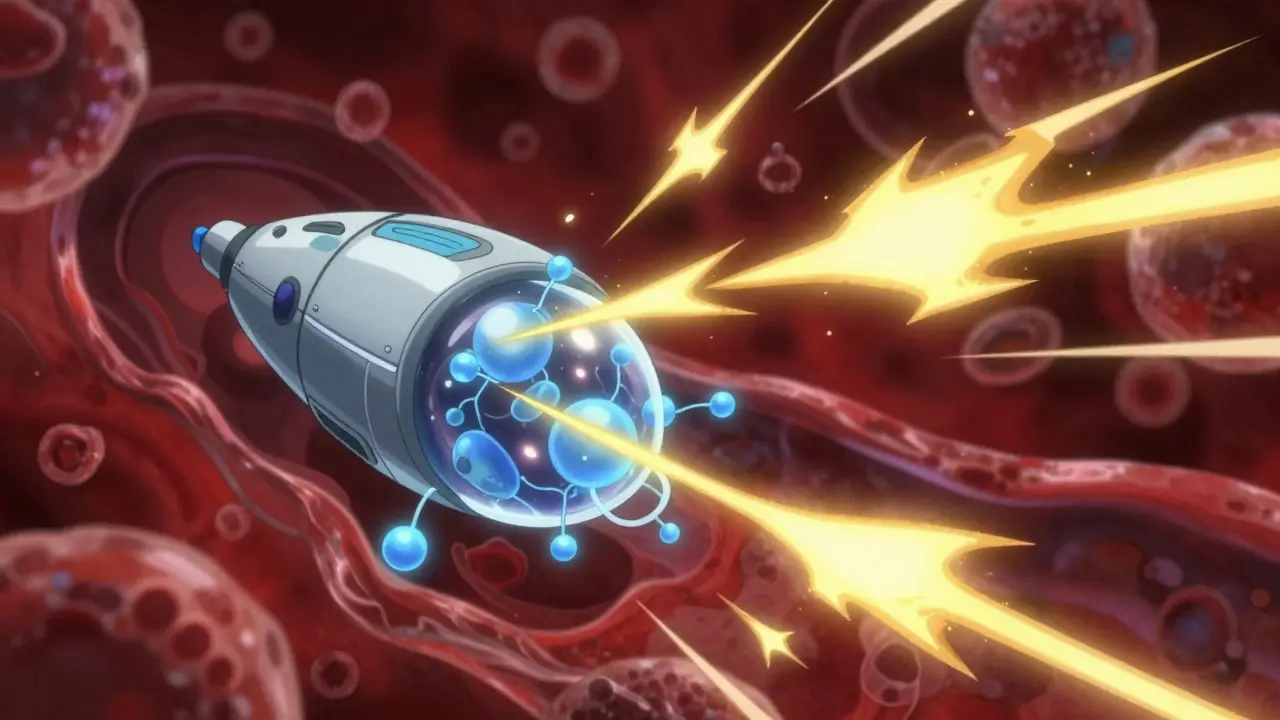
Phenytoin-Warfarin Interaction Simulator
Select a scenario to see how the International Normalized Ratio (INR) and clinical risks shift over time.
Mixing Phenytoin is a potent antiepileptic medication used primarily to manage seizures, known for its narrow therapeutic index and complex pharmacokinetics. with Warfarin is a widely used oral anticoagulant that prevents blood clots by inhibiting vitamin K-dependent clotting factors. is a bit of a pharmacological rollercoaster. Most drug interactions follow a simple pattern: one drug makes the other stronger or weaker. But this pair creates a "biphasic" response, meaning the effect actually flips 180 degrees over the first few weeks of treatment. If you aren't expecting this switch, you could go from a dangerous bleeding risk to a high stroke risk in less than ten days.
The First Wave: The Protein Displacement Effect
Within the first 24 to 72 hours of starting phenytoin, the most immediate concern is an unexpected spike in the INR (International Normalized Ratio). To understand why, we have to look at how these drugs travel through the blood. Both drugs are highly protein-bound, meaning they hitch a ride on Albumin, the main protein in your plasma. Warfarin is roughly 99% bound, meaning only 1% is "free" and active in the body.
Phenytoin has a higher affinity for albumin than warfarin does. When phenytoin enters the system, it effectively kicks warfarin off its seat. This displacement increases the amount of free, active warfarin circulating in the bloodstream by 20% to 30%. Because there is suddenly more active drug available to thin the blood, the INR climbs, and the risk of spontaneous bleeding increases. This effect is particularly dangerous for patients with low serum albumin (below 3.5 g/dL), as they have fewer "seats" available, making the displacement effect even more volatile.
The Second Wave: Enzyme Induction
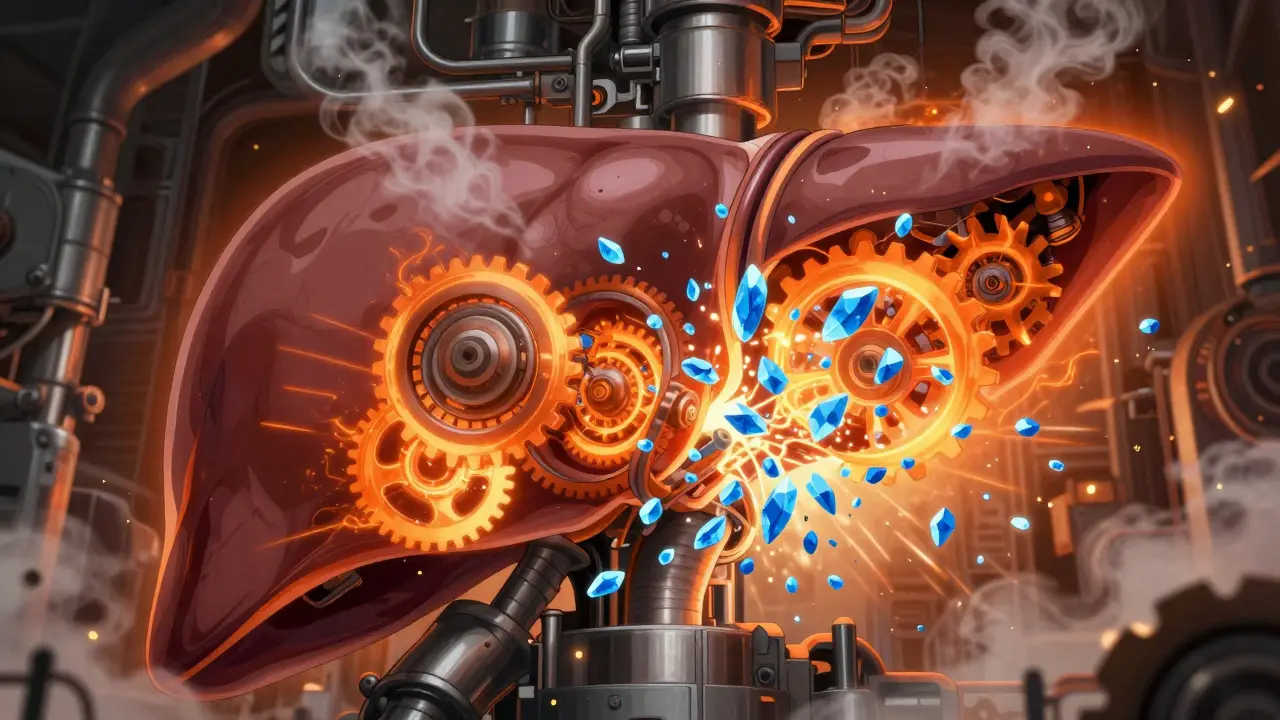
Just as the bleeding risk peaks, a second, more powerful mechanism kicks in. Phenytoin doesn't just move drugs around; it tells the liver to work harder. By activating the Pregnane X Receptor (PXR), phenytoin induces the production of cytochrome P450 enzymes, specifically CYP2C9 and CYP3A4.
This enzyme induction is a slow burn, usually becoming fully apparent after 7 to 14 days. CYP2C9 is the primary enzyme responsible for breaking down the S-enantiomer of warfarin, which is five times more potent than the R-enantiomer. When phenytoin ramps up CYP2C9 expression by as much as 400%, the liver shreds the warfarin at a much faster rate. The result? The INR plummets, and the patient loses their anticoagulation protection. To keep the blood thin enough to prevent clots, clinicians often find they need to increase the warfarin dose by 2 to 5 times the original baseline.
| Phase | Timeline | Primary Mechanism | Effect on INR | Clinical Risk |
|---|---|---|---|---|
| Initial | 24-72 Hours | Protein Displacement | Increase ↑ | Bleeding |
| Transition | 3-5 Days | Equilibrium Shift | Normalizing | Fluctuation |
| Chronic | 7-14 Days | CYP450 Induction | Decrease ↓ | Clotting/Stroke |
The Genetic Wildcard
Not everyone reacts to this interaction in the same way. Your DNA plays a massive role in how your liver handles these chemicals. Specifically, polymorphisms in the CYP2C9 and VKORC1 genes determine your baseline sensitivity to warfarin. If a patient is a "poor metabolizer" due to these genetic variants, the induction effect caused by phenytoin can be even more erratic. While pharmacogenetic testing is becoming more common, the sheer volatility of phenytoin's nonlinear kinetics-where a tiny dose increase can lead to a massive jump in blood concentration-means that genetic data is a helpful guide, but real-time monitoring is the only real safety net.

What Happens When You Stop Phenytoin?
The danger doesn't end when phenytoin is discontinued; it just reverses. When the enzyme-inducing agent is removed, the liver's metabolic rate gradually returns to normal. This means the warfarin that was previously being shredded by an overactive liver is suddenly lingering in the system much longer. Over a period of 10 to 14 days, the INR will steadily climb. If the warfarin dose isn't scaled back-typically by 25% to 50%-the patient can easily drift into a critical over-anticoagulated state, leading to internal hemorrhage.
Practical Management and Alternatives
Managing this duo requires what some pharmacists call "monitoring the ever-loving crap" out of the patient. The gold standard is to check the INR every 2 to 3 days during the first two weeks of co-administration. Making empirical dose changes (changing the dose based on a guess rather than a test) is generally discouraged because the biphasic nature of the interaction makes it too easy to overcorrect.
Because of this headache, many doctors now look for alternatives. If a patient needs an antiepileptic but is already on warfarin, drugs like Levetiracetam, Gabapentin, or Pregabalin are often preferred because they don't mess with the CYP450 system. Similarly, the rise of Direct Oral Anticoagulants (DOACs) like apixaban has reduced the need for warfarin. However, for patients with mechanical heart valves or specific thrombophilia, warfarin remains the only option, making this specific interaction a critical piece of knowledge for their safety.
Why does the INR go up and then down?
It's a two-step process. First, phenytoin pushes warfarin off plasma proteins, increasing the active drug in your blood (INR goes up). Then, phenytoin triggers the liver to produce more enzymes that break warfarin down faster (INR goes down).
How much does the warfarin dose typically change?
Once the enzyme induction is full, patients may require 2 to 5 times their original warfarin dose to maintain a therapeutic INR.
Are there safer alternatives to phenytoin?
Yes, levetiracetam, gabapentin, and pregabalin are generally preferred as they have fewer significant interactions with warfarin.
How often should INR be monitored during this interaction?
Experts recommend monitoring INR every 2 to 3 days after starting phenytoin until stable, then weekly for the first several weeks.
What happens if I stop taking phenytoin while on warfarin?
Your liver's metabolism of warfarin will slow down over 10-14 days, which can cause your INR to rise sharply. You will likely need to decrease your warfarin dose by 25% to 50% to avoid bleeding.