

SGLT2 inhibitors have changed how doctors treat type 2 diabetes-not because they lower blood sugar better than other pills, but because they save lives. These drugs don’t just manage glucose. They protect your heart, kidneys, and even help you lose weight. But they’re not magic. For every patient who feels better, another struggles with infections, cost, or scary side effects. If you or someone you know is considering one of these medications, you need to know what they really do-and what they might cost you.
How SGLT2 Inhibitors Actually Work
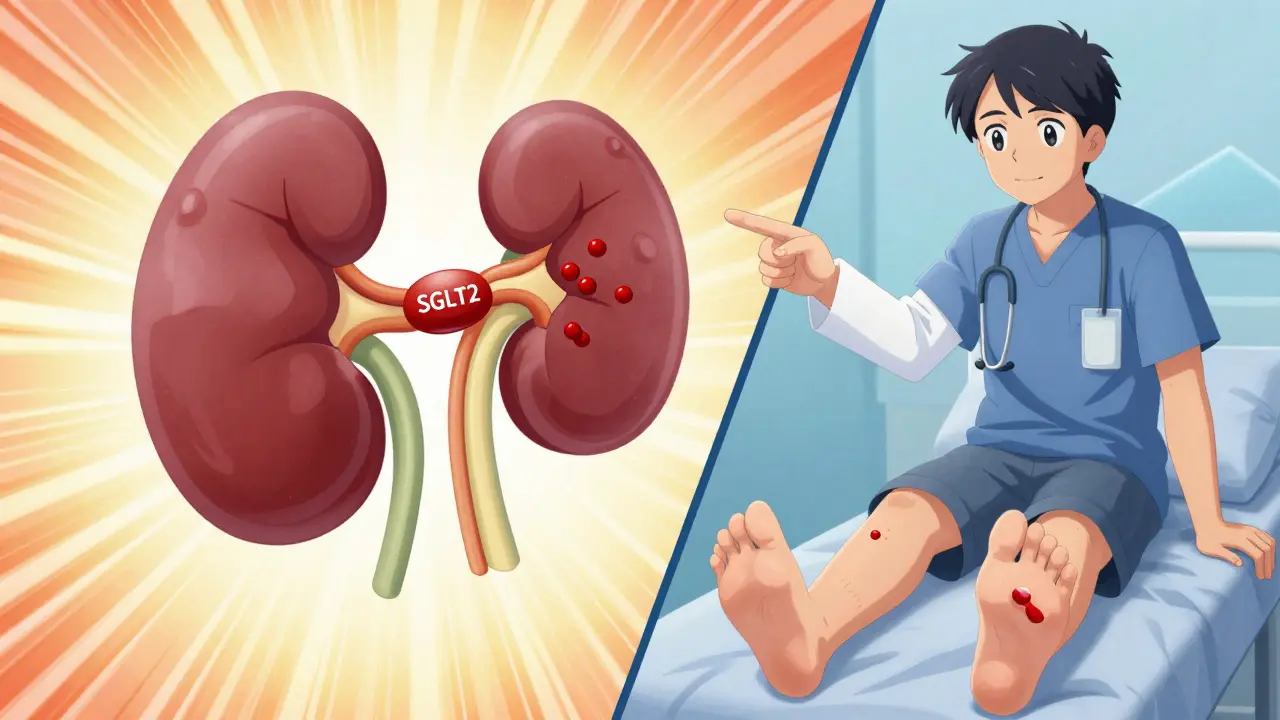
Most diabetes pills work by making your body more sensitive to insulin or pushing out more of it. SGLT2 inhibitors do something totally different. They tell your kidneys to dump sugar into your urine. Normally, your kidneys reabsorb almost all the glucose filtered from your blood. SGLT2 inhibitors block that process. The result? You pee out 40 to 100 grams of sugar every day. That’s roughly 160 to 400 calories. No need to count them-your body just loses them.
This mechanism means one big advantage: no low blood sugar. Unlike insulin or sulfonylureas, SGLT2 inhibitors don’t force your pancreas to overproduce insulin. Your body only gets rid of glucose when it’s high. That’s why these drugs are safer for older adults or people with irregular eating habits.
The four main SGLT2 inhibitors on the market are:
- Canagliflozin (Invokana)
- Dapagliflozin (Farxiga)
- Empagliflozin (Jardiance)
- Ertugliflozin (Steglatro)
All work similarly, but doses vary. Canagliflozin comes in 100 mg and 300 mg. Dapagliflozin is taken as 5 mg or 10 mg. Empagliflozin is usually 10 mg or 25 mg. Ertugliflozin is 5 mg or 15 mg. They’re taken once daily, with or without food. And yes-they all lower HbA1c by about 0.6% to 0.8%. Not huge. But that’s not why they’re prescribed anymore.
The Heart Protection You Didn’t Know You Needed
Back in 2015, most doctors still saw SGLT2 inhibitors as second- or third-line options. Then came the landmark trials. The EMPA-REG OUTCOME study looked at 7,000 people with type 2 diabetes and heart disease. After three years, those taking empagliflozin had a 14% lower risk of dying from heart attack, stroke, or heart failure. The numbers were so strong, the trial was stopped early.
Canagliflozin showed similar results in the CANVAS trial. Dapagliflozin cut hospitalizations for heart failure by 17% in the DECLARE-TIMI 58 trial. What’s wild? These benefits showed up even in people with normal blood pressure and no prior heart failure. The effect wasn’t tied to blood sugar control-it was a direct, physical change in the heart and blood vessels.
By 2023, the American Diabetes Association officially upgraded SGLT2 inhibitors to first-line therapy for patients with heart disease, heart failure, or chronic kidney disease. That’s huge. It means if you have type 2 diabetes and a history of heart trouble, your doctor should start you on one of these before even considering metformin.
Kidney Protection: Slowing Down the Decline
Diabetes is the leading cause of kidney failure. And once your kidneys start failing, it’s hard to turn back. That’s where SGLT2 inhibitors shine again.
The CREDENCE trial studied over 4,400 people with type 2 diabetes and advanced kidney disease. Those on canagliflozin had a 30% lower risk of reaching end-stage kidney disease, needing dialysis, or dying from kidney-related causes. The EMPA-KIDNEY trial in 2023 confirmed similar results with empagliflozin-even in people without diabetes. That’s right. Empagliflozin was approved in 2023 for chronic kidney disease regardless of whether you have diabetes.
How? They reduce pressure inside the kidney’s filtering units, decrease inflammation, and lower protein leakage into urine. These aren’t just lab improvements-they prevent real, life-altering outcomes. One study showed that for every 21 patients treated with an SGLT2 inhibitor for 16 months, one heart failure hospitalization or death was prevented.
Weight Loss and Blood Pressure: The Hidden Perks
Most diabetes drugs cause weight gain. SGLT2 inhibitors do the opposite. On average, patients lose 2 to 3 kilograms (4.5 to 6.5 pounds) in the first few months. Some lose more. One Reddit user reported losing 15 pounds in three months while his HbA1c dropped from 8.2% to 6.8%-without changing his diet.
They also lower systolic blood pressure by 3 to 5 mmHg. That’s the same drop you’d get from cutting salt or starting a light walking routine. For someone with borderline hypertension, that’s enough to avoid a second medication.
These aren’t side effects. They’re part of the mechanism. Losing sugar through urine burns calories. Lowering kidney pressure reduces fluid overload. It’s a natural, physiological effect-not a lucky bonus.
The Risks You Can’t Ignore
For all the good, SGLT2 inhibitors come with real, documented dangers.
Genital Infections
Up to 11% of people on these drugs get yeast infections. Women get vaginal yeast infections. Men get balanitis (inflammation of the penis). It’s not rare. It’s expected. One patient on Drugs.com wrote: “I had recurrent yeast infections that made me stop Farxiga after six months.”
It’s not because of poor hygiene. It’s because sugar in urine is a breeding ground for fungi. If you’re prone to infections, this might be a dealbreaker. Antifungal creams help-but they don’t stop the root cause.
Urinary Tract Infections
UTIs are 5.5% to 8.8% more common with SGLT2 inhibitors than placebo. They’re usually mild-bladder irritation, burning-but can escalate. If you get frequent UTIs, talk to your doctor. You might need a different option.
Diabetic Ketoacidosis (DKA)-Even When Blood Sugar Isn’t High
This is the scariest risk. Most people think DKA only happens when blood sugar is over 300 mg/dL. With SGLT2 inhibitors, it can happen at normal or even low levels. This is called euglycemic DKA.
It’s rare-0.1% to 0.3% of users-but deadly. In 2022, a study found 42% of these cases happened in patients with kidney function above normal (eGFR >60). Why? The drug pushes out glucose, so blood sugar looks fine. But your body starts burning fat for fuel, flooding your blood with ketones.
Doctors now warn patients: Stop these drugs if you’re sick, fasting, or having surgery. If you feel nauseous, tired, or have fruity-smelling breath, get checked immediately. Don’t wait.
Acute Kidney Injury
The FDA added a black box warning for acute kidney injury. This isn’t about long-term kidney decline-it’s sudden, dangerous drops in function. It’s more common in elderly patients, those on diuretics, or people who are dehydrated.
One 78-year-old woman in Melbourne stopped drinking water during a heatwave and ended up in the ER with a 50% drop in kidney function. Her doctor had told her to drink more fluids-but she forgot. This isn’t theoretical. It happens.
Fournier’s Gangrene and Amputations
Fournier’s gangrene-a rare, fast-spreading infection of the genitals and perineum-has been reported in 0.002% of users. It’s life-threatening. The FDA now requires warnings on all labels.
Canagliflozin carries an increased risk of lower limb amputations, especially in people with prior foot ulcers or peripheral artery disease. The CANVAS trial showed nearly double the risk (HR 1.97). If you have foot problems, your doctor should screen you carefully before starting.

Who Should Take These Drugs? Who Should Avoid Them?
These are the patients who benefit most:
- Type 2 diabetes with heart failure (even if not diabetic)
- Type 2 diabetes with chronic kidney disease (eGFR ≥30)
- Type 2 diabetes with history of heart attack or stroke
- Obese patients who need weight loss
- Those who can’t tolerate metformin or have GI side effects
These are the patients who should avoid them-or proceed with extreme caution:
- People with recurrent yeast or UTIs
- Those with low blood pressure or on diuretics
- Elderly patients with poor fluid intake
- Patients with eGFR below 30
- People with type 1 diabetes
- Those planning surgery or fasting
Cost and Accessibility
These drugs are expensive. In January 2024, the average retail price in the U.S. was:
- Jardiance: $642.50/month
- Farxiga: $628.75/month
- Invokana: $598.25/month
- Steglatro: $612.00/month
But most patients pay $10-$25/month thanks to manufacturer coupons or insurance. Medicare Part D plans often cover them, but step therapy is common-you might have to try metformin first.
There are no generics yet. Patents run until 2027-2029. Until then, cost remains a barrier. In Australia, they’re listed on the PBS with a co-payment of around $30 per script for concession cardholders. That’s more accessible than in the U.S.
What Now?
If you’re on an SGLT2 inhibitor and feel great-keep going. Talk to your doctor about monitoring kidney function every 3-6 months. Drink water. Watch for signs of infection.
If you’re considering one, ask your doctor: “Do I have heart disease, kidney disease, or heart failure?” If yes, this might be the best choice you’ve had. If no, weigh the small benefit against the risks and cost.
These drugs aren’t for everyone. But for millions, they’re life-changing. Not because they lower A1c. Because they keep you alive.
Can SGLT2 inhibitors be used in type 1 diabetes?
No. SGLT2 inhibitors are not approved for type 1 diabetes. Using them in type 1 increases the risk of diabetic ketoacidosis, even when blood sugar levels appear normal. The FDA has issued strong warnings against this use. Patients with type 1 diabetes should avoid these drugs unless under strict supervision in a clinical trial setting.
Do I need to stop SGLT2 inhibitors before surgery?
Yes. Most guidelines recommend stopping SGLT2 inhibitors at least 3 days before elective surgery. This reduces the risk of euglycemic diabetic ketoacidosis, which can occur during fasting or stress. Always check with your surgeon and endocrinologist. You may need insulin during this time to manage blood sugar safely.
Can I take SGLT2 inhibitors if I have kidney disease?
Yes-but only if your kidney function is above 30 mL/min/1.73m² (eGFR). Dose adjustments are needed between eGFR 30-60. Below 30, they’re contraindicated. Even if you don’t have diabetes, empagliflozin and dapagliflozin are now approved for chronic kidney disease. They slow progression and reduce the risk of needing dialysis.
Why do these drugs cause weight loss?
SGLT2 inhibitors cause you to lose glucose through urine-about 40-100 grams per day. That’s roughly 160-400 calories. Your body doesn’t reabsorb it, so you’re essentially burning off excess sugar. Over time, this leads to modest weight loss-typically 2-3 kg in the first few months. It’s not appetite suppression. It’s calorie loss.
Are there any long-term safety concerns?
Long-term data beyond 5 years is still limited, but no new major safety signals have emerged. The biggest concerns remain genital infections, volume depletion, and rare cases of ketoacidosis or Fournier’s gangrene. Ongoing studies are monitoring bone density and fracture risk, but current evidence doesn’t show a strong link. Regular monitoring and hydration remain key.
How do SGLT2 inhibitors compare to GLP-1 agonists?
Both are now first-line for high-risk patients. GLP-1 agonists (like semaglutide) are better at reducing heart attacks and strokes, while SGLT2 inhibitors are better at preventing heart failure hospitalizations. GLP-1 drugs cause more nausea and weight loss (up to 15%), while SGLT2 inhibitors have more urinary and genital side effects. Many patients now use both together for maximum protection.
Comments
Amit Jain
SGLT2 inhibitors are a game-changer for people with heart or kidney issues. I’ve seen patients go from frequent hospital visits to stable, active lives just by switching. The key is monitoring-drink water, check for infections, and don’t ignore fatigue. It’s not magic, but it’s close.
Mandy Vodak-Marotta
Okay but let’s be real-my cousin was on Farxiga and lost 18 pounds in 4 months without even trying. She was also getting yeast infections every other week, which sucked, but she said the weight loss and energy boost made it worth it. Then her insurance dropped coverage and she had to switch back to metformin. Now she’s back to feeling like a zombie. I don’t get why these drugs aren’t cheaper if they’re this effective. Also, why does everyone act like ketoacidosis is this rare horror story? My uncle got it and he was fine after a day in the hospital. It’s scary, but it’s not a death sentence if you catch it.
Caleb Sutton
This whole thing is a pharmaceutical scam. They’re pushing these drugs because they make billions. The real cause of diabetes is sugar and processed food. These pills just mask the problem while creating new ones. You think losing sugar in your urine is a feature? It’s a symptom of your body being poisoned. And don’t get me started on the FDA-they’re bought and paid for.
pradnya paramita
From a nephrology perspective, the renoprotective effects of SGLT2i are mediated via tubuloglomerular feedback modulation, reducing intraglomerular pressure and glomerular hyperfiltration. The CREDENCE and EMPA-KIDNEY trials demonstrated a 30% reduction in the composite renal endpoint, primarily driven by a decrease in albuminuria progression and slower eGFR decline. These are class effects, not agent-specific. However, volume depletion remains a critical risk factor for acute kidney injury, especially in elderly patients on diuretics or with low baseline volume status.
Susheel Sharma
Let’s be honest-these drugs are brilliant but overhyped. The HbA1c drop is meh. The real win is the cardiovascular and renal protection, which is undeniable. But let’s not pretend it’s all sunshine. Genital mycosis rates? Unacceptable. And euglycemic DKA? That’s a silent killer. I’ve seen patients come in with ketosis but normal glucose-no red flags until they’re in DKA. Doctors need to stop treating these like ordinary pills. They’re high-stakes tools. Use them like one.
Jamillah Rodriguez
I’m so glad someone finally wrote this. My mom was on Jardiance and she lost 12 pounds and her BP dropped like magic. But then she got that UTI that turned into a kidney infection. She was in the hospital for a week. I was terrified. Now she’s off it and back on metformin. I just wish the warnings were louder. Like, screaming. Not buried in a 10-page PDF. 😔
Rachel Kipps
i read this whole thing and it made me cry. not because i’m emotional but because my dad just got diagnosed with type 2 and kidney disease and the dr said sgl2 inhibitor is the best option. i was so scared but now i feel like i finally understand. thank you. i’ll make sure he drinks water and watches for signs. i just hope we can afford it.
Prajwal Manjunath Shanthappa
Let me just say this-while the data is compelling, the pharmaceutical-industrial complex has weaponized this class of drugs to maximize shareholder value, not patient outcomes. The cost disparity between the U.S. and Australia is not merely a policy failure-it’s a moral catastrophe. And yet, we are told to be grateful for coupons. This isn’t healthcare. It’s corporate theater dressed in white coats. The fact that these drugs are now first-line, despite their risks, speaks volumes about the erosion of evidence-based medicine.
Ed Mackey
My brother’s on empagliflozin and it’s been great-his A1c dropped, he lost weight, no more foot swelling. But he got a bad UTI last month and had to stop for a bit. He’s back on it now and we’re being way more careful with fluids. Just don’t forget to drink water. Seriously. That’s the one thing they don’t tell you enough.